Cours 22 avr 2024 14:30 à 15:30 Peter Sloterdijk L’Europe latine : L’imperium romanum et ses transpositions
Séminaire 22 avr 2024 15:45 à 16:45 Karlheinz Stierle L’Europe latine : L’imperium romanum et ses transpositions
Conférencier invité 22 avr 2024 17:30 à 18:30 Karl-Oskar Lindgren Perpetuity of the Past: How Political Inequality is Transmitted Across…
Cours 23 avr 2024 10:00 à 11:00 Salikoko S. Mufwene L’émergence des créoles et l’histoire du français : une perspective uniformitaire
Séminaire 23 avr 2024 11:15 à 12:15 Enoch Aboh Les créoles sont-ils de nouvelles langues indo-européennes ?
Conférencier invité 23 avr 2024 14:30 à 15:30 Alexander Grosberg Phenomenology: Chromatin is a Functional Form of DNA in the Cell
Séminaire 23 avr 2024 16:30 à 18:00 Ivana Obradovic Politiques pénales en matière de drogues Non enregistré
Séminaire 23 avr 2024 17:00 à 19:00 Patrick Boucheron et François Foronda Comment se réveiller politiquement ?…
Conférencier invité 23 avr 2024 17:30 à 18:30 Karl-Oskar Lindgren Breaking the Cycle: Education's Role in Reducing Political Inequality…
Séminaire 24 avr 2024 16:00 à 18:00 Dario Mantovani Lire les œuvres des juristes : le « De officio proconsulis » (Sur les devoirs du … Non enregistré
Cours 25 avr 2024 14:00 à 15:00 Thomas Römer « Noé but du vin et s’enivra… » – L’invention du vin et la différenciation des peuple…
Grand événement 25 avr 2024 19:30 à 21:00 Patrick Boucheron, Julien Sorez et Emmanuel Laurentin Écrire l’histoire du sport et des Jeux olympiques
Conférencier invité 26 avr 2024 11:00 à 12:00 Christophe Nihan Nourrir les morts : genèse et transformations d'une pratique funéraire dans l'Israël ancien
Séminaire 26 avr 2024 15:30 à 16:30 Anne-Marie Aubert Séries à la Bernstein de paramètres de Langlands enrichis et algèbres de Hecke
Cours 29 avr 2024 14:30 à 15:30 Peter Sloterdijk La grande école du monde : L’Europe comme cadre d’apprentissage
Séminaire 29 avr 2024 15:45 à 16:45 Peter Sloterdijk La grande école du monde : L’Europe comme cadre d’apprentissage
Cours 30 avr 2024 10:00 à 11:00 Salikoko S. Mufwene L’indigénisation du français en Afrique et en Amérique du Nord
Séminaire 30 avr 2024 11:15 à 12:15 Musanji Ngalasso-Mwatha L’africanisation du français ou le français comme une langue africaine
Séminaire 30 avr 2024 16:30 à 18:00 Michel Kokoreff Pratiques policières, crimes d’État Non enregistré
Séminaire 30 avr 2024 17:00 à 19:00 Hugo Óscar Bizzari et Joël Blanchard Après le songe. Le réveil du rêve Trastamare chez Pero López de Ayala
Grand événement 30 avr 2024 18:00 à 19:00 Antoine Compagnon Aperçu des chaires scientifiques au Collège de France durant le XIXe siècle
À bras-le-corps. Savants et instruments au Collège de France au XIXe siècle Jean Dalibard, chaire Atomes et rayonnement Publié le 12 mars 2024
Enquête sur l'offre et les services numériques du Collège de France Collège de France Publié le 23 février 2024
Trésors audiovisuels du Collège de France : des leçons inaugurales à redécouvrir (3) Alain Connes, chaire Analyse et géométrie Publié le 19 avril 2024
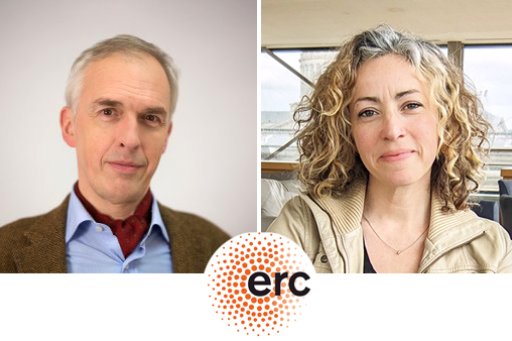
ERC Advanced Grants, 2 lauréats en 2023 Centre interdisciplinaire de recherche en biologie (CIRB) Publié le 18 avril 2024
Le prix Laurette Fugain 2024 est attribué à Pierre Bercier Centre interdisciplinaire de recherche en biologie (CIRB) Publié le 17 avril 2024
La semaine de l’indexicalité François Recanati, chaire Philosophie du langage et de l'esprit Publié le 17 avril 2024
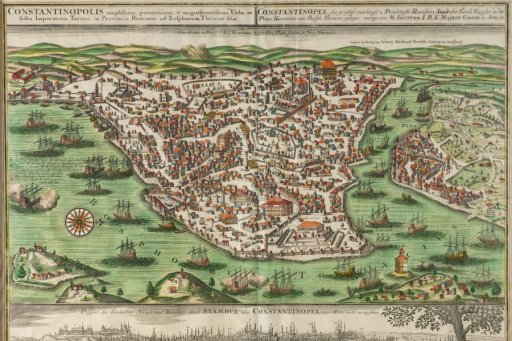
Visualité et représentation de Constantinople dans l’ère prémoderne Bibliothèques et archives Publié le 16 avril 2024
Pierre-Michel Menger Les mathématiques, miroir grossissant des défis, des dilemmes et des défaillances du système éducatif (2) – La situation française au prisme des enquêtes PISA et TIMSS 05 avril 2024
Peter Sloterdijk Le continent sans qualités : des marque-pages dans le livre de l’Europe 04 avril 2024