

Published on 9 December 2022
Laurence Boisson de Chazournes, who advises governments, international organisations, associations and businesses on various areas of international law, is a pioneer in the field of natural resource management. She founded the Platform for International Freshwater Law and contributes her expertise to negotiations on international watercourses.
She has been invited to hold the Avenir Commun Durable Annual Chair for the 2022–2023 academic year, which is supported by the Collège de France Foundation and its major patrons, Covéa and TotalEnergies.
Why did you choose water as your area of study in international law?
Laurence Boisson de Chazournes: It all began when I was working at the World Bank in the late 1990s. As part of my work, I had to deal with issues of international law concerning the River Senegal, the Aral Sea and the Nile. As a generalist by training, I soon realised that there was little literature or comprehensive research on this subject. So, drawing on my fieldwork experience, I began to develop a theoretical framework for this field. I subsequently worked on other international watercourses. At the University of Geneva, with the help of PhD students, I also set up the Platform for International Freshwater Law, which has served as a hub for numerous research projects and publications.
Historically, how has international law approached the subject of freshwater?
The international approach to water developed relatively late, in the second half of the 20th century. Indeed, even today, in my view, international law addresses the subject only in a partial and piecemeal manner. The field initially focused on water resources shared by several States, whilst limiting itself to certain uses. International rivers were primarily used for navigation and trade as trade expanded during the 19th century. They also served as transport routes during the expansion of colonisation in Africa and Asia. The establishment of state borders relied on international rivers and lakes as natural boundaries. Contemporary inter-state disputes are, moreover, shaped by decisions taken during that period. Water was then regarded as an inexhaustible resource. The issue of groundwater was not even addressed.
The 20th century saw significant population growth as well as major economic and social changes. Water use consequently increased and diversified. Regulations were then shaped by these various uses. Water was used to generate energy through the construction of dams, but also to develop industry, particularly in Western countries. Not to mention agriculture, given that land irrigation already accounts for 70 per cent of water resources. By the end of the 20th century, there was also a growing realisation that water is a natural resource that must be managed sustainably, as it is severely affected by environmental degradation (melting glaciers, droughts, floods, etc.). Attention was also focused on meeting human needs.

Does this mean that, today, environmental protection and meeting human needs are at the heart of international water regulation?
It is clear that awareness of the need to protect the environment plays an important role in international water law. Issues such as land and forest management, the protection of biodiversity and the fight against climate change all contribute to better water protection. Beyond environmental law, international human rights law is increasingly being invoked, and the issue of access to water is becoming central. Indeed, although water is the planet’s most abundant resource and its quantity remains constant, it is not naturally distributed in a ‘balanced’ manner. 97 per cent of its total volume cannot be consumed, used for irrigation, or even employed for industrial purposes due to its excessively high salt content. A very large number of people still lack access to it. The same applies to sanitation. This issue is, moreover, a priority of the 2030 Agenda for Sustainable Development, adopted by the United Nations General Assembly in 2015, with the Sustainable Development Goal (SDG) of ensuring access to water for all by 2030.
However, the regulation of water resources is governed by other bodies of law. The economic dimension is also present. Navigation on international rivers remains, even today, of vital strategic importance to many countries, particularly landlocked states. The same applies to energy production. International investment law also shines a spotlight on other aspects of the economic dimension of water. This is the case with the conclusion of concession contracts whereby a government entrusts private companies with the provision of public services, such as those relating to water supply. This vital resource is also a matter of diplomacy. It lies at the heart of tensions and conflicts. Dispute resolution initiatives are utilised in an attempt to resolve these issues. In the context of an armed conflict, water can be used as a weapon of war, as the conflict in Ukraine demonstrates. International water law is therefore a multifaceted body of law, in which all these aspects play a role.
Is there a common set of standards for regulating water at an international level?
Water regulation is at once unique and universal, as well as being multidisciplinary. This is, in fact, what makes it so complex. Towards the end of the 20th century, states sought to codify general principles of international law, notably through the United Nations Convention of 21 May 1997 on the Law of the Use of International Watercourses for Purposes Other Than Navigation. The aim of this convention, which came into force in 2014, is to provide a normative framework for the management of international watercourses. Under this treaty, the signatories undertake to use watercourses in an equitable and reasonable manner, without causing significant harm to other riparian States. They also establish various instruments of cooperation, by regularly exchanging – in theory at least – data and information on the condition of watercourses, and by notifying other riparian states of any water-use projects they are planning. These principles are implemented at regional level. This is notably the case in Europe, with the Helsinki Convention on the Protection and Use of Transboundary Watercourses and International Lakes. It is also the case with the revised protocol on shared watercourses within the Southern African Development Community. In a sense, there is a common set of standards governing international watercourses.
Nevertheless, these initiatives set out only general principles. Yet no two rivers are alike, whether in geographical, hydrological, human or even political terms. Thus, the basic unit for water regulation remains the river basin. A very large number of specific agreements have been concluded. Within this framework, the role of international law is to take account of the specific characteristics of each catchment, whilst establishing broad general principles. These principles also make it possible, incidentally, to regulate what I call orphan catchments, that is to say, catchments that are not the subject of an agreement between riparian states.
There are numerous challenges surrounding water. To address these, are there any leading institutions dealing with the issue, similar to the World Health Organisation in the field of public health?
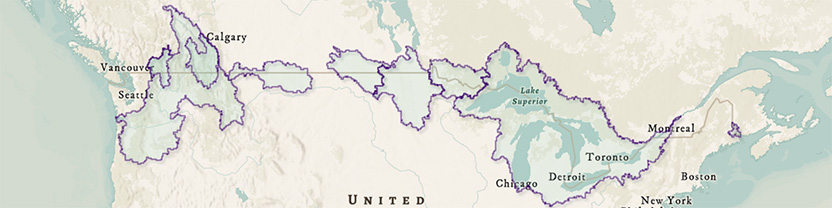
Here again, this is a distinctive feature of the International Law of Institutions: the main institutions we currently have are basin-based organisations. Examples include the Rhine Commission, the Danube Commission and the Senegal River Commission. Some, such as the International Joint Commission established between the United States and Canada, have been granted the power to adopt binding decisions. Generally speaking, therefore, it is the riparian states that decide jointly on the use of a watercourse. At regional level, there is no institution dealing with this issue, apart from the United Nations Economic Commission for Europe and, to a limited extent, the European Union. And at global level, there is no institution that deals with water in its entirety, in all its aspects. This is partly because the issue remains strategic for states, and sovereignty still plays a significant role. However, in my view, this is a real weakness, because, even if water is not always a source of conflict, its increasing scarcity and waste in certain regions will lead to population displacement and rising tensions. It would therefore be useful for the issue to have a voice at the United Nations. The Security Council discusses it from time to time, but the issue of water management is not merely a security issue. The General Assembly will hold a special session dedicated to water in 2023. Perhaps the foundations for a more coherent vision of water will begin to emerge.
If legal texts and institutions seem somewhat in their infancy, can diplomacy help to manage water resources sustainably? In this regard, could you explain the concept of ‘hydro-diplomacy’?
The aim of ‘hydro-diplomacy’ is to ensure the best possible management of international rivers and to prevent disputes. In practice, asymmetries are observed within each river. These may be natural, for example, in terms of access to water or the length of a river’s banks. They may also be political, as there are often power imbalances between two riparian states.
In this context, international law establishes the principle that every riparian state has an equal right of access to the water resource. However, this does not constitute an equal right in terms of the quantity of water or the benefits derived from it. It is therefore up to the riparian states to reach an agreement so that equity and the avoidance of significant harm govern their relations. ‘Hydro-diplomacy’ enables the search for a model based on equity and reasonableness, by involving all relevant stakeholders and actors. The idea is to resolve crucial issues such as data sharing, food security and energy problems. The fact remains, however, that this concept of ‘hydro-diplomacy’ is flexible – perhaps too flexible. It relies on the goodwill of the stakeholders.
Sometimes, conflict unfortunately seems inevitable; how do international law or ‘hydro-diplomacy’ deal with this situation?
Disputes must be resolved peacefully through diplomatic or judicial mechanisms. In this regard, certain international courts have the jurisdiction to manage such conflicts. Diplomacy, for its part, can take over in implementing judicial decisions. To this end, I am a firm believer in mediation, which enables the parties concerned to find common ground. The mediator has the flexibility to listen, make proposals and guide the parties towards reaching an agreement. There is also a technical aspect to water that is important for resolving conflicts. The mediator or conciliator called upon to intervene can draw on the expertise of specialists.
In the case of armed conflicts, water can be a target (such as infrastructure related to water use) or, conversely, a weapon (such as control over dams). Particular attention must be paid to the protection of water and people’s access to this resource. In this context, international law in the broadest sense – that is to say, including international humanitarian law, human rights law and environmental law – must be applied. However, the law applicable in times of armed conflict, including in situations of occupation, must be strengthened in terms of both its substance and its application. In this context, international criminal law could provide for the prosecution of war crimes or crimes against humanity relating to water resources.
We have talked a great deal about governments and very little about the private sector. What role should they play?
Private sector actors – whether private or public companies – play a significant role. Without substantial investment, the Sustainable Development Goal (SDG) on access to water and sanitation for all will not be achieved. Today, thanks in particular to the support of the United Nations, which has established instruments such as the United Nations Global Compact, private sector actors are guided in the role they must play. They have accepted a form of accountability. The precise scope of this concept still needs to be defined. National laws have established the duty of care that falls upon them. At the international level, codes of conduct and other forms of commitment set out the best practices with which companies must comply. Furthermore, as part of a research project carried out with the Centre for Philanthropy at the University of Geneva, we are seeking to identify best practices that relate specifically to water resources and their ecosystems. These will form the basis of a Code of Conduct, which will be disseminated and will evolve as our understanding grows.
Interview by Romain Cayrey
Published on 16 November 2026

Published on 9 November 2026

Published on 27 October 2026

Published on 2 October 2026

Published on 2 October 2026

Published on 2 October 2026

Published on 2 October 2026

Published on 23 July 2026

