CIRB


INTERCELLULAR COMMUNICATION AND MICROBIAL INFECTIONS

Director : Guy TRAN VAN NHIEU

Pathogenic bacteria express virulence determinants that enable them to colonize and invade host cell tissue.
These determinants could be surface proteins that act as “adhesins” or “invasins” that target host cell receptors, thereby providing the mechanical bacterial link to the cell surface. Other virulence determinants can be secreted in the extracellular medium and acting as pore, or by penetrating into host cells, can affect the integrity of an epithelial barrier. The team’s research is focused on the characterization of the function of virulence determinants and signaling pathways involved in bacterial-induced cytoskeletal reorganization and cell invasion. To gain insights into the functional coordination of these effectors during bacterial infection, we are developing a combination of genetic, cellular, molecular and imaging techniques in order to characterize dynamic aspects of bacterial cell interactions, using Shigella, enteropathogenic E. coli (EPEC) and Streptococcus pneumoniae, as bacterial models. The approaches are revealing original aspects concerning the function of bacterial effectors, intercellular communication induced by bacterial invasion, as well as early recognition events the initial steps of host cell interaction.


SCIENTIFIC PROJECTS

I. T3S effectors and bacterial-induced cytoskeletal rearrangements during Shigella invasion

Nathalie Carayol (post-doc) ; Cesar Valencia-Gallardo (undergraduate student)
Enteropathogenic bacteria are responsible for a large number of diarrhoeal diseases, in particular among young children in developing countries. Shigella, the causative agent of bacillar dysentery, invades the colonic mucosa and induces an intense inflammatory reaction leading to tissue destruction. Enteropathogenic E. coli (EPEC), a major cause of infantile diarrhea, induces characteristic attaching / effacing lesions corresponding to the disappearance of epithelial cell microvilli, while adhering to the intestinal epithelium. For both bacterial pathogens, cell adhesion or invasion is dependent on the activity of a specialized type III secretory apparatus (T3SS), that allows the injection of bacterial effectors into the host cell that reorganize the actin cytoskeleton. T3SS are widely expressed in gram-negative bacterial pathogens. Because of their intracellular function, these T3S effectors act individually as molecular “mimics” and various studies have highlighted their role in the characterization of original cell functions. T3SS effectors may regulate cytoskeletal reorganization required for bacterial invasion or adhesion, or may modulate inflammation. T3SS share the common feature of secreting two substrates upon cell contact that inserts into the host cell membranes to form a so-called translocator, required for the injection of other effectors.
We are studying the molecular basis for the cytoskeletal reorganization induced by T3SS effectors using a combination of in vitro biochemical, cell transfection, and real-time fluorescence microscopy techniques. This analysis is being performed with a particular emphasis on the spatio-temporal parameters during Shigella invasion, using dynamic fluorescence imaging techniques to follow the secretion of these T3SS effectors and their interaction with their host cell molecular targets.


TranVan-ImportRVB-EPEC Tai copier

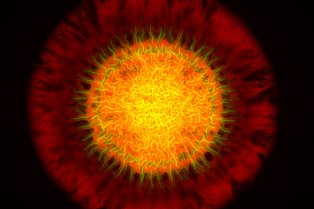
Cytoskeletal reorganization induced by enteropathogenic E. Coli (EPEC) during adhesion to epithelial cells Hela cells are infected with EPEC and subjected to immuno-fluorescent staining. Bacteria (red) form microcolonies at the surface of epithelial cells and induce polymerized actin structures.


II. Mechanisms of polarization, docking, and translocation of T3S effectors

Clémence Collet (PhD student) ; Khadija Ourradi (undergraduate student) ; Julie Guignot (Research associate / CR1 Inserm)
A common feature of T3SS is the requirement to secrete upon cell contact two substrates that insert into host cell membrane to form the T3SS “translocator”. This translocator forms a pore and is necessary for the injection of T3S effector proteins. The precise mechanisms involved in the translocation of T3S effectors are unknown.
Shigella T3S is polar and polar secretion is determined by substrate polarization inside the bacterium prior to secretion. We plan to develop a biochemical approach to characterize the determinants responsible for the polar localization of T3SS translocator components and their link with the T3SS. The link between the polar compartment and the T3SS represents a new aspect of bacterial physiology linking spatial localization and functional processes which that is likely to be relevant for other bacterial secretion systems.
While Shigella invasion is a rapid process involving the secretion of T3SS effectors within seconds following cell contact, enteropathogenic E coli (EPEC) also uses a T3SS to inject bacterial effectors during bacterial attachment to the epithelial cell surface with kinetics of secretion over several tenths of minutes. We are studying factors that regulate the injection of EPEC T3SS effectors into host cells, with a particular emphasis on translocator components. The comparison of the modes of action of the Shigella and EPEC T3SS will allow to identify specific and common features of these secretion systems critical for bacterial virulence.


TranVan-ImportRVB-Shigella invasion IpaC secretion copier

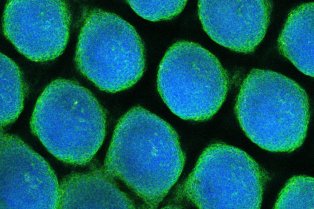
Epithelial cell invasion by the bacterium Shigella flexneri
Hela cells are infected with Shigella and subjected to immuno-fluorescent staining. Blue: F-actin; green: bacteria; red: secreted bacterial protein implicated in invasion


III. Intercellular communication linked to hemichannels during bacterial infection.

Stéphane Romero (post-doc); Andrea Puhar (post-doc);
Shigella invasion induces hemichannel - and ATP-dependent signaling in epithelial cells that, acting in a paracrine manner, further stimulates bacterial invasion in neighboring cells. We are analyzing the mechanism by which extracellular ATP released through hemichannels enhances bacterial invasion of epithelial cells, by studying calcium signaling and developing in vitro biomimetic approaches.
We have recently obtained evidence that functional hemichannels form at the basolateral surface of polarized enterocytes. ATP-dependent signaling through hemichannels by epithelial cells may therefore amplify “alert” signals at discrete sites of invasion during the early stages of infection. Hemichanel-mediated signaling could favor the recruitment and activation of phagocytic cells at sites of infection and contribute to bacterial clearance. Because this signaling is likely to occur early during infection and at discrete sites of invasion, this project will implicate to develop in vivo imaging approaches to characterize the function of hemichannels and intercellular communication during infection.
Because bacterial pathogens have evolved remarkably efficiently to counter host cell innate responses, T3S effectors may provide effective tools to better characterize hemichannel-mediated intercellular signalling.


IV. Cytoskeletal reorganization induced by Streptococcus pneumoniae

Samantha Knockaert (technician); Isabelle Podglajen (Research associate / MCU-PH)
Streptococcus pneumoniae is a Gram-positive bacterium, which can persist as a commensal as part of the human nasopharynx flora, but which is also responsible for mucosal as well as invasive infections leading to bacteriemia and meningitis. A number of determinants have been associated with the pathogenicity of S. pneumoniae, but their relative role in virulence may show some strain-variation. We are applying fluorescence microscopy imaging techniques to identify cytoskeletal alterations induced by strains from different muti-loci sequence types. Based on a preliminary epidemiological study on a collection of S. pneumoniae clinical isolates, the goal of these studies is to identify patterns of determinants that are associated with invasive strains, and their mode of action which would enable bacterial crossing of epithelial and endothelial barriers.


TranVan-ImportRVB-W3110pCiv copier

Type III substrate intra-bacterial polarization
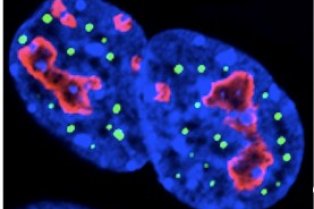
E. coli expressing the Shigella type III substrate IpaC fused to the green fluorescent protein (green) are stained with the lipophilic dye FM4-64(red). The IpaC type III substrate labels the bacteria poles.


SELECTED PUBLICATIONS 2005-2011

- Romero S., Grompone G., Carayol N., Mounier J., Guadagnini S., Prevost M.-C., Sansonetti P.J. & Tran Van Nhieu G. (2011), ATP-Mediated Erk1/2 Activation Stimulates Bacterial Capture by Filopodia, which Precedes Shigella Invasion of Epithelial. Cell Host Microbe, Jun 16;9(6):508-19
- Enninga J., Mounier J., Sansonetti P.J. & Tran Van Nhieu G. (2005), Secretion of type III effectors into host cells in real time. Nature Methods, 12: 959-965.
- Izard T., Tran Van Nhieu G & Bois P. (2006), Shigella applies molecular mimicry to subvert vinculin and invade host cells. J. Cell Biol., 175, 465-475.
- Ramarao N., Le Clainche C., Izard T., Bourdet-Sicard R., Ageron E., Sansonetti P.J., Carlier M.F. & Tran Van Nhieu G. (2007), Capping of actin filaments by vinculin activated by the Shigella IpaA carboxyl-terminal domain. FEBS Letters, 581:853-7.
- Tran Van Nhieu G. & Izard T. (2007), Vinculin binding in its closed conformation by a helix addition mechanism. EMBO Journal, 26: 4588-4596.
- Clair C., Combettes L., Pierre F., Sansonetti P. & Tran Van Nhieu G. (2008), Extracellular-loop peptide antibodies reveal a predominant hemichannel organisation of connexins in polarized intestinal cells. Experimental Cell Research, 314(6):1250-65.
- Jaumouillé V., Francetic O., Sansonetti P. & Tran Van Nhieu G. (2008), Cytoplasmic targeting of IpaC to the bacterial pole directs polar type III secretion in Shigella. EMBO Journal, 27:447-457.
- Viklund I.M., Aspenström P., Meas-Yedid V., Zhang B., Kopec J., Agren D., Schneider G., D'Amato M., Olivo-Marin J.C., Sansonetti P., Tran Van Nhieu G. & Pettersson S. (2009), WAFL, a new protein involved in regulation of early endocytic transport at the intersection of actin and microtubule dynamics. Experimental Cell Research, 315: 1040-52.
- Mounier J., Popoff M.R., Enninga J., Frame M.C., Sansonetti P.J. & Tran Van Nhieu G. (2009), The IpaC carboxyterminal effector domain mediates Src-dependent actin polymerization during Shigella invasion of epithelial cells. PLoS Pathog., 5(1): e1000271.
- Dupont N., Lacas-Gervais S., Bertout J., Paz I., Freche B., Tran Van Nhieu G., van der Goot F.G., Sansonetti P.J. & Lafont F. (2009), Shigella phagocytic vacuolar membrane remnants participate in the cell signaling response to pathogen invasion. Cell Host and Microbe, 6: 137-149.
- Tran Van Nhieu G., & Guignot J. (2009), When Shigella tells the cell to hang on. J. Mol. Cell Biol., Aug 3.
- Romero S. & Tran Van Nhieu G. (2009), A bacterial virulence factor that dissipates tension. Nat. Cell. Biol,. 11: 1174-5.
- Tran Van Nhieu G. & Arbibe L. (2009), Genetic reprogramming of host cells by bacterial pathogens. F1000 Biology report, (in press).


PEOPLE

Director :
Tran Van Nhieu Guy , DR2 INSERM

Senior Researchers :
Podglajen Isabelle, MCU-PH
Guignot Julie, CR1 INSERM

Technical staff :
Knockaert Samantha

Post-docs and Students :
Romero Stéphane, Post-Doc
Carayol Nathalie, Post-Doc
Collet Clémence, PhD student
Ourradi Khadija, undergraduate student
Valencia-Gallardo Cesar, undergraduate student