
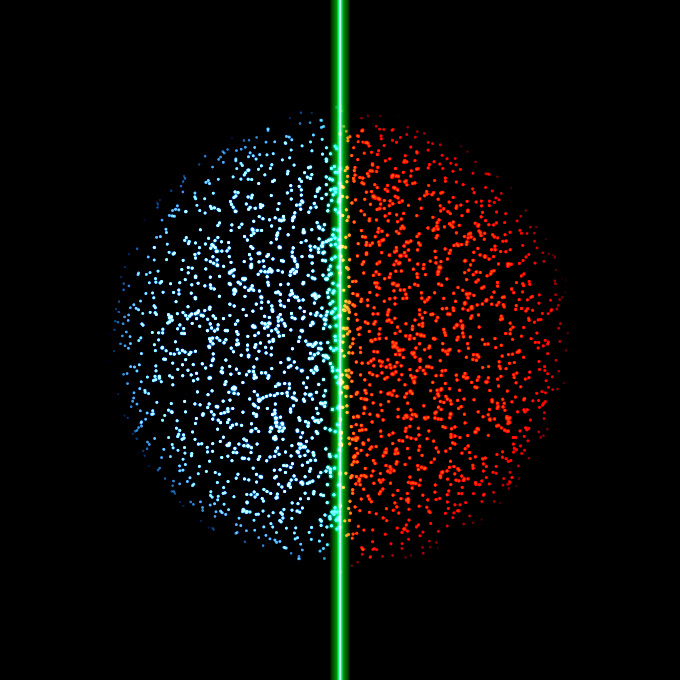
In 1962, as a young doctoral student at Cambridge, Brian Josephson realized that an electric current could flow between two superconducting metals separated by an insulating barrier, even in the absence of any potential difference between the metals. This " Josephson junction " is the basis for many developments in modern physics, as illustrated by the Nobel Prize in Physics 2025 awarded to Clarke, Devoret and Martinis.
The Josephson effect was then generalized to other quantum fluids, such as liquid helium or ultra-cold atomic gases. In this lecture, we will present the main aspects of this effect, comparing the different platforms on which it manifests itself, and highlight the prospects it opens up for atomic fluids.