Amphithéâtre Maurice Halbwachs, Site Marcelin Berthelot
Open to all
-

Abstract

No experiment today provides evidence that gravity requires a quantum description. The quantum optical control of solid-state mechanical devices, quantum optomechanics, may change that situation -- by enabling experiments that directly probe the phenomenology of quantum states of gravitational source masses. Such "quantum Cavendish" experiments require to explore extreme regimes of both quantum and gravity phenomena, specifically: delocalized motional quantum states of sufficiently massive objects, as well as gravity experiments on the microscopic scale. Extending quantum optomechanics methods to trapped solids offers a unique approach for pushing into these ambitious parameter regimes. I review the current status in the lab and the challenges to be overcome for future experiments.
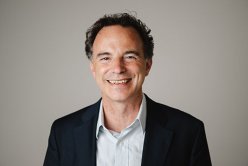
Markus Aspelmeyer

Markus Aspelmeyer
Markus Aspelmeyer. Crédits : Luiza Puiu.

Markus Aspelmeyer is Professor of Physics at the University of Vienna and Scientific Director at the Institute for Quantum Optics and Quantum Information (IQOQI) of the Austrian Academy of Sciences in Vienna. He studied physics and philosophy in Munich, Germany. After a PhD in solid state physics from LMU Munich he switched fields to quantum optics. By combining these two backgrounds he became one of the early pioneers of the field of quantum optomechanics, a new paradigm for light-matter interaction that allows to control solid-state quantum systems and to explore previously unattainable regimes of macroscopic quantum phenomena. He is a Fellow of the American Physical Society, and Member of the Austrian Academy of Sciences and the Academy of Sciences and Humanities in Hamburg. His current research is focused on the intriguing puzzles around quantum physics and gravity.

Speaker(s)

Markus Aspelmeyer

Professor, University of Vienna Institute for Quantum Optics and Quantum Information (IQOQI), Vienna, Austrian, Academy of Sciences

Events