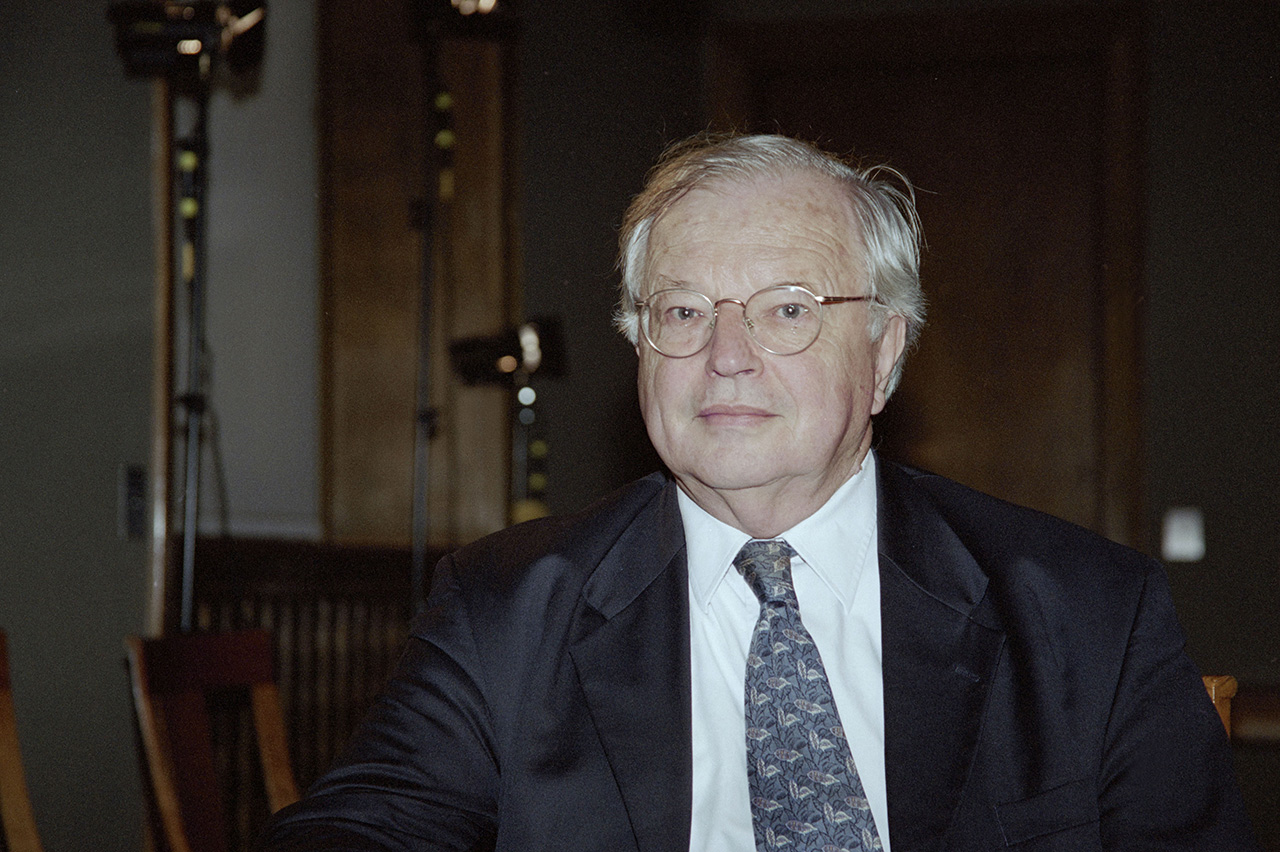
Xavier Le Pichon (1937-2025)
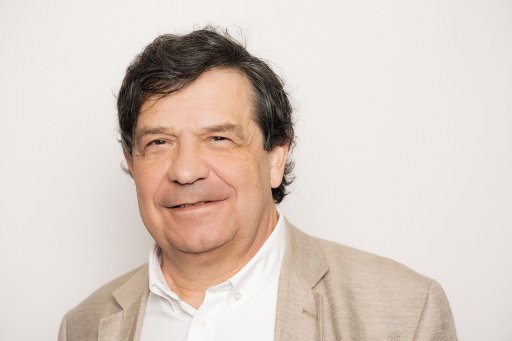
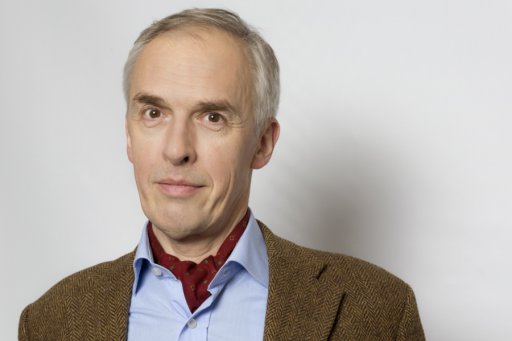
Xavier Le Pichon was born on June 18, 1937 in Quy Nhơn, Vietnam. He died on March 22, 2025 in Sisteron, at the age of 87. Appointed Professor at the Collège de France in 1986, he held the Geodynamics chair until 2008. A scientist of rare acuity, an explorer of the abyss and a thinker driven by the quest for meaning, he combined the intuition of the scholar, the rigor of the researcher and the benevolence of the humanist in a single life.
He spent his childhood in the French protectorate of Annam, Vietnam, where his father managed a rubber plantation, assisted by his mother, who was also responsible for the upbringing of a sibling family marked by war and hardship. At the end of the Second World War, he and his family were interned in a Japanese camp on the Pacific coast, where his fascination with the deep sea was born. "As a small child, I used to look out over the Pacific Ocean and wonder how the beach extended beneath the blue waves that stretched as far as the eye could see. The hidden mysteries of this unusual world fascinated me", he said in the opening of his Balzan Prize acceptance speech in 2002.
After the family returned to France in 1945, he attended the Institut Saint-Paul in Cherbourg, then the Lycée Sainte-Geneviève in Versailles. He obtained a bachelor's degree in physics from the University of Caen and, in 1960, an engineering diploma from the Institut de Physique du Globe in Strasbourg.
He continued his studies in the United States at Columbia University's Lamont Observatory in New York, a hotbed of nascent oceanography and marine geology. Oceanographers and geologists often took part in the same campaigns at sea. His first work in physical oceanography focused on the dynamics of the deep Indian Ocean, where the movements of water masses are disturbed by the topography of the ocean floor, with its ripples and abyssal plains.
In the mid 1960s, the geological community was experiencing a period of unprecedented effervescence. Discoveries were piling up, and certainties were wavering: paleomagnetic directions showed that the continents had drifted, confirming Alfred Wegener's hypotheses. Mid-ocean ridges were becoming the matrix for the expanding oceans.
At Lamont, founded and directed by Maurice Ewing, Xavier Le Pichon worked on seismic reflection and seismic refraction analyses, taking part in a long expedition lasting several months on the Columbia University three-masted vessel Vema. The aim was to observe the South Atlantic and Southwest Indian Ocean ridges. He also wanted to verify the continuity of these structures, a hypothesis put forward by Jean-Pierre Rothé, his professor in Strasbourg.
This oceanographic expedition confirmed the existence of continuous tectonic activity along the ridges. The oceanic rift thus made its triumphant entry into geology as the largest structure on the globe. Le Pichon returned to Strasbourg in 1966 to defend his doctoral thesis, entitled "Geophysical study of the Mid-Atlantic Ridge", the first step in a scientific adventure that was to revolutionize our view of the Earth.
It was in the scientific ferment of the Lamont that, at the age of thirty-one, he conceived what he would later call a scientific "crystallization". Inspired by the work of Harry Hess, Fred Vine, Drummond Matthews, Dan McKenzie, Tuzo Wilson and Jason Morgan, he used computer calculations to model the global movement of lithospheric plates based on magnetic anomalies and the location of transform faults.
At the time, his model consisted of six large plates, explaining most of the tectonic manifestations observed on the surface of the globe. The article he published alone in 1968, in the Journal of Geophysical Research, is entitled "Sea floor spreading and continental drift". This article remains a founding milestone, proposing the first coherent, quantitative kinematic model of terrestrial dynamics. This study brought to a close the controversy that still pitted the proponents of Earth expansion against the proponents of continental drift. He established plate tectonics as the new global framework for the Earth sciences.
Back in France in the late 1960s, Xavier Le Pichon joined Cnexo, the Centre national pour l'exploitation des océans, the forerunner of Ifremer, the French Research Institute for Exploitation of the Sea. He helped set up the Centre océanologique de Bretagne, in Plouzané near Brest, to develop his method of combining direct exploration of the seabed with mathematical modeling. Under his impetus, France became a nation of deep-sea explorers. The campaigns he conceived or led combined technical daring with scientific foresight. The FAMOUS (FrenchAmerican Mid-Ocean Undersea-Survey) expedition, which ran from 1971 to 1974, was the first to explore the Mid-Atlantic Ridge underwater. Thanks to the three submersibles Alvin, Cyana and Archimède, geophysicists were able to observe for the first time the oceanic crust at depths of over 3 000 meters.
This was followed by the HEAT campaign in the Hellenic trenches, the first dive into a subduction zone, and the Kaiko and Kaiko-Tokai programs in the 1980s, in cooperation with Japan. With the French submarine Nautile, capable of descending to depths of 6 000 meters, Le Pichon and his team explored active margins, notably the subduction trenches of Japan and the Barbados accretionary prism.
These expeditions fueled a wide-ranging scientific reflection, in which he set out to understand the mechanics of rifting, subduction and collision, as well as the interactions between internal geodynamics and the Earth's surface. His work on the seismic coupling of subduction zones made a lasting contribution to modern seismology. As early as 1990, he recognized the value of space geodesy and GPS measurements for tracking continental deformation in real time. A visionary, he warned of the seismic risk of the Japan Trough, well before the 2011 Tohoku earthquake and its human consequences, including the Fukushima nuclear accident. Following the Izmit earthquake in 1999, his research focused on the North Anatolian Fault and the Sea of Marmara, one of the most seismically sensitive areas on the planet.
In 2003, Le Pichon and his colleagues moved to the Technopôle de l'Arbois campus, in synergy with my team at the Climate and Ocean Evolution chair attached to the UMR CEREGE in Aix-en-Provence. His research focused on a number of major projects, including the Marmara Sea and the North Anatolian fault, and the tectonics of Provence in connection with the assessment of seismic risk around the Cadarache site where the ITER tokamak will be located.
For the Sea of Marmara, he helped set up a permanent underwater observatory and study the coupling between seismic activity and fluid circulation in sediments. He shared with me his enthusiasm for the geology of this region, which enabled me to work on the sediments of the Sea of Marmara and the Black Sea. With my team, we were able to show that the deep sediments still contain freshwater, a remnant of the last Ice Age, during which these two seas were occupied by large lakes totally disconnected from the Mediterranean Sea due to the general drop in sea level.
A demanding researcher who was always attentive to others, Le Pichon trained several generations of geophysicists. He was a professor at the Pierre-et-Marie-Curie University, then at the École normale supérieure and finally at the Collège de France. His exceptionally clear and wide-ranging lectures introduced hundreds of students and colleagues to the mysteries of earth physics.
Throughout his career, he received the highest honours: the Maurice Ewing Medal from the American Geophysical Union (1984), the Huntsman Award from the Royal Society of Canada (1987), the Japan Prize (1990), the Wollaston Medal from the Geological Society of London (1991), the Balzan Prize for Geology (2002), the Alfred Wegener Medal from the European Geosciences Union (2003). He was a member of the French Academy of Sciences (1985) and an international member of the US National Academy of Sciences (1995).
A devout Catholic, Le Pichon underwent an existential crisis in the early 1970s, torn between his scientific quest and his desire to help the underprivileged. This realization led him to Calcutta, where he spent several months with Mother Teresa. Later, with his family, he joined one of the L'Arche communities, where they lived for almost thirty years, sharing the lives of mentally handicapped people. In his lectures and writings, Le Pichon often linked his understanding of the physical world with his spiritual reflection on human fragility.
We have lost a scientist whose clarity of mind and moral depth were exceptional and admirable. The Collège de France pays tribute to a man who, from global geodynamics to intimate reflections on life and death, knew how to combine the greatness of the Earth and the greatness of Man.
Edouard Bard, November 30, 2025