4:00 - 4:45pm
Symposium

AI-Driven Complexity Reduction and Multi-Physics Digital Twins: From Theory to Engineering Implementation in Nuclear Reactors

Helin Gong
Amphithéâtre Marguerite de Navarre, Site Marcelin Berthelot
Open to all, subject to availability
-

Abstract

To meet the rigorous demands of Best-Estimate Plus Uncertainty (BEPU) in modern nuclear engineering, it is essential to characterize safety margins and system dynamics with both high fidelity and high efficiency. Building upon foundational complexity reduction methods—such as the Generalized Empirical Interpolation Method (GEIM) and Reduced Basis methods—this talk presents recent advancements in applying these mathematical tools to real-world nuclear engineering practices.

By integrating Model Order Reduction (ROM) with Artificial Intelligence (AI) and Data Assimilation, we have developed a data-enabled, physics-informed digital twin framework. This approach effectively resolves high-dimensional multiphysics coupling problems and enables ultra-real-time state estimation and parameter identification. Furthermore, the presentation will highlight the engineering implementation of these methodologies, demonstrating how theoretical reduced-order models are deployed into industrial software and platform architectures (e.g., the AI-Enhanced Digital Twin Engineering Platform) for the online monitoring and predictive simulation of commercial nuclear reactor cores.
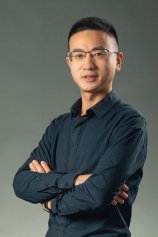
Helin Gong

Helin Gong

Helin Gong is an associate professor and doctoral advisor at the Paris Elite Institute of Technology (SPEIT), Shanghai Jiao Tong University (SJTU). He holds a bachelor’s degree in Nuclear Engineering and Technology from Tsinghua University, a master’s degree in Nuclear Energy Science and Engineering from the Nuclear Power Institute of China (NPIC)—where he also served as a senior engineer from 2010 to 2022—and a Ph.D. in Mathematics from Sorbonne University. Dr. Gong’s research focuses on complex system engineering for advanced nuclear energy systems. He has made systematic academic contributions by integrating Artificial Intelligence (AI), Reduced Basis (RB) methods, and Data Assimilation (DA) to develop real-time digital twins and intelligent support technologies. His work systematically advances physics-informed modeling and specialized software development, providing critical solutions for the safety, economics, and operational flexibility of next-generation nuclear systems. He has served as principal investigator on numerous high-level research grants, authored over 60 peer-reviewed papers, and received multiple prestigious science and technology awards.

Speaker(s)

Helin Gong

Associate Professor, Paris Elite Institute of Technology, Shanghai Jiao Tong University, Shanghai, China.

Events

Symposium
8:50 - 9:00am
Symposium
11:45am - 12:30pm
Symposium
5:30 - 6:30pm
Not recorded
Symposium
5:30 - 6:30pm
Not recorded