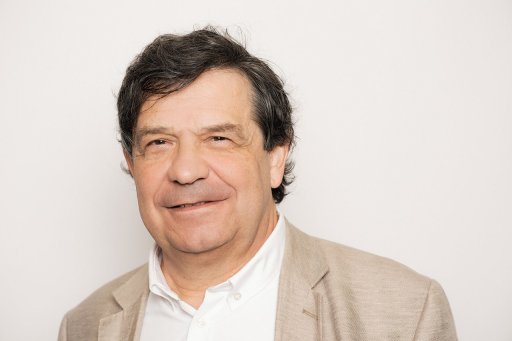
Olivier Hermine, Professor of Haematology at Paris Cité University (formerly Paris Descartes) and Head of the Haematology and Immunology Department at Necker-Enfants Malades Hospital, wears two hats: that of a clinician and that of a researcher in basic science. Throughout his career, he has worked to understand the biogenesis and biology of blood cells in order to develop new treatments and adapt existing therapies to better treat patients with blood disorders, and even to apply them to other conditions.
In 2026, he was appointed to the Chair of Experimental Medicine at the Collège de France.
How did your interest in science, and subsequently in haematology, begin?
Olivier Hermine: When I was young, I envisaged becoming a blacksmith, like my grandfather, or perhaps a vet. But his death, when I was in Year 9, was my first encounter with death, which led me to ask myself many questions from that point onwards. The heart stopping, the brain ceasing to function, the uncontrolled proliferation of cancer cells and their immortality – that was when the idea of studying medicine first crossed my mind, although I didn’t have a very clear idea of what it actually involved. As I immersed myself in the Larousse medical dictionaries from the 1960s, I was fascinated by the words and the images, and I decided that I wanted to become a doctor, to understand and treat illnesses. Then, in my first year of medical school: the shock. We were learning everything by heart, without really trying to understand it, simply to maximise our chances of passing the entrance exam. The following year, my mind was made up: I wanted to do research, alongside medicine as it was taught and practised at that time. I explain this ambivalence to my students today: in medicine, you have to follow the rules to cure patients – it’s essential; you can’t just improvise and do whatever you like. And yet, in certain areas where we are unable to cure certain diseases, or where treatments are too toxic, we must be able to move forward and challenge certain dogmas. I initially wanted to become a neurosurgeon, but haematology ultimately appealed to me because of its highly experimental nature. It is a discipline that deals with blood disorders, which require a broad knowledge of clinical medicine, as blood circulates through every organ in the body. Understanding the mechanisms involved in order to cure patients seeking solutions has been a real driving force throughout my career.
How do you balance your role as a hospital doctor with that of a basic researcher?
It’s not always easy, but it’s essential! Intellectually, the two are a bit like riding a bike; you never really forget how, even if staying on track in both fields requires a great deal of discipline and hard work. You have to know how to delegate to colleagues who work with you on the various aspects of medicine, investigation and research. But wearing these two hats undoubtedly enables me to ask the right questions, from both a purely scientific and a clinical perspective. I’ll always say this: we must encourage basic research within clinical teams. The discoveries we make in the laboratory using experimental models eventually find their way into patient care, even if, initially, their sole purpose was simply to advance our understanding of biology. There is a sense of satisfaction in knowing that our discoveries have meaning and a real, observable application. There are also different types of laboratory research: on the one hand, basic research on models that are very difficult to fund and where it is unclear whether it will lead to medically recognised applications; on the other, translational or clinical research, which can yield much faster results and be far more rewarding, both financially and academically, as well as in the eyes of the general public. We strive, however, not to prioritise one aspect of research over the other, as both are crucial. Finally, I believe that basic research may have its limitations, due to the models used – which are necessarily imperfect – but that its clinical application can precisely act as a ‘final arbiter’, providing validation.
Since its emergence in the last century, haematology has made great strides, particularly in relation to diseases such as leukaemia, myeloma and lymphoma. What are the major challenges driving your research today?
I would say there are two major challenges. Firstly, malignant diseases, such as blood cancers. Fortunately, nowadays we are able to cure many of them. We must therefore now identify the diseases that cannot be cured using our current approaches, through rigorous methods that benefit from technological advances and fundamental research. Secondly, between chemotherapy, targeted therapies based on the biology of the disease and immunotherapy – used either independently or in combination – there are numerous options. Today, we want to know precisely which patient will respond to which type of treatment and minimise the toxicity of treatments as much as possible. The second challenge concerns so-called ‘benign’ diseases. My team and I are working in particular on sickle cell anaemia, the most common genetic disorder affecting red blood cells worldwide, which has long been underestimated for socio-economic, and even racial, reasons. Patients suffering from this condition still have a life expectancy of less than fifty years. Fortunately, many changes have taken place today, both in terms of awareness and from a scientific and medical perspective. On the one hand, through fundamental and translational research into biogenesis [1] and the biology of red blood cells, we are seeking to identify patients who do not respond to current treatments, in order to find new therapeutic alternatives. On the other hand, we ensure that each patient is matched with the treatment that will be most effective for them. I am also working on mastocytoses, a group of rare diseases characterised by the accumulation – and, in some cases, the proliferation – of mast cells, immune system cells known to be responsible for allergic reactions. Drawing in particular on the clinical description of mastocytosis, we aim to gain a better understanding of the physiological and pathological role of mast cells outside the context of allergy, as this is a cell that remains rather difficult to study due to its rarity. This is why our work extends beyond haematology to include, for example, neurodegenerative and inflammatory diseases, as well as the progression of and response to treatment for certain solid tumours.
To achieve this, you incorporate so-called ‘natural’ animal models into your research. What does this involve?
It’s something that has always fascinated me. When we work with models that are closer to humans, the predictions we make can be more easily applied to humans, compared to mouse models, for example, which are artificially made ill in the controlled environment of a laboratory. There are a whole range of ethical considerations to take into account in this sort of practice. We have therefore adopted a different approach. When developing a new medicine, it generally needs to be tested on three animal species before it can be administered to humans for the first time. However, some of these animals develop the same diseases as humans, in a natural setting. Rather than making healthy animals ill for the purposes of our research, we therefore work directly with animals – such as dogs or cats – that have naturally developed the disease. It was in this way that we were the first to develop a treatment targeting a molecular abnormality in canine cancer, resulting in a better response with reduced toxicity. Once efficacy has been proven in naturally affected animals, success rates in humans are significantly higher. I always say that we must give back to animals what they have given to humans, which ties in with the ‘ One Health ’ concept, where we take into account the links between animal health, human health and the environment. Unfortunately, this practice has not become very widespread, because there is no insurance system for animals that is as comprehensive as that for humans. Medicine is often governed more by economic considerations than by scientific ones…
How do these economic considerations impact your research into treatments?
At one time, rare diseases were attractive to investors because the trials required to demonstrate the efficacy and safety of treatments involved only a small number of patients, and the retail prices were very high. Today, when a treatment costs millions of euros for a patient with a rare disease, healthcare systems cannot keep up, and the industry consequently becomes more cautious, less inclined to develop medicines for these conditions. It is more interested in common diseases. The recent case of treatments developed for obesity, and the wealth they have generated for those who market them, speaks volumes… It has therefore become very difficult, in the case of rare diseases, to find an investor to fund the development of new medicines. I eventually helped set up two biotechnology companies to establish a framework conducive to this development. This involves seeking funding, as well as industrial partners who could subsequently take charge of producing these products. It is a process that causes a certain amount of frustration, and one that offers no guarantee that the development of products which have nevertheless shown encouraging results will continue.
In 2008, you founded the National Reference Centre for Mastocytosis at Necker Hospital. What are its remit and objectives?
The primary mission, of course, is to treat patients. In the context of rare diseases where the diagnostic criteria, prognosis and treatments are not always yet known, the aim is to organise research locally in order to understand the pathophysiology and to define these criteria and therapeutic targets. The fundamental idea behind a centre of excellence is also to ensure that patients can consult a doctor capable of advising and treating them, within 150 kilometres of their home. These centres now cover the whole country, including the French West Indies, French Guiana and Réunion. We also carry out research and hold multidisciplinary consultation meetings every two weeks, where we discuss national cases in order to establish the best treatment strategy for each patient. This enables us to define research priorities based on clinical questions, thereby improving the prognosis. It is therefore a unifying structure, which has enabled the development of protocols and classifications – in short, the unification of research efforts. Furthermore, we participate in European networks, with over 10,000 patients in our database who are being monitored and who highlight the heterogeneity of the rare diseases affecting them. I also coordinated an Initiative of Excellence (Idex), the aim of which was to organise some of the research into red blood cell disorders, which had been neglected for several years, as haematology research had largely focused on cancers. We wanted to establish a network of research laboratories working on these topics, as well as databases and biobanks, and to bring our findings to patients. This initiative has borne fruit, enabling us to better understand the biogenesis and biology of red blood cells, to treat numerous patients, to draw up innovative protocols and to bring this aspect of the discipline back into the spotlight.
Interview by William Rowe-Pirra, science journalist.
[1] Biogenesis: biological processes leading a cell or organism to produce a biological substance, another cell, or another organism.