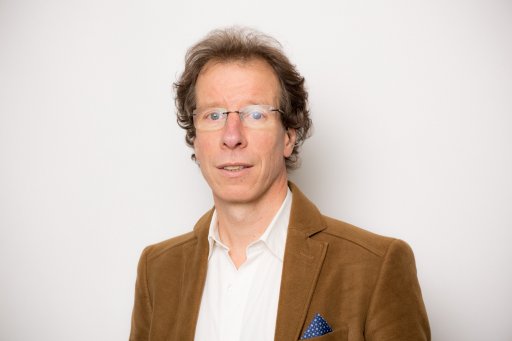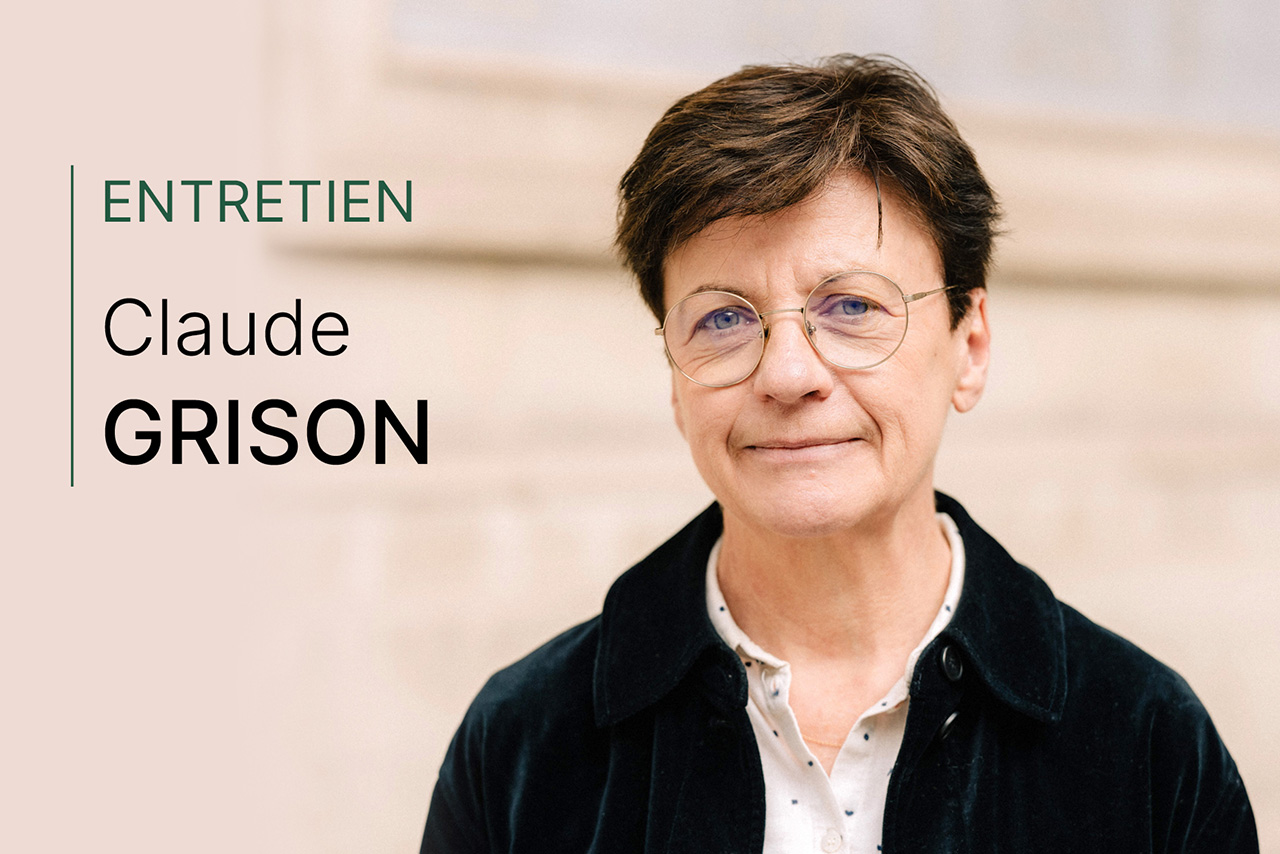
Both a life chemist and an ecologist, Claude Grison breaks down the barriers between disciplines. Her work on plants capable of bioconcentrating metallic and organic pollutants is being put to good use in sustainable chemistry, enabling the restoration of extremely degraded ecosystems while recycling polluting metals, such as manganese or palladium, as eco-catalysts.
She has been invited to take up the Avenir Commun Durable Annual Chair for 2025-2026, which is supported by the Collège de France Foundation and its major sponsors the Covéa Foundation and TotalEnergies.
How did your interest in science, and chemistry in particular, initially develop ?
Claude Grison : I have a naturally curious mind, which attracted me to science in general, whether geography or chemistry, or philosophy or ecology. What interests me is the overall coherence of science, which enables me to answer extremely varied questions. I prefer interdisciplinarity to the fragmentation of knowledge, so I had a hard time choosing a discipline in my curriculum. I opted for life chemistry - a term I prefer to organic chemistry - because it's a frontier discipline ; a non-choice, in short. In this field, you're necessarily interested in other fields, such as biology and ecology. It's a question of scale, but we're studying the same living beings, and we need physical tools, which are themselves closely linked to mathematics. Our research questions are also intrinsically linked to philosophical notions, such as stepping back and questioning. Finally, as I like my work to be useful, I'm interested in economics.
After initial work on bacterial resistance, you finally turned your attention to ecology. What motivated this transition ?
After becoming a professor in 1995, I was sent by the CNRS to co-direct the Biomolecular Organic Chemistry Laboratory at the University of Montpellier in 2003, where the scientific environment is very different from the Nancy context from which I came. There, I discovered major scientific strengths in the field of ecology. There, around 2008, as part of my lectures, four young students asked me for help with a subject they were preparing for an entrance exam to the Grandes Ecoles d'Ingénieurs. They had chosen a very new question at the time : can plants be used to clean up pollution ? I didn't know much about it, but their enthusiasm convinced me, so I asked around, scoured the scientific literature and we worked together on the question. I then discovered the existence of a fascinating plant, the blue stinkweed(Noccaea caerulescens), which had been studied for several years by ecologist José Escarré. The plant managed to thrive on a highly polluted mining site near Montpellier, hostile to all other plants - a true anomaly of nature. What's more, it extracted a metallic element from the soil, zinc, and stored it in its leaves, as if to protect itself from it ! I saw in this an absolutely brilliant response from nature, and a far more interesting alternative to the usual methods of soil decontamination, such as excavation or chemical treatment. At the time, the Pôle interministériel de prospection et d'anticipation des mutations économiques was already warning of the critical state of mineral resources such as zinc. For me, it was a wake-up call. We had in front of us a plant that provided a double service by extracting a precious mineral resource while restoring the soil, enabling a return to the site's original biodiversity. And the resulting plant material is not a contaminated waste product, but an exploitable natural resource.
What applications can you imagine for ?
I've been thinking about a credible business model. What cultivation area would be needed to generate an economic return that would support the large-scale development of this plant ? Using it to produce zinc metal didn't make sense, as it would require an inordinate amount of land. That's where my chemist's hat made the difference. In chemistry, catalysts are used to start, speed up or make more interesting certain reactions involving millions of molecules. Zinc catalysts fall into this category ; very little zinc can be used to produce many molecules. It was to pursue this idea that I joined the Centre d'écologie fonctionnelle et évolutive in Montpellier, where I was the only chemist ! After a year, the first results were in. My blue stinkweed leaves, loaded with zinc, were catalyzing a chemical reaction. Shortly afterwards, I went to New Caledonia, a global biodiversity hotspot, to restore mining sites using local plants. I say restoration, because the notion of total depollution is rather naive. Our aim is not to eradicate all pollutants ; we want to give nature back its rights and restore the original biodiversity of polluted sites. These lands, once deserted and hostile, have now greened up : the seedlings we planted there over ten years ago are now almost two metres tall. And many local plants have reappeared. What's more, the catalysts obtained are sometimes even more efficient than those produced by metallurgy, and we have found completely new catalyst structures. Then I turned my attention to water pollution. By using certain invasive aquatic plants, which are a real scourge for biodiversity, and reducing them to a powder, we realized that we could recover strategic metals from water. Palladium, for example, which is in short supply in France and whose main world producer is Russia. Palladium is an indispensable metal in the automotive and electronics industries, but also in the production of one out of every three drugs used in pharmaceutical chemistry. Today, I'm developing the mass harvesting of these invasive plants using an ecological protocol that enables us to measure the benefit to biodiversity and the production of precious resources. These are not traditional ways of thinking, but we need to challenge the reflexes of a linear economy, and develop the logic of a truly sustainable chemistry where economic, ecological, social and environmental issues are in harmony.
How does sustainable chemistry differ from so-called green chemistry ?
Green chemistry is based on principles aimed at reducing the impact of chemical processes. That's useful, but not enough. Sustainable chemistry inspires me more, because it is based on the pillars of sustainable development to solve past, present and future environmental problems. Green chemistry doesn't seek to solve these problems, but to avoid those that may arise. So how can we solve the problems already identified ? Moreover, it omits the socio-economic aspect of the solutions envisaged. Without this aspect, your solutions may be the most virtuous or the most efficient possible, but nobody will develop them.
As the only chemist in a laboratory of ecologists, how has interdisciplinarity affected you ?
The director of the laboratory, who was a mathematician, felt that certain ecology activities lacked chemistry. I provided the ecologists with a skill they lacked, and they provided me with knowledge I didn't have. Faced with a plant capable of accumulating pollutants within itself, the ecologist asks : " why ? " and the chemist : " how ? " Two equally important questions, whose complementary answers have helped me develop the various ecological restoration projects I've led. Throughout this collaboration, I broke down the artificial barriers that are sometimes erected between scientific disciplines. The CNRS then invited me to set up the Laboratoire de chimie bio-inspirée et d'innovation écologique, which I now run, with this interdisciplinary approach that extends right up to the management level. People don't know what to call me anymore. Am I a chemist or an ecologist ? I consider myself an ecochemist. Today, you can't conceive of one without the other. Ecology is the starting point for innovation, and chemistry brings an economic dimension to it, which in turn supports ecological solutions.
What were the major difficulties you encountered in pursuing this project ?
Prejudices - like the one that says chemistry and ecology are incompatible - which stem from a deeply rooted monodisciplinary culture. But rethinking things differently is extremely difficult : some people remain very hostile to these new ideas, on principle, and it's impossible to have a conversation with them. This obstacle manifested itself at every level : funding, publications, the general public... Fortunately, I also met some extraordinary people, who helped me a lot. In any case, my motivation lies in the usefulness of my research. I want to be a citizen researcher ; I want to move forward, and prove through my results that a different approach based on sustainable development is possible. I'm delighted to see that young chemists and ecologists are exceptionally enthusiastic about this.
In 2025, you will be appointed to the Avenir Commun Durable chair at the Collège de France. What does it mean to you and what do you expect from it ?
This appointment is a source of pride for what I stand for, i.e. the interdisciplinarity between ecology and chemistry, and I'm very grateful for it. Today, research takes up a considerable amount of my time, but the chair will enable me to exchange with the public and share my work - a real pleasure when you're a professor. And the Collège de France is very open, welcoming all kinds of scientifically curious people, whatever their background. I'm looking forward to all the conferences and dialogues that await me, like the day of exchanges with high-school students that I've organized and that I'm very keen on. I've set them a challenge : can chemistry be ecological ? We're going to think about this together. Another interesting aspect is that I can invite people from different backgrounds with ideas that complement mine. We're going to discuss with these guests and the public, not only the basic issues and technical results, but also the philosophy and thinking behind them. And this is an absolutely fantastic opportunity.
Interview by William Rowe-Pirra, science journalist