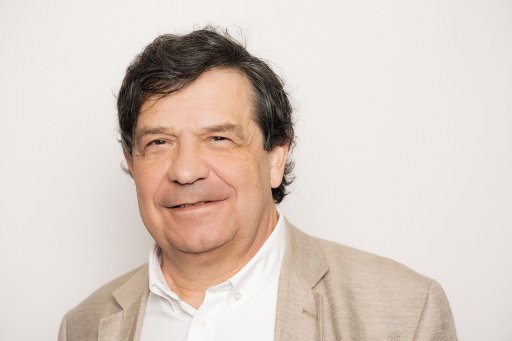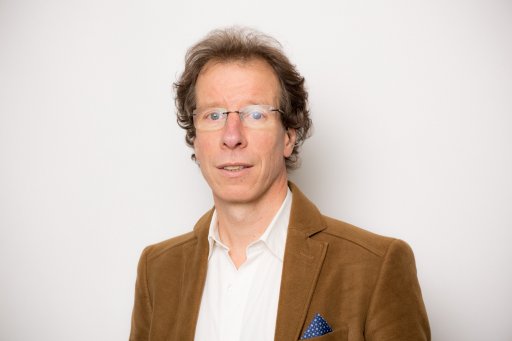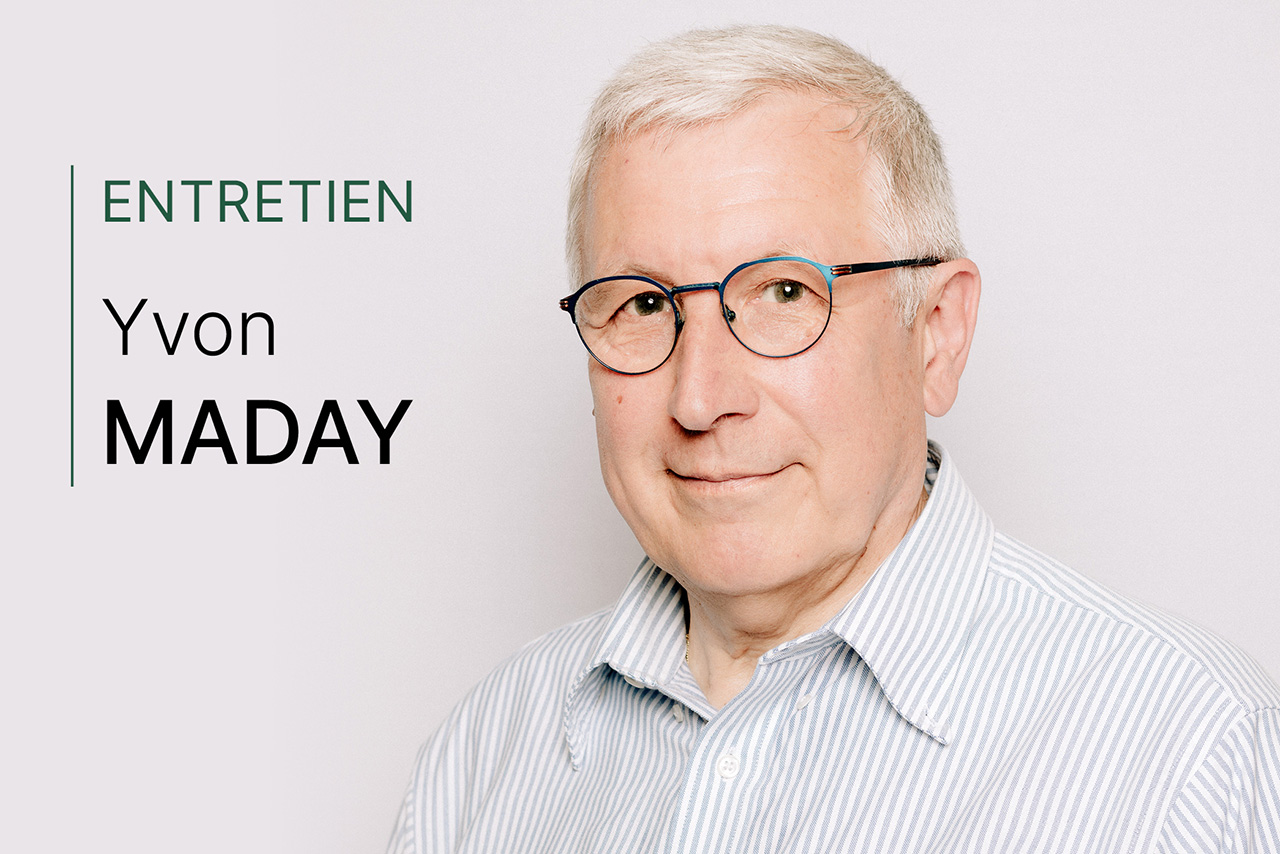
As a mathematician, Yvon Maday has always taken an interdisciplinary approach. He dialogues with colleagues from other disciplines - medicine, chemistry, etc. - to understand their problems and develops mathematical models to provide solutions. Author of numerous contributions (model reduction, algorithms for parallel computing, among others), he puts his tools at the service of industrial progress.
He has been invited to occupy the Computer Sciences and Digital Technologies chair, created in partnership with Inria, for the year 2025-2026.
How did you become interested in mathematics and computer science ?
Yvon Maday : I' ve always been very curious. As a child, I asked lots of questions about technology. In kindergarten, for example, I remember staying at recess to build a clock with twenty-four hours, instead of twelve, in order to explain to my classmates the notion of twelve and twenty-four hours. This desire to investigate, and then to find a pedagogical way of explaining the things I understand, has never left me. It was a passion, so when my teachers encouraged me to study science, I found myself like a fish in water. I came to understand that there were several types of mathematics ; some fundamental, others more applied. The rigorous aspect of fundamental mathematics obviously appealed to me, but right from the start of my thesis, I quickly moved towards its applied counterpart, in particular by taking an interest in biology. During my PhD, I also studied medicine until the third year . I wanted to understand, on the one hand, the discipline itself, and on the other, those who practice it ; their problems and their approaches. This enabled me to collaborate with doctors, knowing their language and logic, since I had seen how they had been introduced to the various notions of their field of study, such as cardiac mechanics, or pulmonary functions, which interested me. In short, I don't think of myself as an applied mathematician, but rather as an interdisciplinary mathematician : I like and aspire to develop useful mathematics to answer questions posed by other disciplines.
So what do you do to build this bridge between mathematics and the various fields of application that call upon it ?
I've always been keen to build bridges between mathematics and other disciplines. For example, if we want French industries to progress, we need to help them drive innovation. Industrial research centers need to have rapid access to mathematical inventions, so that research advances can lead to industrial innovations. Conversely, we need a good understanding of industrial problems in order to develop and apply mathematical theories to answer these questions. In the years 1990, I had already spent a lot of time in the United States, particularly during the summers when research activity slows down a little in France. I wanted to propose a summer research activity in France, and my heart fell for the Centre international de rencontres mathématiques (CIRM), which is free at this time of year, and located in the Calanques, an ideal setting ! Together with the director at the time, we transformed the place by installing air conditioning and computing machines, and in 1996, the Centre d'études mathématiques de recherches avancées en calcul scientifique (CEMRACS) was born . Frédéric Coquel and I organized this event for the first three years, to show what could be done, and little by little, the industrialists got on board. They proposed specific, circumscribed subjects that we could tackle and unblock during the summer, working in this exceptional setting, morning, noon and night. That's the whole point of the center: we have researchers of all generations living together, giving talks and exchanging ideas all day for weeks on end. This helps to break the ice - young and old get to know each other, collaborate and trust each other - and explore subjects in depth. CEMRACS is now well accepted in the French research landscape, and by industrialists who eagerly await the new theme every year. It's also a great experience for young people, as it opens them up to themes that are generally different from those they are exploring during their thesis. And the projects continue beyond the summer, sometimes involving international collaborations. It's an intense, neuron-packed time of year, and so rich that the organizers are more than happy to join in. We look forward to celebrating the thirtieth edition of this event next year.
Among other things, you are a specialist in numerical analysis. What is this ?
In science, technology and industry, we seek to understand phenomena in order to master, anticipate or control them. This understanding leads to simplified models, in which the essential principles are identified and the quantities of interest represented. These models provide a mathematical translation of reality, enabling computer simulations of experiments that are costly or impossible to carry out in the laboratory. The quality of a simulation depends on the relevance of the model and the accuracy of the numerical methods used - the domain of the numerical analysis specialist. For a new phenomenon, we often start with simplified models to develop algorithmic strategies before moving on to more complete versions. The aim is to simplify without betraying the essential, to evaluate the methods on a reduced model, and then to progress towards the final model. This work includes the design of algorithms adapted to computer architectures - from parallel computing to quantum computers - as well as the creation of complexity reduction methods, designed to accelerate heavy simulations while maintaining their accuracy. These approaches are attracting a great deal of interest in the industrial, societal and medical fields. In recent years, I've applied them to computational chemistry.
What is the dialogue like with your colleagues from other disciplines when you have to produce such models ?
First of all, you have to understand the model to be built. After that, you step back for an hour, a week, a month or a year - this is a necessary step to test the first methods and find the ones that will work. Once we've obtained a simplified model, with reliable and robust numerical methods, we come back to our collaborators. In the industrial context, it is sometimes necessary to respond rapidly to partners' needs. In such cases, it is acceptable to propose an approach that is not totally finalized, as long as it remains reasonable and justified. We have to juggle the realities of industry with those of fundamental research - industry wants an answer in six months, research can provide a very good one in ten years. Some people understand this, others do not. However, we do have research projects that can be financed and which, in the long term, enable us to develop infinitely better methods and much better understood models. Mathematical research really comes into its own when it links theory to action, and the key is to know how to put these mathematical objectives in the face of industrial, economic and societal challenges. I tried to find the right people to talk to in each of the disciplines I studied, so that I could get to the bottom of the problem, and not just superficially. I wanted to ask myself the right questions and find the mathematical and simulation tools to try and answer them. A large part of my work involves modeling and discussions with colleagues from other disciplines. For example, during the global Covid pandemic, I organized seminars via videoconference to review the mathematics of epidemiology. This wasn't my specialty at all, as at the time I was working on my ERC in computational chemistry, and my previous work in biology was more concerned with organ modeling. But at the time of the health crisis, epidemiological models seemed either non-existent or unknown. One of our initiatives led us to research and quantify the presence of the virus in wastewater, giving rise to the " Obépine " research initiative, which enabled us, as early as April 2020, to show that measurements of viral particles in wastewater reflected the dynamics of infections observed in the population. It was quite innovative, we had to be convincing, we were supported by various Academies and the Ministry of Research supported us and enabled us from 2021 to monitor more than two hundred stations. Every week, the municipalities connected to the network receive a status report on the pandemic, based on measurements taken in their wastewater. Biologists were used to dealing with data that sometimes made no sense. Mathematical modelling has made it possible to rectify them and propose a clean, meaningful signal.
This year, you've been awarded the Computer Sciences and Digital Technologies Annual Chair at the Collège de France. What does it mean to you and what do you expect from it ?
It's a surprise and an exceptional event in my career. It's unexpected and somewhat intimidating to end my career with a chair at the Collège de France, but I'm very pleased and proud of it. As for the topics I'll be tackling this year, there were several possibilities. I could have talked about computational chemistry, my most recent subject, but that wouldn't have had the scope I hope to have by talking about model reduction. It's a method that lends itself to a very wide variety of disciplines, and it's particularly well established in industry at the moment. What I expect from this Chair is that people will amplify the appropriation of this tool throughout the application environment. That's why, after each lesson, I'll be inviting industrialists to take part in seminars. It's a good way of looking at how numerical methods are used, but also of presenting problems that are still open and stimulating research activity to solve them. In June, there will be a colloquium at which I'll be bringing together academic and less academic experts on the subject to talk about recent results that I haven't been able to cover during my lectures, and to go further than what I've been able to present in the lessons. For me, it's an opportunity to give new impetus to this research, which has certainly been well received by industry, but which deserves to be taken further.
Interview by William Rowe-Pirra, science journalist