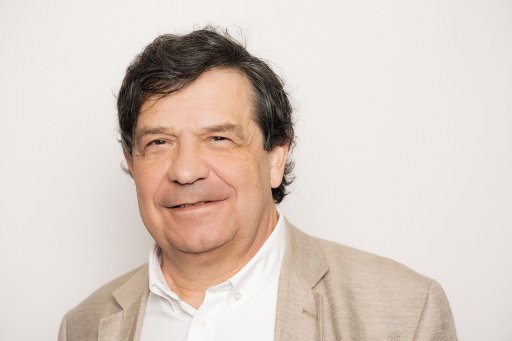
Pr Jean-Jacques Hublin will take part in the symposium La Préhistoire en sons et images. Le connu, l'inconnu et l'imaginaire , to be held at the Musée d'Archéologie nationale - Domaine de Saint-Germain-en-Laye.
Human societies have all developed stories about their origins. Material objects, by virtue of their visible and tangible nature, occupy a particularly important place in these narratives. In the XIXthcentury, the development of scientific archaeology in Western societies profoundly altered our relationship with these objects from the " past ", whose antiquity had suddenly been revealed to be much more profound. Since then, this scientific archaeology applied to prehistory has maintained two tensions, which are particularly difficult to communicate to the rest of society. Firstly, the dissonance between the evidence of prehistoric objects and their dating, extending over time scales that are hard to imagine. Secondly, the production of discourses aimed at truth, while assuming not only their fragmentary, limited and sometimes flawed nature, but also their perpetual questioning by the scientific process. Thus, the narratives produced by prehistoric archaeology struggle to compete with mythical, theological or literary discourses on the origins of humankind. Indeed, the latter are free from the incompleteness of knowledge to which the scientist must, by definition, submit.
In these tales of origins, here or elsewhere, the imaginary fills in the gaps, especially where scientific knowledge dominates and invites societies to accept the discomfort of doubt. And since, when it comes to prehistory, there's little to see, the resources of the imaginary come into their own in the field of audiovisual creations. These media - films, sound creations, video games or web documentaries, whose distribution far surpasses that of scientific writings - constitute a particularly relevant observatory for a better understanding of the current state of relations between scientific knowledge, cultural productions and popular culture. For, then as now, there was and is no watertight barrier between " Science " and the rest of society : there are numerous collaborations between filmmakers and archaeologists or, for example, between game creators (video or otherwise) and scientists. These collaborations take a variety of forms and are not without their tensions, polemics and disagreements, all of which reveal something of the social dynamics at play around knowledge relating to " our " origins.
An annual meeting of the Société préhistorique française, in partnership with the Musée d'archéologie nationale - Domaine de Saint-Germain-en-Laye and the Collège de France.
Open to all with prior registration.