Abstract
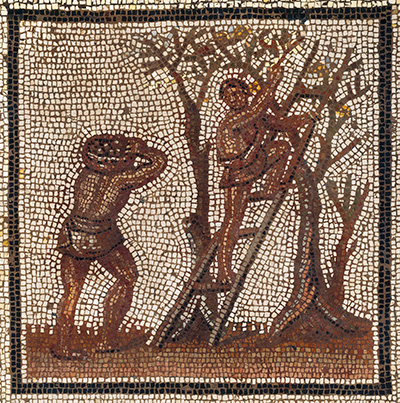
If we're interested in metaphors, particularly those words that jurists often borrow from physical reality to build their conceptual vocabulary, the term " fruit ", used to designate the " income ", seems to offer an almost perfect example. It's as if, by observing nature, jurists had instituted an analogous world, transposed into the legal order.
And yet, attempting to retrace the destiny of the word fructus, from the XII Tables in the century Vthcentury BC to the French Civil Code, shows that the journey of words and ideas is actually more complex and instructive. The Romans tended to link vocabulary closely to the economic dimension of life : a page from Varron's treatise De lingua Latina provides a particularly enlightening illustration. The word fructus cannot be separated from the verb fruor, which means " tirer profit ", " jouir de ". It is therefore a term which, from the outset, already expresses man's point of view and his inclination to think of the world as a source of utility.
The Roman jurists themselves seem to follow this narrow path, where what is natural is already considered from the point of view of the utility it brings to mankind. This also leads them to exclude the idea that a child born of a woman could be considered a source of profit, as this would be a logical short-circuit. Paradoxically, as we move further away from these origins and closer to contemporary thinking, the term " fruit " tends to take on a more naturalistic and distinctly metaphorical meaning : at least that's what this lecture suggests.