Abstract
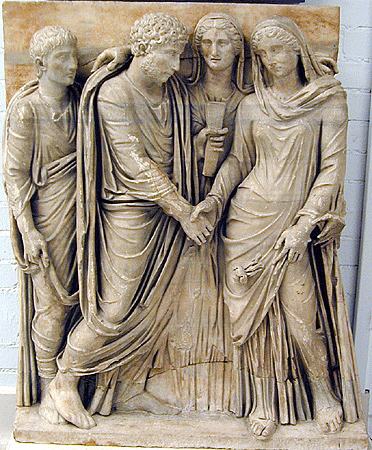
Pignus, or pledge, is a legal term with a strong figurative aura. As a guarantee, the pledge inhabits the wait between the present and what is yet to come. Poets from Ovid to Racine and even today have made it the emblem of proof of love. Roman jurists, meanwhile, associate pignus with pugnus (" fist "). This is only an apparent etymology, based on phonetic affinity - a paronomasia - but rich in consequences (Gaius, Digest 50, 16, 238, 2).
However, pignus does not deploy its figurative potential solely as an isolated lexical unit. An analysis of a text by the jurist Cervidius Scaevola, from the late IIndcentury, makes this clear (Digest 44, 3, 14, 5). This text depicts a public debate, a real staging of reasoning, where the jurist elaborates and resolves a problem in front of an audience.
The case concerns the sale of a thing pledged following the debtor's non-performance, and the role played by the will. Most of the technical terms used - distrahere, contrahere, convenire, accedere, concedere - are of metaphorical origin. Taken in isolation, they may seem scattered ; but as the text unfolds, they reveal themselves to be organized along lines of force that constitute its very framework and guide the reasoning towards the solution of the problem.