Salikoko S. Mufwene
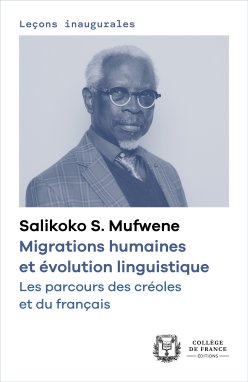
Human Migration and Linguistic Evolution: The Trajectories of Creole Languages and French
Far from being static, languages are constantly changing as a result of contact between peoples. Human migration is therefore a significant factor in linguistic evolution. The migration of Europeans to the colonies, beginning in the 15th century, gave rise to new varieties and, in particular, to Creole languages. The history of these languages, which emerged during the modern era, deserves close attention, as their processes of emergence and differentiation mirror those of the Romance languages.
This opening lecture sets out to analyze the evolutionary dynamics of Creole languages and French, highlighting the social, political, and economic issues that underlie them. By challenging the prejudices of 19th-century philologists and even the misconceptions that persist today, it demonstrates that deconstructing colonial representations of Creole formation is essential to advancing our understanding of the development of Romance languages.
Mufwene S.S., Human Migration and Linguistic Evolution: The Trajectories of Creole Languages and French , Paris, Collège de France, “Opening Lectures ” series, no. 331, 2025.