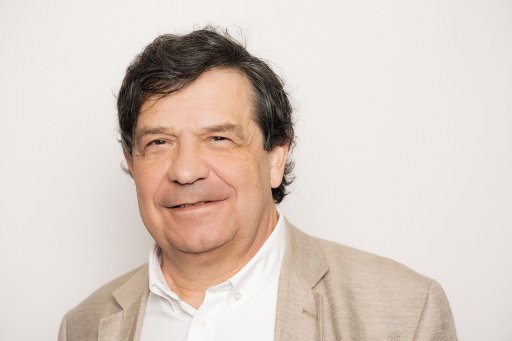
Launched in 2017, the Excello program aims to develop, test, and disseminate innovative educational tools in schools that enable consistent reading and math instruction tailored to students’ needs. These tools are based on the work of Stanislas Dehaene, professor of Experimental Cognitive Psychology, focusing on understanding the brain mechanisms underlying the most fundamental functions of the human brain (awareness, reasoning, language, reading, and math) and the mechanisms of learning in children.
The Excello program is notably working on the creation of a reading instruction method called Kalulu. Based on learning to decode grapheme-phoneme correspondences, this method—which takes the form of workbooks, games, and an app for phones and tablets—also aims to develop children’s vocabulary. Tested in 100 classrooms in the Versailles school district since 2022, Kalulu will be made available nationwide to all teachers who wish to use it starting with the 2024 school year. Adaptations of the method for international use are currently being developed. Other research projects, particularly those related to the learning, assimilation, and understanding of mathematics, are also underway.
This project is part of the Collège de France’s “Agir pour l’éducation” initiative.
The “Agir pour l’éducation” initiative is supported by the Collège de France Foundation and its patrons.