GREAT CIVILIZATIONS
2009–2010 Program
Every neighborhood, every village, every community in human society is a civilization: a place of exchange, memory, learning, and shaping the future.
To speak of the “great civilizations” of history is to evoke times and places that, under the same forms of governance, brought together diverse human groups, languages, and religions—groups that have left us monuments and texts, all of which sought to represent humanity and a universal vision. China, India, classical Egypt, Alexander’s Empire, the Roman Mediterranean, the Arab world, and the civilizations of Latin America are examples of this human endeavor to immortalize their conception of society, as well as public and sacred spaces.
For each of these civilizations, we could repeat the eulogy *In Honor of Rome * that Aelius Aristides composed in the middle of the second century CE: “Here is what, in your political system, deserves particular attention and admiration: it is the grandeur of your vision, which has absolutely no equal. […] Neither sea nor land distance excludes anyone from citizenship, and between Asia and Europe there is no difference in this regard. Everything is made available to all; no one is a stranger if they deserve a position of office and trust […]. All converge here as toward a common agora, so that each may obtain what they deserve. What a city is to its own borders and territories, this city is to the entire inhabited world, as if it had been proclaimed its common urban center” (see L. Pernot, *Éloges grecs de Rome*, Paris, Les Belles Lettres, 1997, pp. 88–90).
This eulogy evokes an ideal power where the center is everywhere and the periphery nowhere: thinking of the civilizations that enrich our students in Aubervilliers, of the traditions they have inherited, Aelius Aristides might say the same thing: a universe whose center is everywhere and the suburbs nowhere. We must acknowledge this and, this year, gather the historical accounts capable of bringing this universal center to life at the heart of our neighborhood, of our experience.
Realities and Challenges of the Contemporary Arab World
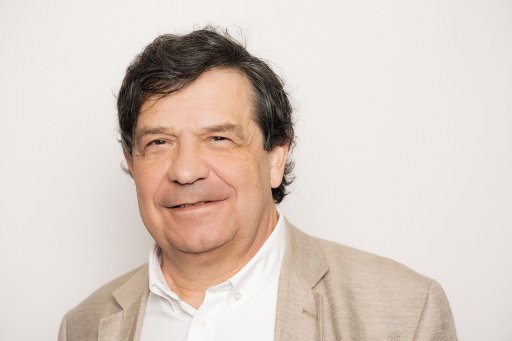
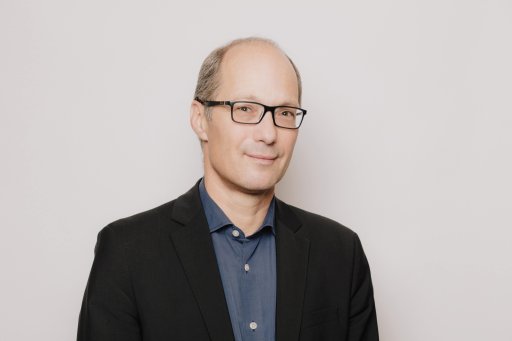
Henry Laurens
, Professor at the Collège de France,
Chair of Contemporary History of the Arab
World Monday, May 10, 2010
, 7:00 p.m., Théâtre de la Commune d’Aubervilliers
, 2 rue Edouard Poisson (Quatre-Chemins Metro Station, Buses 150, 170)
Native American Civilizations
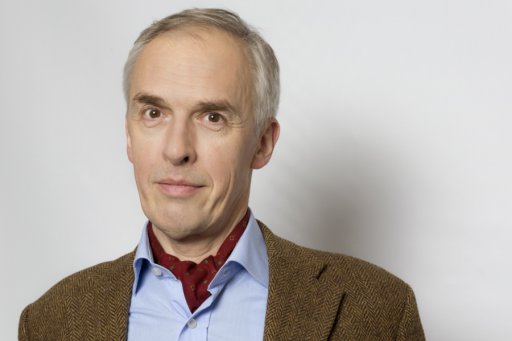
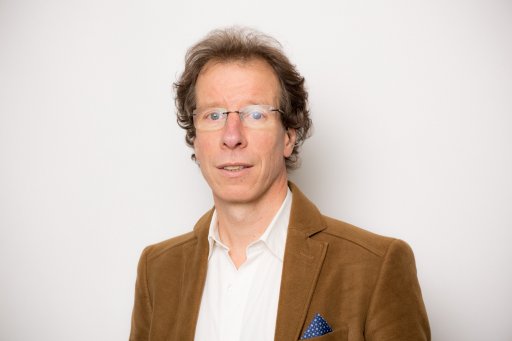
Philippe Descola
, Professor at the Collège de France,
Chair of Anthropology of Nature
Monday, June 7, 2010
, 7:00 p.m., Lycée Le Corbusier in Aubervilliers
, 44 Rue Léopold Réchossière (Metro Quatre-Chemins, Bus 249)
Free admission; reservations required at 06.21.20.59.55
, Monday through Friday from 9:00 a.m. to 5:00 p.m.
Contacts
- Claudine Joseph—Aubervilliers City Hall: egc@mairie-aubervilliers.fr
- Marie-Hélène Lévi—Collège de France: marie-helene.levi@college-de-france.fr
In partnership with Lycée Le Corbusier, the Aubervilliers–La Courneuve Regional Conservatory (CRR 93), and the Théâtre de la Commune.
With support from the EDF DiversiTerre Foundation and the Hugot Foundation of Collège de France, and in collaboration with France Culture.