News

Read the IPCC reports to understand the world that lies ahead

Lectures at the Collège de France as part of the “Avenir Commun Durable” initiative.
March 29, 2023, through June 1st, 2023.

The Collège de France is organizing a series of educational lectures on the IPCC’s 2021–2022 report. In addition to highlighting the scientific foundations of these documents, the aim is to understand the vision of society advocated by the IPCC, as well as the societal and legal values that are—often implicitly—taken as models.

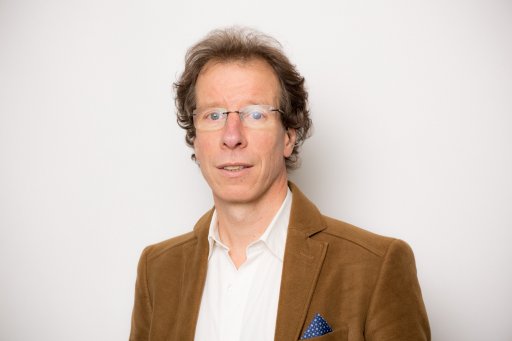
This lecture series, organized by the Collège de France under the supervision of legal scholar and legal historian Prof. Dario Mantovani , will consist of five sessions. Each session will take place from 5:00 p.m. to 7:00 p.m.

  1. The IPCC, the Voice of Climate – March 29, 2023
  2. Principles, Methods, Key Findings, and Some Suggestions for Improving the Assessment Reports – April 17, 2023
  3. Consensus-Building – The Experience of an Author of the Last Two Assessment Reports – May 12, 2023
  4. The Implicit Values and Models in the Reports (1) – May 15, 2023
  5. Implicit Values and Models in the Reports (2) – June 1st, 2023

Science, Utopia, and Reality

Since 1988, the Intergovernmental Panel on Climate Change (IPCC) has regularly published voluminous reports ranging from 2,000 to 3,000 pages that present the current state of knowledge on climate change, its causes, its impacts, and strategies for mitigating its effects and adapting to the world to come. These analyses are the result of the collective expertise of several thousand scientists, which is in itself a remarkable and likely unprecedented collaborative effort. Given the density of the reports, we are mostly familiar with the simplified version, which takes the form of an “abstract for policymakers.” Even though it does not contain prescriptive guidelines, this “abstract” influences political decisions—and thus all of our lives. Dates, deadlines, scenarios: our future takes shape within it. In an era we thought was devoted to “presentism”—that is, to contemplating the present while forgetting the past and being unconcerned about the future—a new form of planning is taking hold, on a global scale unlike anything we’ve ever seen before. This may remind us of certain utopias of the past, such as Plato’s Republic . And as in Plato, the question arises regarding the relationship between science and the political sphere.

So what do comprehensive reports actually say, particularly when governments do not directly intervene in their drafting? Amid the abundance of data and information made available to us, what should we retain and what should we understand? What scientific and institutional methodology underlies the collective working process?

The Avenir Commun Durable initiative is supported by the Collège de France Foundation , its major sponsors Covéa and TotalEnergies , and its sponsors FORVIA and Saint-Gobain .