Jacques Livage (1938–2025)
Dear colleagues,
I would like to take this opportunity at our meeting to pay tribute to Jacques Livage.
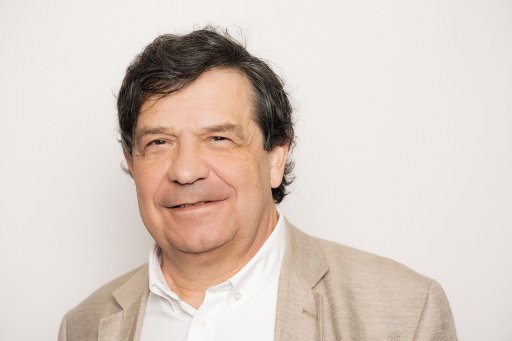
Jacques was born on October 26, 1938, in Neuilly-sur-Seine and passed away on November 9 of last year in Orsay. He was a world-renowned solid-state chemist who held the Chair in “Condensed Matter Chemistry” from 2001 to 2009. Some of you may still remember what a calm, kind, and cultured man he was.
Jacques did not have an easy childhood. Shortly after his birth, his father was sent to Tunisia to command a regiment, and the entire family accompanied him. Thus, Tunisia became the country of Jacques’s earliest memories. At the start of World War II, in 1940, his father was recalled to France, where he was arrested by the Germans for acts of resistance and held captive. It was not until 1945, when Jacques was seven years old, that he was reunited with his father, of whom he had very few memories. He had been too young at the time to truly remember his father’s departure.
A brilliant student, Jacques had an impeccable academic record. He first attended Lycée Pasteur before enrolling at the École nationale supérieure de chimie, from which he graduated at age 20—already married, a father, and also an assistant professor at that same school. At the same time, he began working on his dissertation at Orsay under the supervision of Professor Mazieres. He focused on the thermal and absorption properties of zeolites using differential thermal analysis in a poorly equipped laboratory. In 1966, he defended his doctoral dissertation under difficult circumstances, as one of his advisors implied that he had no future in research.
Completely demotivated, with no career prospects, and with May 1968 approaching, Jacques lost interest in research and became involved in environmental and peace movements, joining a community where he rubbed shoulders with writers and journalists. This period opened his eyes to other ways of seeing the world and taught him the rare ability to engage in dialogue with everyone. It also laid the foundation for the talent for communication that we have always known him to possess. In the meantime, feeling a bit nostalgic for science, he set off on a true adventure with his family to “do a postdoc at Oxford,” without even knowing if he would receive a salary. There, he developed a method for analyzing oxides using the electron paramagnetic resonance technique.
However, this temporary stint did little to thrill him, so upon returning to France, he decided to leave the country for Kathmandu. Fortunately for us, that departure never took place, because a leading figure in inorganic chemistry at the time, Pierre Collongues, had spotted him and made it clear that he would not be leaving. Collongues promised him a professorship at the Sorbonne in 1974, but the office space was in such poor condition that he first had to clear it of squatters. Jacques never stopped thanking his mentor throughout his career, although he was proud to say that he had been appointed more for his teaching skills than for his research work.
After securing a few spaces, he recruited his first Ph.D. student—whom some of you may know—Clément Sanchez, who would eventually take over Jacques’s chair after his departure. Their research then focused on hyperalloys of vanadium oxides, which they produced in either amorphous or crystalline forms and studied using EPR. The slow pace of moving into the new facilities provided time for reflection, and in 1977 he wrote a visionary article on his conception of a new branch of chemistry, “gentle chemistry,” which would truly launch his career. Thus, as a young professor with a hippie-chic look, Jacques succeeded in carving out a place for himself at what was then the new Paris 6 University by establishing a laboratory that would become the Laboratory of Condensed Matter Chemistry.
Jacques was an internationally renowned chemist, a researcher whose work profoundly transformed our understanding of chemistry. But he was also a man of culture, driven by an insatiable curiosity that extended far beyond the realm of science. Throughout his career, he played a key role in shaping French research—whether at the CNRS, universities, or the ministry—by chairing numerous policy committees. He knew how to balance the demands of the collective with respect for individuality, and he was one of the leading advocates for research focused on the needs of society. He often told me: “The role of the chemist is to transform matter to adapt it to our needs and turn it into a useful resource for our society.”
In all his roles, his loyalty, integrity, vision, and kindness were always recognized. He defended his ideas with conviction, without ever compromising his ethical and moral values.
His colleagues referred to him as a “solid-state chemist”—a label that amused him, as he always reminded them that he had never solved a crystallographic structure. Yet it was indeed Jacques who left a profound mark on French and international research, always staying ahead of his time.
In fact, as early as 1975, he anticipated future energy challenges by developing an alternative to high-temperature chemistry—an outdated, energy-intensive practice he humorously summed up as “Bake, Shake, and Pray.” He thus proposed a low-temperature, energy-efficient chemistry, now known worldwide as “soft chemistry,” of which the sol-gel method is an essential component. This new approach, which he pioneered , opened the door to innovative materials—such as glasses, ceramics, and composites—prepared from solutions with reduced energy input, to the great benefit of industry.
Ten years later, he would pave the way for another adventure, just as innovative but with a more biological focus. He became a pioneer in bio-inspired chemistry, at the intersection of materials chemistry and biology, exploring natural mineralization processes. He succeeded in creating mineral matrices capable of immobilizing biological species while preserving their activity. In doing so, he ushered in a new era of research with numerous applications: biosensors, bioreactors, and bifunctional materials.
Jacques was a visionary, a trailblazer, a pioneer… He was the one who foresaw things before others did, the one who championed a new science, distinct from what was being done elsewhere. He thus gained international recognition at a time when it was difficult to stand out and break free from well-established academic circles. He instilled in all his collaborators—both senior and junior—a passion for academic freedom.
Despite the scope of his work, he always remained humble and modest. We owe him our gratitude for the profound and enduring scientific legacy he has left us. For my part, his work serves as a reference that I continue to draw upon daily in my research. I must also thank him for all our passionate scientific discussions, for his warm welcome upon my return to France, and for facilitating my reintegration into the French academic community with such elegance and tact. He always remained calm despite my occasional lack of diplomacy.
Jacques also had a talent for sharing his passion for research and his desire to always do more with those around him. He knew how to find the right words and be persuasive. He managed to convince me to take an annual chair at the Collège de France, a prospect that initially left me rather skeptical. In fact, he was taken aback that my first reaction was a simple, “Okay. I’ll think about it.”
Beyond being an exceptional researcher, he was an excellent teacher. I often met students who had chosen to pursue a master’s degree or a thesis in solid-state chemistry simply because they’d had Jacques as their instructor. He’d shared his enthusiasm with them and made “everything clear” to them—so clear and engaging were his lectures. He loved to share his knowledge, explain concepts, and inspire curiosity: his numerous visits to middle and high schools across the region are a testament to this. Who knows how many scientific vocations he helped spark?
Even in his 80s, he remained incredibly active professionally. But when the pandemic hit, everything came to a standstill. He was no longer allowed to go to the lab or travel. All conferences had to be held remotely. This affected him deeply. He continued to write to his chemist friends around the world, from the United States to Gaza. But the magic was gone, as I witnessed during our meetings in the Luxembourg Gardens.
Beyond being a man of science and a mentor, he was a person of integrity, generosity, and rare humanity. To many, he was a friend who was always there, endearing, attentive, curious, and tolerant. He loved life.
We will deeply miss his kindness, his humor, and his infectious passion. His calm voice will continue to resonate within us. We miss his warm gaze. We miss his vision and his inventiveness. His advice, however, will remain etched in our memories. With his passing, our scientific community has lost a creator, a master, a guide—a spiritual father whose work will continue to inspire us for a long time to come. He leaves behind an immense void.
Jean-Marie Tarascon, June 28, 2026