Résumé
Entanglement stands as a foundational resource in quantum technologies. Lacking a classical equivalent, it theoretically guarantees superior performance over classical systems, provided it plays a non-trivial role in the underlying process. However, in the field of optical imaging, demonstrating the indispensable nature of entanglement remains a significant challenge. Most current applications rely on optical correlations derived from entangled states - features that can often be emulated by classical sources - rendering entanglement a sufficient, rather than strictly necessary, component.
In this presentation, we explore imaging scenarios where entanglement becomes a critical and non-trivial asset. Specifically, I will discuss recent experimental studies utilizing entangled photon states to image through scattering media, highlighting regimes where quantum entanglement provides a definitive advantage over classical alternatives. And, as a nod to the foundations of quantum mechanics, the presentation will be illustrated with the mandatory pictures of cats!
Hugo Defienne
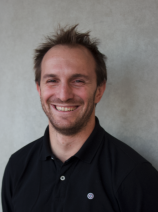
Hugo Defienne's research focuses on quantum optics, imaging, and complex media. He is a researcher at the CNRS at Sorbonne University in Paris, where he heads the Quantum Imaging Paris group. He completed his doctoral thesis at the Kastler-Brossel Laboratory in Paris, where he studied quantum optics in disordered media. He graduated in 2016 and then turned his attention to quantum imaging in his postdoctoral research at Princeton University and then at the University of Glasgow. He became a lecturer in Glasgow before returning to Paris in 2022 to set up his own group at the CNRS thanks to a grant awarded to early-career scientists by the European Research Council.
