Abstract
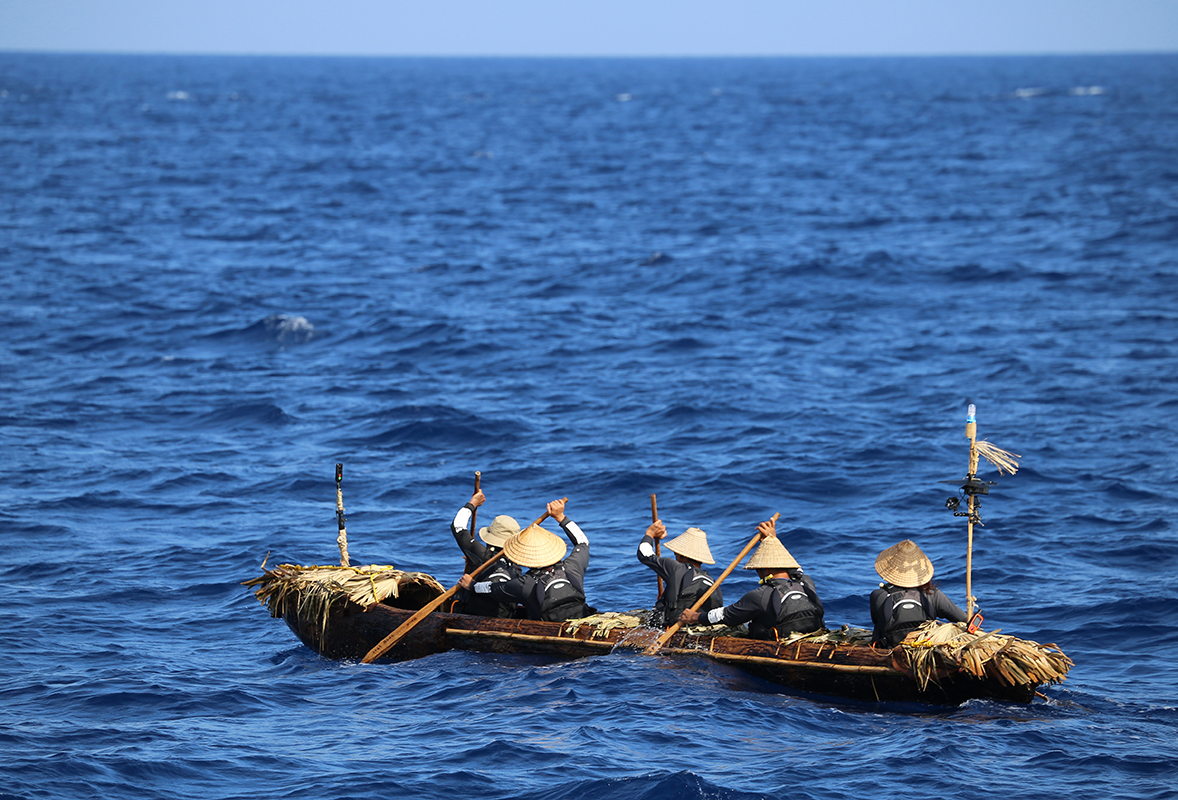
The rise of water transport technology enabled modern humans to expand their habitable territory to insular environments beginning in the Late Pleistocene or Late Paleolithic. However, aside from extensive discussion regarding Wallacea, the developmental process and regional variation of Paleolithic seafaring remain unclear. To address this issue, I will present a synthetic model for Paleolithic seafaring in another region of the western Pacific: the Ryukyu Islands (Ryukyus). Here, some islands were more than 100 km apart and invisible beyond the horizon, and one of the world’s strongest ocean currents, the Kuroshio, flowed through the sea lanes. Despite these challenging conditions, Paleolithic sites appeared throughout much of the 1,200 km-long chain of islands approximately 35,000–30,000 years ago. By integrating currently available information from archaeology, skeletal morphology, genetics, paleogeography, oceanography, our own experimental voyage project, and supercomputer-based simulations, I discuss probable migration routes, possible watercraft, the preparation and strategy required for successful maritime migrations, and other issues relevant to a deeper understanding of the origins and development of human maritime activities.