
Access conditions
Due to large numbers, we recommend that all members of the public arrive at least 45 minutes before the start of the event. Seats cannot be reserved, and are allocated on a first-come, first-served basis only. If capacity is reached, the public may be directed to a broadcast room.
Presentation
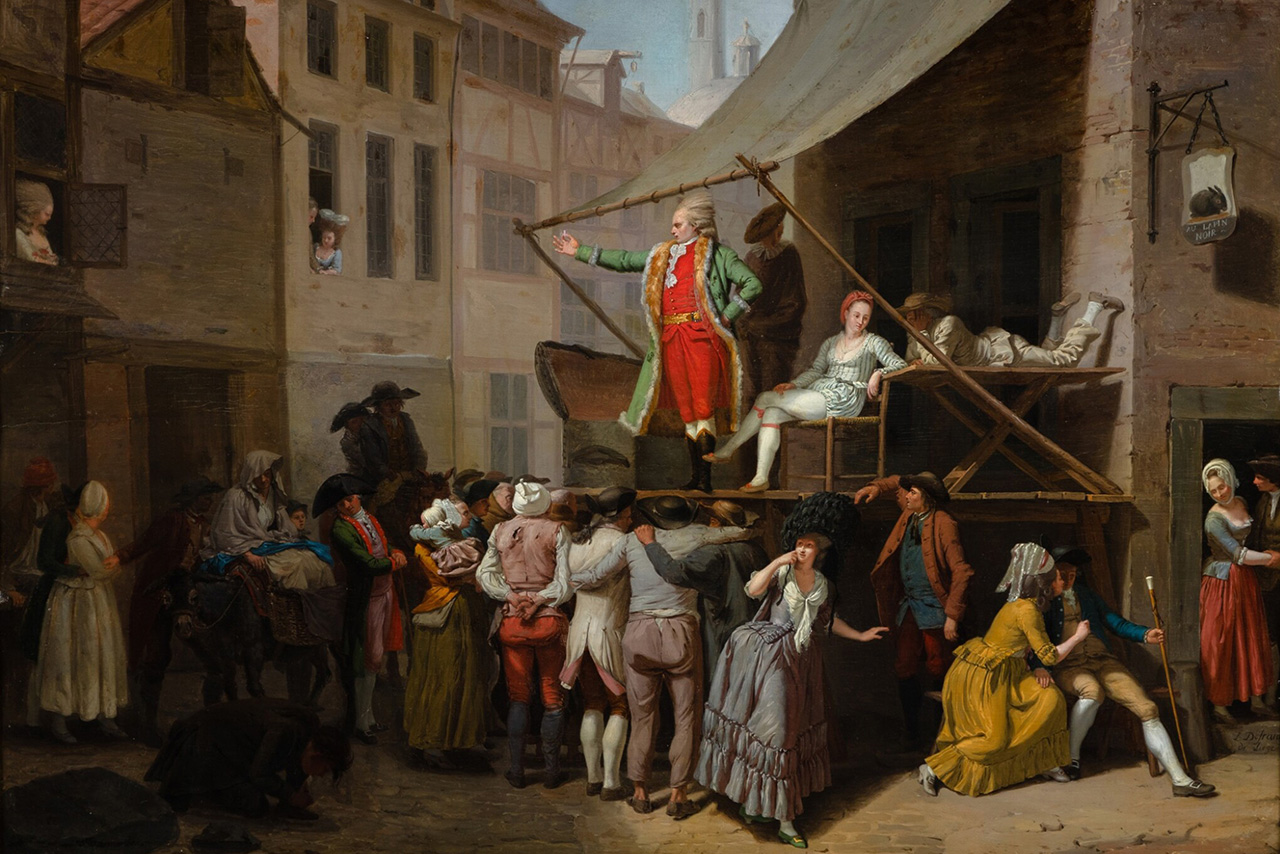
" Any society that is not enlightened by philosophers is deceived by charlatans ", wrote Condorcet in 1793. The charlatan is an important figure in the imagination of the Enlightenment. How is it that this apparently archaic figure, often identified with the fake doctor selling his elixirs in public squares, could have seemed so threatening ? In truth, charlatanism is omnipresent and protean : not only " empirical " doctors, tolerated on the bangs of official medicine, but also high-flying adventurers, imposters living off the credulity of the elite, demagogues capable of seducing the people with their words, unscrupulous scientists and overly eloquent writers.
This year's lecture will explore this fear of charlatanism, which reveals the ambivalence of the public arena and the epistemological anxieties of Enlightenment philosophers faced with a new paradox : how can the public recognize those who seek to enlighten rather than deceive ? Wouldn't they prefer entertaining shows to painful lessons ? And who can judge ? The charlatan is always the other : the accusation is reversible, pointing to the limits of scholarly authority, the often blurred boundaries between conviction and seduction, between the power of reason and the glamour of belief.
The disturbing shadow of charlatans continues to loom over modern times, as science emerges from its laboratories to confront the media and politics.