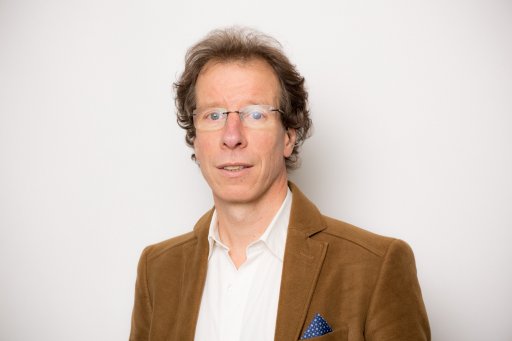
François-Xavier Fauvelle, elected professor at the Collège de France in 2019 to the Chair of History and Archaeology of African Worlds , offers us a critical perspective on how societies that came before us responded to climate change. While humanity has already had to adapt—sometimes successfully—to radical changes in its environment, it now faces an unprecedented shift. Nevertheless, it remains useful to draw lessons from our past experiences.
From a historical perspective, is this the first time human societies have had to adapt to climate change? How does this differ from the situation we face today?
Since the beginning of the Holocene (see below), environmental and archaeological data show that many societies have had to cope with transformations in their environment. Depending on the region of the world, these changes may include climate warming, melting ice, rising sea levels and the resulting retreat of coastlines, increased precipitation, or even animal extinctions. Not all of these phenomena are, therefore, unprecedented. However, the warming we are currently experiencing does exhibit characteristics that are unique in the history of humankind. I see three such characteristics. First, its unprecedented scale, which will continue to increase over the coming decades before stabilizing if we manage to limit our environmental footprint. Second, its indisputably anthropogenic nature: The acceleration of global warming is due to the massive emission of greenhouse gases into the atmosphere since the beginning of the Industrial Revolution. Finally, our global awareness of this warming and its human causes: This is the first time in history that our societies can simultaneously observe the phenomenon (thanks to scientific tools), determine its causes, and muster the will and the means to limit it and combat its effects.