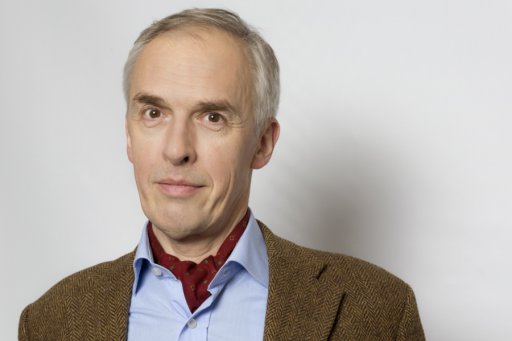
On Saturday January 17, 2026 at 11am, Antoine Lilti, Professor at the Collège de France's History of the Enlightenment, 18th to 21st century, will give a lecture entitled "Les Lumières au miroir de Tahiti : Des Polynésiens en Europe au XVIIIe siècle".
The lecture will take place at the Marguerite Duras media library, 115 rue de Bagnolet, Paris 20th.

Exploration of the Pacific, notably by Louis-Antoine de Bougainville and James Cook, fascinated Europeans in the 18th century, giving rise to the myth of the Tahitian paradise. It is often overlooked that a few Polynesians sailed with the Europeans. Two of them came to Europe, to Paris and London. Their story tells a little-known aspect of the first contacts between travelers and islanders in the Pacific. It raises questions about the limits of Enlightenment universalism, confronted with the otherness of these travelers from the ends of the earth.
Antoine Lilti was born in 1972. A former student at the École normale supérieure and holder of the agrégation d'histoire, in 2003 he defended a thesis at Panthéon-Sorbonne University, under the direction of Daniel Roche, entitled "Le Monde des salons. Sociabilité et mondanité à Paris au XVIIIthsiècle", published in 2005. He teaches as a lecturer at ENS Ulm, then as Director of Studies at EHESS from 2011. In 2022, Antoine Lilti will become Chair of the History of the Enlightenment, XVIIIth - XXIst siècle at the Collège de France. At the same time, he is active in publishing. From 2006 to 2011, he edited the journal Annales. Histoire, sciences sociales. From 2013 to 2023, he was director of the "L'épreuve de l'histoire" collection, published by Fayard. He currently directs "L'histoire au présent", published by Flammarion.
His work focuses on the social, cultural and intellectual history of the Enlightenment. He first studied the sociability practices of aristocratic elites and writers (Le Monde des salons, Fayard, 2005), then set out to show the emergence, in the XVIIIthcentury, of a new form of recognition, celebrity, linked to changes in public space and individual identities (Figures publiques, Fayard, 2014). Since then, his work has extended to the multiple legacies of the Enlightenment(L'Héritage des Lumières. Ambivalences de la modernité, EHESS/Gallimard/Seuil, 2019 and Actualité des Lumières: une histoire plurielle, Collège de France, 2023). In recent years, his research has also focused on the first contacts between Europeans and Polynesians in the Pacific, and on Tahitian travelers to Europe in the XVIIIthcentury (L'Illusion d'un monde commun. Tahiti et la découverte de l'Europe, Flammarion, 2025).
These lectures, aimed at the general public, reflect the variety of disciplines present at the Collège de France : history, economics, sociology, literature, but also biology, chemistry, mathematics and evolutionary sciences are all involved.
With this new event, the libraries of the City of Paris are fulfilling their mission to disseminate knowledge and combat misinformation by offering the public opportunities to decode and explore certain areas of knowledge in greater depth. The aim is also to open a window onto the world of research and how it works, and to bring Parisians closer to an exceptional institution, the Collège de France, which has been at the heart of the city's intellectual and scientific life for five centuries.