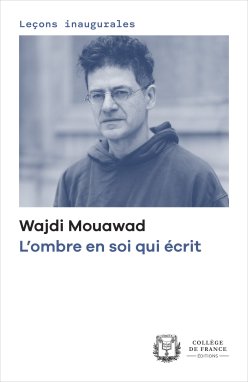
Wajdi Mouawad
The shadow that writes
" Ulysses, hero that he is, asks to be tied to the ship's mast to resist the sirens' song. Likewise, the poet fiercely resists the attraction of knowledge. Not that he is against knowledge, on the contrary, but he obstinately, stubbornly seeks to keep inaccessible a fragment that has always eluded knowledge. If every object has its own shadow, knowledge also has its own shadow, which, by definition, is impossible to illuminate. To venture into this shadow, you need a stalker. Some things can't be taught. Not only can they not be taught, but the act of trying to teach them immediately cancels them out. They owe their presence to the obliteration of reason. Perhaps to a madness, a trance, a loss, a drift. Perhaps also, no doubt, to blood, which has a lot to do with the ardor of a shadow that finds its origins in the depths of our violence and barbarism. "
This book is based on the opening lecture delivered at the Collège de France on Thursday, February 6 2025 by Wajdi Mouawad, visiting professor in 2024-2025 at the The Invention of Europe through languages and cultures Annual Chair, created in partnership with the French Ministry of Culture.
Mouwad W., L'ombre en soi qui écrit, Paris, Collège de France, coll. " Leçons inaugurales ",no 335 , 2025.