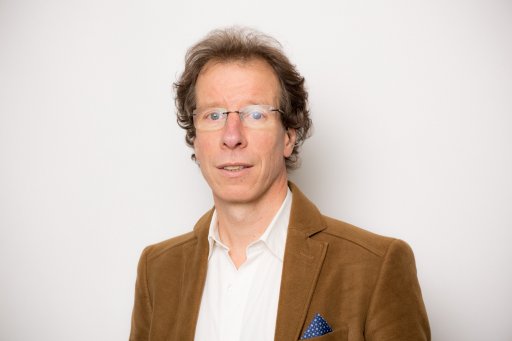
Samantha Besson, a professor at the Collège de France and holder of the Chair in International Law of Institutions , conducts research at the intersection of international law, European law, and the philosophy of law. She explores for us the challenges and limitations of “international environmental law” and the growing reliance on “human rights” to address its shortcomings.
Is our society sufficiently equipped to enable the emergence of an “international environmental law”? Why? Is cooperation among states possible in this area?
Samantha Besson: We should really speak of “societies” in the plural, since what is at stake here is for the international community to develop a body of law common to all peoples and civilizations of the world. All the individuals and peoples in question are represented in this process by their states, of course, but also by other public, non-state, or private institutions, such as international or nongovernmental organizations. For international environmental law to develop, we must first be able to identify common interests or assets (e.g., the fight against global warming or the protection of biodiversity) and, second, our various representatives must be able to agree on rules and principles capable of ensuring the protection of these common environmental interests or assets.
At present, unfortunately, this body of law—like other systems of international law, of course, but perhaps even more so—is in crisis. It is primarily the state of its sources that raises concerns (a proliferation of treaties that have been accumulating since the 1970s, addressing various environmental interests, and treaties that do not always fit coherently into the pre-existing framework of customary principles of environmental protection from the early 20th century). Furthermore, this body of law faces at least four challenges: the lack, to date, of a single definition of what constitutes the “environment” in international law; legal obligations that, when they exist, are primarily procedural and, when substantive, are above all “obligations of result”; the absence of rights corresponding to these obligations that could be directly invoked by individuals and peoples before their national or international authorities; and, finally, the lack of international courts specializing in this field and, more generally, of an institutional and political framework capable of ensuring the equal participation of individuals and peoples in the development of the law applicable to their environment.
Is invoking the “human right to a healthy environment” to circumvent the difficulties associated with the absence of “environmental rights” a sustainable solution?
The various shortcomings of contemporary international environmental law explain why, in recent years, international human rights law has been attracting growing interest not only from environmental lawyers but also from civil society as a whole. One need only think of the enthusiasm for the human right to a healthy environment and its significant development in case law (through a more “green” reinterpretation of the right to life and/or the right to private and family life, specifically in Europe). Admittedly, this right already exists in the domestic law of most countries worldwide (155 out of 197, according to estimates by the United Nations Special Rapporteur on Human Rights and the Environment). What we are also observing—and this is encouraging—is a growing, global trend of litigation based on violations of the right to a healthy environment within judicial and quasi-judicial mechanisms, both regional (except in the Middle East and Asia) and universal, in the field of human rights, and, more recently, even before national courts.
The strength of international human rights law in the environmental context stems from its various characteristics, notably: the high rate of ratification and thus the near-universal dissemination of human rights treaties; the political—and notably democratic—dimension of this legal framework, which guarantees everyone’s participation in determining their rights; and the existence of international (regional) courts and international (universal) quasi-judicial bodies specializing in human rights, to which individuals or groups who are victims of human rights violations may bring cases directly, and whose jurisdiction to adjudicate such violations is binding.
This reliance on human rights for environmental purposes is not, however, a panacea. It suffers, first and foremost, from the limitations inherent in the very nature of this system of international law, particularly regarding the protection of the interests of future generations. In fact, there is now even cause for concern that the intensive use of international human rights law for environmental protection purposes may weaken it in the long term. Practice in this area is indeed sometimes carried out at the expense of a failure to recognize—or even a sacrifice of—the specific characteristics of human rights. One example is the forceful and ill-considered extension of the human right to a healthy environment to certain areas—such as extraterritoriality—in disregard of the political limits inherent in the scope of human rights. There is also cause for concern regarding a more profound challenge to the structural and normative specificity of these rights. Admittedly, we can welcome the move beyond anthropocentrism in international law and a greater consideration of people’s environment for the effective protection of their rights. However, we must not allow this to lead to an even greater rush—through excessive legal anthropomorphism and the outright assimilation of the rights of other subjects (such as, for example, animals or rivers) to those of human beings, the process of diluting what is unique to international human rights law—namely, its contribution since the 20th century to the definition and protection of humanity through the legal guarantee of the fundamental equal status of every person.