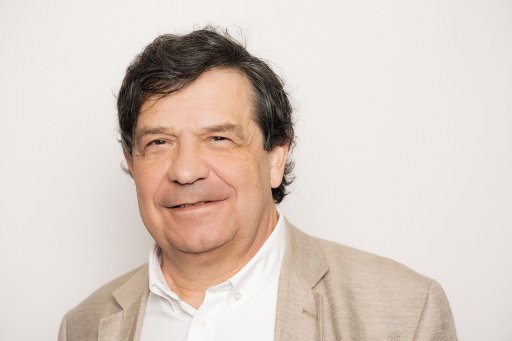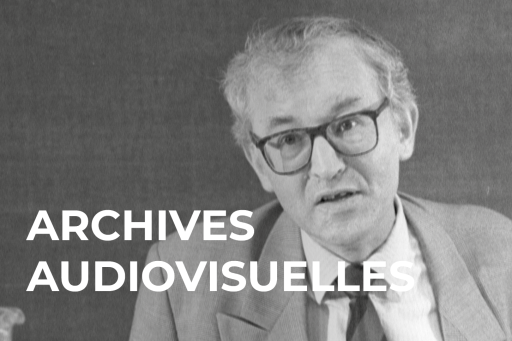
Stanislas Dehaene, holder of the Chair in Experimental Cognitive Psychology at the Collège de France, has chaired the “Agir pour l’éducation” project since its inception in 2022. This initiative harnesses scientific research to support schools and promote equal opportunity. Joined by several professors over the years, the project now comprises five diverse programs, ranging from cognitive sciences to the humanities.
How did the “Agir pour l’éducation” project come about?
Stanislas Dehaene: It was when I became chair of the Scientific Council of the Ministry of National Education, upon its creation in 2018, that I truly became aware of the decline in French students’ academic performance. For example, the Ministry of National Education’s Statistics Division (DEPP) observed a dramatic decline in students’ math scores over thirty years, with a drop of 0.5 standard deviations every ten years. As for the TIMSS study (Trends in International Mathematics and Science Study), which measures the performance of fourth-grade and eighth-grade students in math and science, it ranks France last in Europe! There are also warning signs in the areas of language (with the exception of English, which has improved) and socio-emotional skills, particularly self-confidence. As a result, social inequalities are growing: when schools fail to provide sufficiently effective education, affluent families manage to find ways to compensate, while poor families, unfortunately, bear the brunt of the consequences.
Given the urgency of the situation, I was also struck by the lack of action… We cannot give up; we must act! We have the capacity to do so, as numerous scientific studies suggest that learning can be dramatically improved through practical measures. However, we are not putting these ideas into practice sufficiently. I then realized that several of us at the Collège de France were conducting research that could have a positive impact on education in France. So in 2022, I presented a collective action project to the Collège de France assembly, which was received with tremendous enthusiasm. Several researchers were eager to get involved, and the Collège de France Foundation immediately believed in the project. It has supported us greatly, enabling us to raise funds—an effort it continues to this day. Without it, we wouldn’t be where we are today.
What is the common approach across the initiative’s various programs?
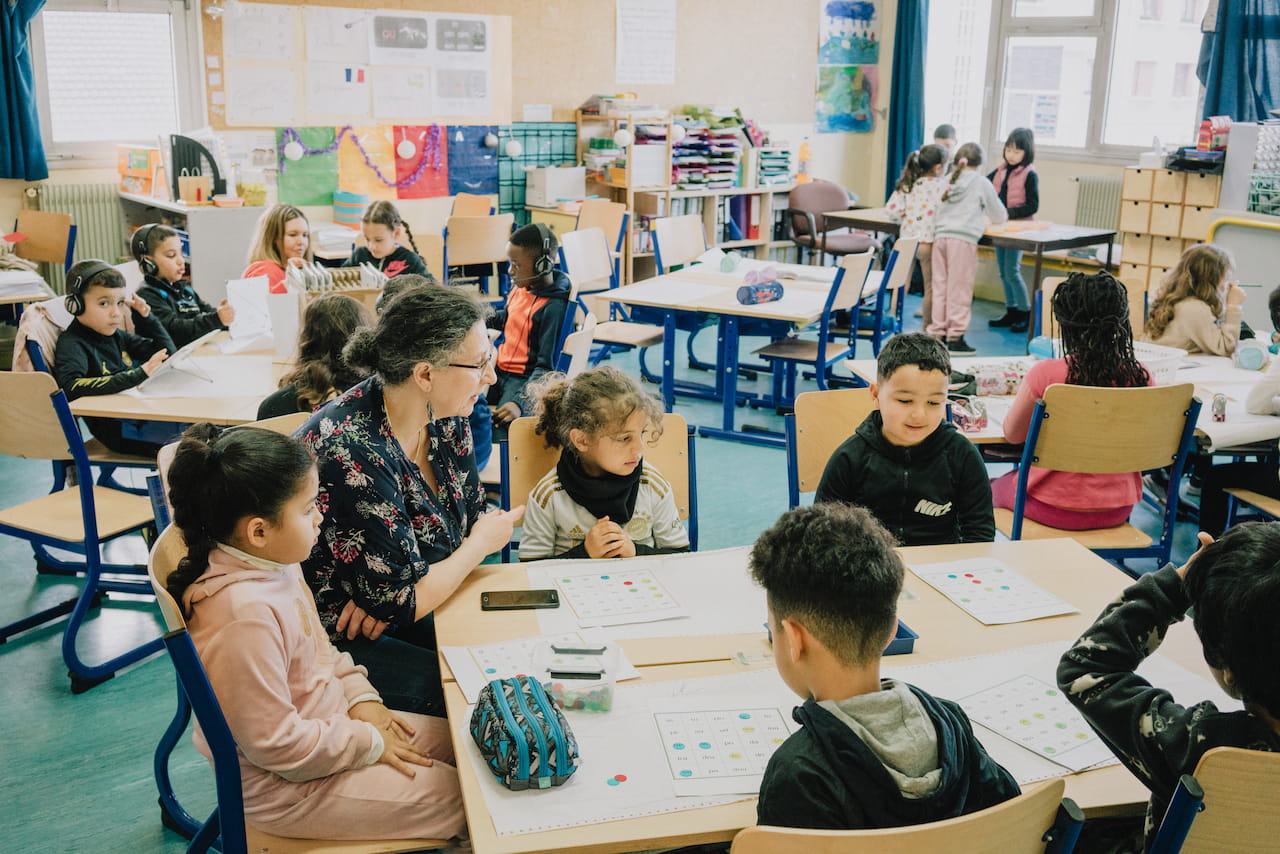
Each program combines scientific research with fieldwork, always through a collaborative approach. We develop educational projects with teachers to improve teaching practices and, in turn, help children. This gives our work as researchers a great deal of meaning. It’s a very concrete effort that the country truly needs. There’s something truly rewarding about stepping out of the lab to visit classrooms, meet students and teachers, and try to understand and help them.
A common principle across the initiative’s projects is to rely on scientific data and international comparisons. In particular, we examine what has worked in controlled studies with sufficiently large samples. We prioritize publications that have demonstrated that, with appropriate teaching methods, better results can be achieved—with a significant effect size compared to a control group. However, everyone contributes in their own way, depending on their field, and our work includes purely observational studies, surveys, and outreach efforts... All scientific disciplines are represented at the College—it’s even the hallmark of this institution—and the idea was to exclude no one. I am deeply committed to this diversity of subjects, which allows us to draw inspiration from one another, exchange perspectives, and envision new avenues of research…
What are these different projects, and which professors are leading them?
There are currently five such projects. The “Campus de l’innovation pour les lycées” initiative, led by Philippe Aghion, aims to promote equal opportunity by making knowledge accessible to a greater number of young people. This includes, in particular, the creation and distribution of new teaching materials in economics and social sciences (SES), life and earth sciences (SVT), and mathematics; the involvement of leading French researchers in working with high school students in areas with low socioeconomic status; and the organization of competitions in SES and SVT. To combat the decline in interest in mathematics, Stéphane Mallat is developing the MathAData initiative, which aims to rekindle high school students’ enthusiasm for mathematics. By having them work in class on real-world problems drawn from artificial intelligence challenges, they learn—for example—the equation of a line by thinking about the best way to split a dataset in two, and the program shows them the results in a very concrete way as graphs within interactive programming software. It’s a tool I would have loved to have had when I was learning math!
Jean-Luc Fournet and William Marx focus on teaching French in middle and high school. They aim to develop the practice of rhetoric—tailored to school curricula—to strengthen the connection between the teaching of literature, language, and discourse. This helps students develop their empathy and critical thinking skills. Pierre-Michel Menger’s “Diagnostiquer pour agir” program, meanwhile, analyzes the diversity of French students’ academic and university trajectories in mathematics. To do so, it examines young women’s relationship with math (why do they pursue this field less often?) as well as the educational experiences of the Chinese diaspora, whose academic performance is above average.
Finally, my team and I lead the Excello initiative: we develop, test, and disseminate educational tools based on cognitive science for teaching reading and math in elementary schools in France and several other countries.
Could you elaborate on the initiatives you’re leading within Excello?
First and foremost, all the teaching materials we develop with teachers are based on explicit instruction. The program is structured in a logical sequence, and each lesson has a specific, limited learning objective. A lesson consists of three steps. First, the teacher explicitly explains everything relevant to learning, using very precise language. The child then puts what they have learned into practice under the teacher’s guidance, with feedback from the teacher. Afterward, the student can move on to independent practice. The program is organized to regularly revisit what has been learned, in a spiral manner, without leaving anything to guesswork or ambiguity, which ensures a high level of student success. This point is very important, as it builds the child’s confidence in their ability to learn and thus increases their motivation.
Based on these ideas—and many other experimental findings I’ve compiled over the years in my books, such as *The Neurons of Reading* and *Learn! The Brain’s Talents, the Challenge of Machines , we first developed the “Kalulu” method to improve reading instruction. It is a purely phonics-based method: it focuses on the systematic teaching of the correspondences between graphemes and phonemes (letters and sounds, to put it simply). We do away with a host of activities—such as memorizing “tool words” to visualize mentally—that distract children from the reading process. Our experiments, conducted in more than 250 first-grade classes, show excellent results: on average, “Kalulu” students learn to read faster than students in the control group. Reading fluency improves, as does comprehension of sentences and texts. The method, adapted into Portuguese and Spanish, is also yielding extremely positive results in Latin America. All of our tools, which we continue to optimize, are now available for free on our website and via an app for tablets and smartphones, which can help parents support their children.
In 2025, we launched the “Math Pioneers” initiative. The goal is to create a new approach to teaching mathematics, better suited to elementary school students and aligned with what we know about how their brains represent mathematical concepts. In less than a year, the team created two full years’ worth of explicit instruction covering the entire third- and fourth-grade curriculum—more than two thousand documents! We are developing this program with 150 teachers from six school districts, who have placed their trust in us for these experiments. We are already seeing much better results, and students are beginning to enjoy math. The next step will be to conduct randomized controlled trials, for which we already have more than 500 volunteer classes. The enthusiasm is enormous.
“Agir pour l’éducation” also features a wide range of conferences at the cutting edge of research…
We have indeed organized a series of conferences that highlight a different theme each year. The goal was to provide an overview of the most current research—and the research most applicable to the classroom. Series were thus dedicated to learning to read in 2023, experimental approaches in education in 2024, and “re-enchanting mathematics” in 2025. But this year, we’re changing our model to have a greater impact. We are launching the Education Forum, a full day dedicated to sharing effective teaching tools and ideas. It will take place on September 30, 2026, at the Collège de France, and we hope to make it a premier annual event. Over the course of the day, we will highlight numerous projects and practices that have a positive impact on education. We want to foster a broad dialogue between researchers and education professionals: to share our tools and get their feedback. There will be lectures as well as smaller workshops where teachers and researchers can interact in person. At the end of the day, there will be a major panel discussion featuring Esther Duflo and Philippe Aghion, two Nobel laureates in economics whom the Collège de France is proud to count among its faculty!
Beyond the Education Forum, what are the next steps—and the challenges—that lie ahead for the initiative?
One challenge facing each of our projects in the coming years is scaling up. It’s not enough to create an educational tool that works well with a single researcher. It must also be adopted and able to function independently in the hands of teachers. But how do we train them to use this tool, especially on the scale of the French national education system? On the Excello website, we’re making a major effort to create a completely free, open-access toolkit, including explanatory videos. We also hope that the “Agir pour l’éducation” initiative will coordinate with other partners, such as the National Education System’s Scientific Council (a partner of the Education Forum) or the Academy of Sciences’ “L’École dont nous rêvons” project, led by mathematician Laure Saint-Raymond. The initial results have made me very enthusiastic and optimistic, and with the growing culture of evaluation and experimentation emerging within the French Ministry of Education, I am convinced that a major change is on the horizon. However, for these programs to expand and for our tools to be distributed on a larger scale, our resources are still insufficient. I am always surprised that educational issues are not more central to public debate and financial priorities. Yet this is the future of our country. Our initiative has received support from several major donors, to whom we are very grateful, but we hope to raise additional funds. The future of “Agir pour l’éducation” depends on it.
Interview by Salomé Tissolong, journalist.