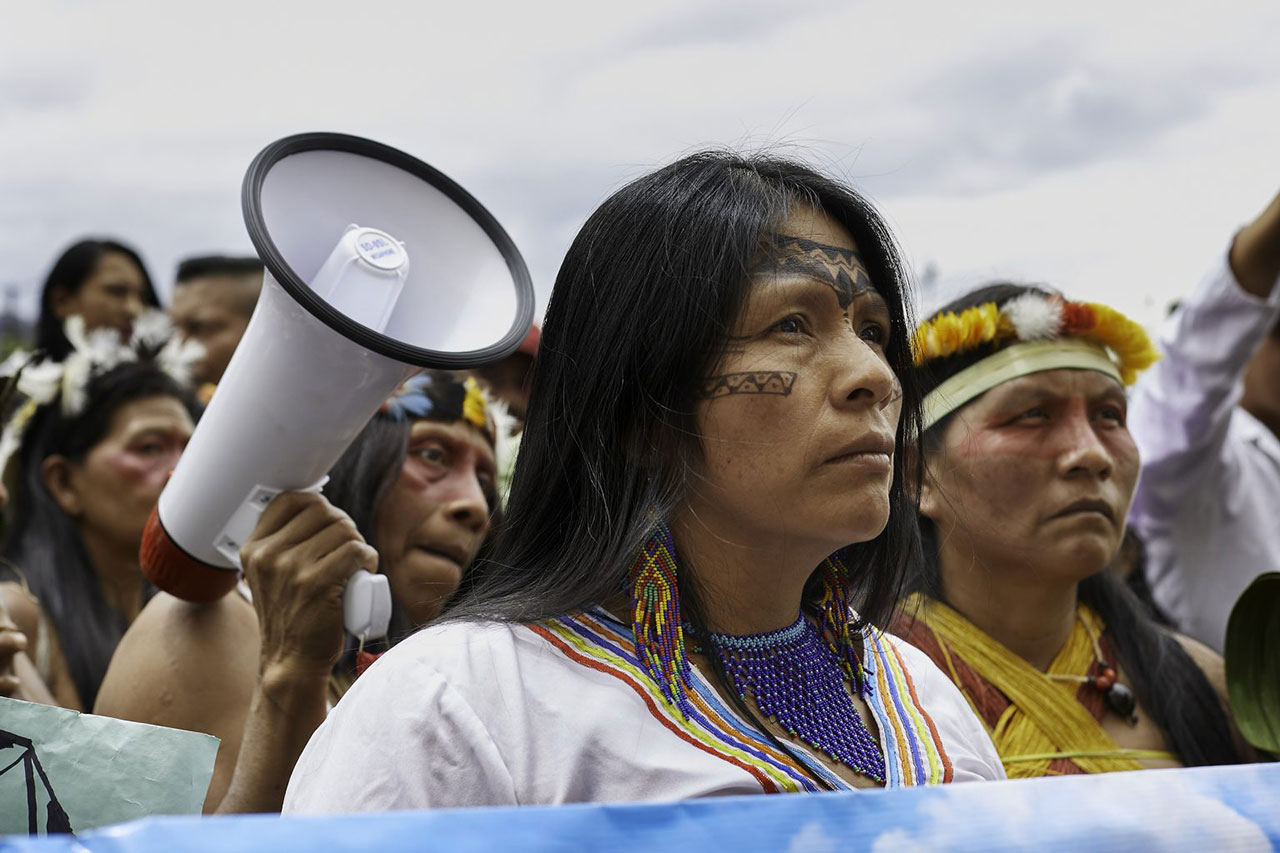
Indigenous knowledge was not taken seriously for a long time. It did not enjoy genuine international legal protection until the 21st century and was not considered a source of knowledge capable of informing policy-making processes, unlike science. However, in recent years, the Intergovernmental Panel on Climate Change (IPCC) has recommended that this knowledge be taken into account in decision-making processes in order to combat climate change more effectively.
This article is based on an interview with Dr. Camila Perruso, a postdoctoral fellow at the University of Fribourg and a research associate at the Chair of International Law of Institutions at the Collège de France. Her work on Indigenous knowledge is part of the project titled “Institutionalizing the Human Right to Science,” led by Prof. Samantha Besson and recently funded by the Swiss National Science Foundation.
The harmful effects of global warming are now visible on every continent. However, not all regions are equally affected by the current and future upheavals. Tropical rainforests, polar regions, high mountains, small islands, coastal areas, and arid and semi-arid lands are particularly vulnerable. These vulnerable geographic areas are often inhabited by indigenous peoples [ descendants of those who inhabited a country or geographic region at the time when population groups of different cultures or ethnic origins arrived and subsequently became predominant, through conquest, occupation, colonization, or other means— High Commissioner for Human Rights ]. Their relationship to the world—and particularly to nature—differs from that which predominates in so-called Western societies. As Philippe Descola, former holder of the Chair in Anthropology of Nature , demonstrates, the clear-cut distinction we draw between “nature” and “culture” makes no sense to them. Their perception of life often encompasses humans, fauna, flora, and sometimes even inanimate objects—such as stones or rivers—on an equal footing. Philippe Descola has extensively studied this duality and the distinctions that societies do or do not make. This worldview and the close relationships that Indigenous peoples have with their environment give rise to local knowledge based on experience, observation of the environment, and rituals that are passed down from generation to generation. This is what we can call “Indigenous knowledge.”