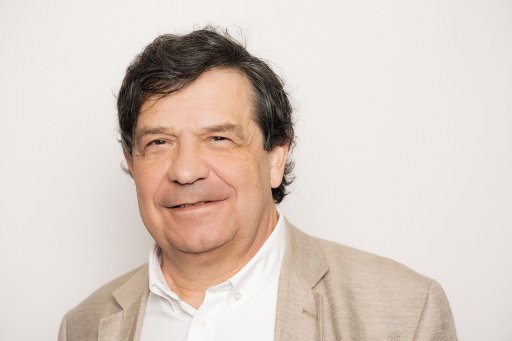
A former senior executive at Areva and former president of La Fabrique de la Cité, Cécile Maisonneuve is currently an advisor to the Energy and Climate Center at the French Institute of International Relations and an associate expert at the Institut Montaigne. On February 28, 2024, she spoke at the symposium “ The Energy Transition: Challenges for Society and Innovation ,” organized at the Collège de France by Professor Marc Fontecave. In particular, she suggested several approaches that could help rebuild the lost foundations of European energy security.
[This article is an edited version of her presentation. The full presentation is available on YouTube .]
Just a few months ago, on the website of the European Commission’s Directorate-General for Energy, you could find this quote:
“How secure is our energy supply? There is currently no threat to energy security. The European energy system has demonstrated its resilience. Electricity, gas, and oil are reaching the places where they are needed—and especially where we need them most.”
This text dates from April 2020. Two years later, the reality was somewhat different. We are now in the midst of the energy crisis, in the spring of 2022. The two photos shown here illustrate quite well, in my view, a number of problems with European energy policy. On the left is German Environment Minister Robert Habeck, who in the spring of 2022 was touring Middle Eastern countries, notably to secure a number of gas supplies for his country. On the right is one of German Chancellor Olaf Scholz’s first major trips after his election. He is touring African countries, which is not the most typical move for a German chancellor.
I see several things when I look at these two images side by side. On the one hand, when we talk about European energy policy, individual countries are always very much in the picture. It’s worth noting that under the treaties—even though, as we’ll see, they’re drafted with remarkable ambiguities—member states retain control over their energy mix. And ultimately, what Robert Habeck or Olaf Scholz are doing is entirely normal during a crisis: reaching out to potential suppliers. That’s the first lesson.
Second lesson: Mario Draghi was the one who emphasized this—particularly to his German colleagues at the time—while accompanied by the prime ministers of Greece, Portugal, and Spain. Can a crisis of this magnitude be resolved without a certain principle of solidarity? He made some remarks then that I invite you to reread because they were quite clear.
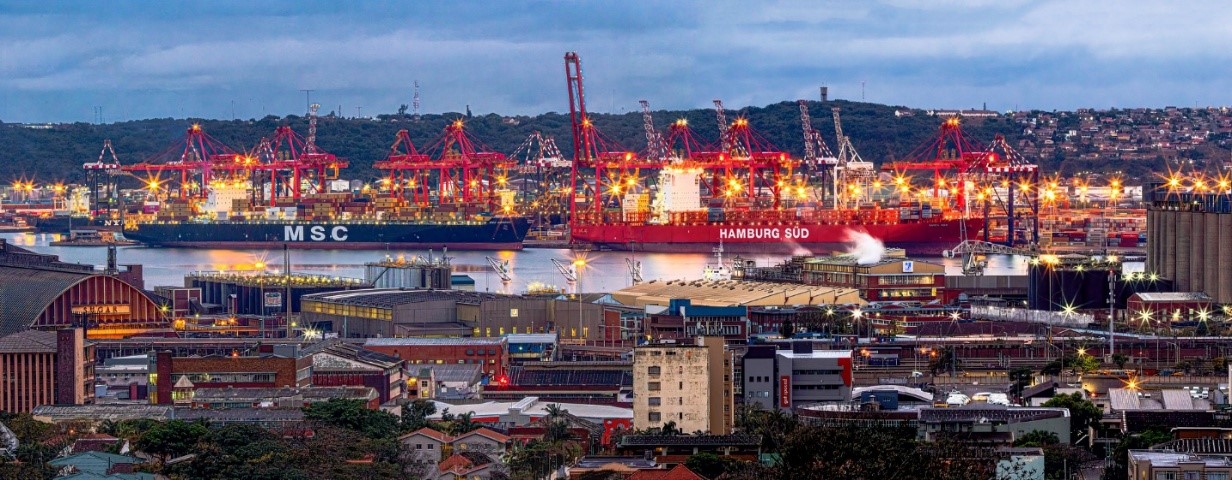
And the third lesson: we’ve had a crisis—one that I don’t think is over yet—but are we ready for the next one? The quote I read to you earlier raises a major question: that of resilience, a term used by Jean-Paul Bouttes . And when I see Olaf Scholz with Cyril Ramaphosa, the South African president, I see what could be the next crisis: the crisis of strategic metals. Indeed, it is on the African continent that these metals are found in large quantities, and these are precisely the materials we will need for the transition. However, in Cyril Ramaphosa’s country, there is the port of Durban. And 90% of the cobalt mined in the Democratic Republic of the Congo, for example, passes through this port. This is a major concern for our future energy security, given that these strategic materials are generally shipped from this port to China for processing. In short, have we experienced a classic energy security crisis, or is this the first crisis of the energy transition? This is a question that historians will be eager to settle.