As the Collège de France prepares to celebrate its 500th anniversary in 2030, it is launching a major campaign to conserve and restore its heritage.
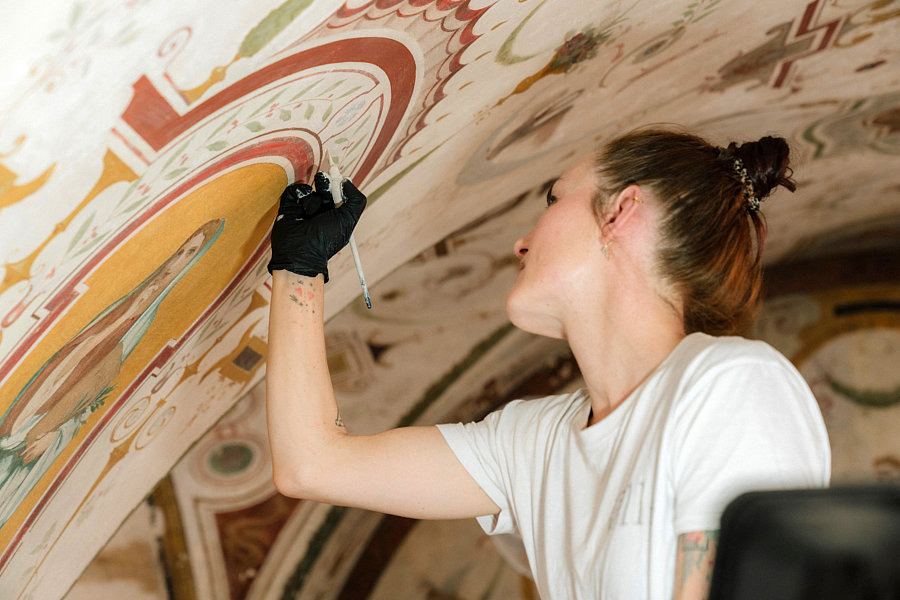
A key stage of this campaign was completed on 18 September with the restoration of the Letarouilly portico, built between 1834 and 1841, whose decorative elements were in a state of disrepair. In 1891, this portico had been adorned with a fresco by the painters Urbain Bourgeois (1842–1911) and Louis Hista (1851–1934), depicting allegorical scenes in the so-called ‘fantastic’ Pompeian style, inspired by the rediscovered frescoes of the Domus Aurea , the imperial palace built for Nero in Rome.
A complete restoration of the painted decorations was carried out, comprising the re-fixing of the paint layer, the cleaning of the decorations and meticulous restoration work. This project also included the renovation and improvement of the lighting of the structure, checking the roof for leaks, and the cleaning and consolidation of the external masonry.
Thanks to this restoration, the fresco can now be admired exactly as it was conceived and executed by Urbain Bourgeois and Louis Hista. The portico and the fresco are open to the public free of charge during the Collège de France’s opening hours.
The restoration of the Letarouilly portico was supported by the Clément Fayat Foundation and Crédit Agricole d’Île-de-France.
Guillaume Moine, a heritage architect, coordinated the contractors Louis Geneste (masonry and roofing), Tollis (wall paintings) and INDELEC (electrical works).
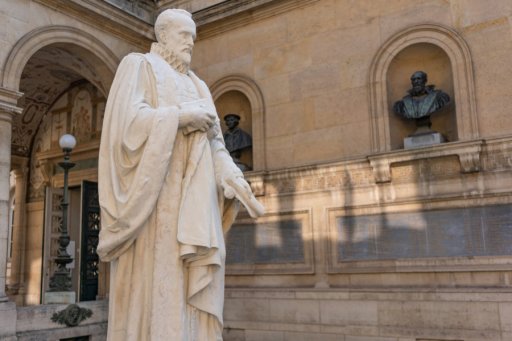
The Collège de France is now embarking on a new phase of restoration work on the statues in the Budé and Letarouilly courtyards, thanks to a major crowdfunding campaign in which everyone is invited to take part.