News

Behind the Scenes of an Exhibition

Interview

Since 2011, the Collège de France has been presenting free exhibitions open to the general public. Organized on the institution’s premises, drawing on its historical and scientific heritage and the expertise of its professors, these exhibitions involve a large number of administrative staff members and numerous service providers.

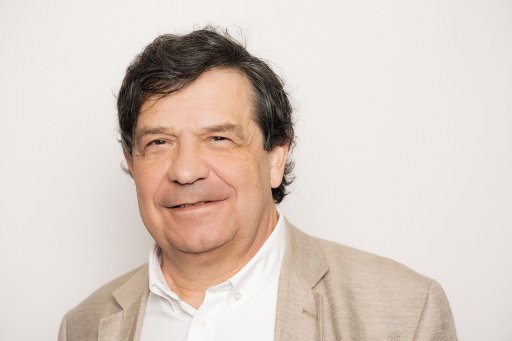
The Department of Libraries, Archives, and Collections (DBAC) at the Collège de France coordinates all parties involved. Marc Verdure, deputy director of the DBAC, and Violette Batailley, who is in charge of configuring the database and the collections website, discuss the creation of the exhibition “Prehistory: Between Utopia and Reality” and how it contributes to the dissemination of “knowledge in the making.”

Exhibition Hall: “Prehistory: Between Utopia and Reality” - © Patrick Imbert, Collège de France.

The exhibition “Prehistory: Between Utopia and Reality” is part of a series of exhibitions presented in recent years at the Collège de France. How was this theme chosen?

Marc Verdure: The Collège de France has the immense advantage of being able to draw on leading scientific curators, who are also researchers well-versed in the latest developments in their disciplines. It is thanks to this dual standard that these exhibitions take shape. In the case of “Prehistory: Between Utopia and Reality,” the approach taken by the exhibition’s curator, Jean-Jacques Hublin, has opened up original methodological perspectives by bringing together several disciplines.

Does this programming follow a specific editorial direction?

Marc Verdure: There is a multi-year planning schedule. The main principles are approved in advance, within an already established institutional framework. The topics, meanwhile, are developed in collaboration with professors and scientific teams. Decisions regarding the project and the curator are made by the expanded executive committee, and the Assembly monitors implementation as the work progresses. Within this framework, the Collège de France is developing a comprehensive policy for promoting knowledge.

Who are the key stakeholders involved in an exhibition of this nature?

Violette Batailley: There are many. First, we conduct a feasibility study. While the scientific curatorship plays a central role at this stage, the production team gets involved very early on, as we must already consider the availability of the artworks and the technical constraints related to their presentation. Next come the scenographers, graphic designers, and museum design specialists. Finally, during the installation phase, all the different trades come together: transporters, installers, electricians, handlers, painters, and so on. The production team’s job is to coordinate everything from the very beginning of the project.

What was your role in this exhibition?

Marc Verdure: I worked on overall coordination. An exhibition is built in three phases: scientific design; administrative, legal, financial, and insurance feasibility; and then physical implementation. Our role is to keep information flowing. We have to remind everyone of dates and deadlines and ensure that all stakeholders meet them. In this regard, we have to coordinate the work of scientists, administrative staff, and technical teams.

Violette Batailley: My role, along with that of my colleagues, was to handle the practical and technical coordination: managing the list of artworks while keeping conservation constraints and feasibility issues in mind. We have to consider hanging systems, alarms, safety distances, the movement of objects, and the lenders’ requirements. The most important thing is to anticipate issues and connect all the stakeholders. Our role is also crucial during the operational implementation phase; for this exhibition, we also handled the transportation and installation of many works.

Kinga, a reconstruction of a Neanderthal woman dressed in contemporary clothing. Dermoplasty by artist Élisabeth Daynès - © Patrick Imbert, Collège de France.

What were the main challenges of this exhibition?

Violette Batailley: The first challenge stems from the venue itself. The Collège de France is not a museum. So we have to work with a space that wasn’t designed to host exhibitions. This imposes constraints in terms of visitor flow, lighting, and installation. We also have to accommodate different audiences: students attending classes and visitors. Signage, access points, and how the building is used must be carefully planned.

Marc Verdure: On top of that, there’s a very practical constraint. The rooms aren’t equipped with picture rails like in a museum. We have to build almost everything from scratch. That requires wood, paint, time, and precise logistics. The installation takes at least fifteen days. That’s a long time. It’s all the more demanding because everything has to be done while the institution is operating normally.

What was the preparation timeline?

Marc Verdure: Preparation for the exhibition began right at the start of the 2024 academic year. The first outline was drawn up in January 2025. After that, the scientific committee met regularly, as did the operational steering committee, which included all relevant departments (academic programs and partnerships, general services and visitor services, finance and budgeting, publications, health and safety, heritage and real estate, etc.) with the assistance of the Director General of Services. The project took about two years to develop.

What are the specific challenges of the setup phase?

Violette Batailley: Setting up the exhibition involves optimizing time and space. We have to balance the requests of lenders, conservation requirements, technical constraints, and delivery deadlines. Despite all this planning, unforeseen issues always arise. The team’s role is then to react quickly and find a solution.

Marc Verdure: The last two weeks are always the busiest. The artworks arrive, the transporters are on the move, and shipments can be delayed. We have to assign each team member to the right contact at the right time. The work may seem invisible, but it’s essential. Without this coordination, nothing holds together.

A 1:5 scale reduction of the Paleolithic paintings in the Altamira Cave near Santander, Spain, by Cartailhac and Breuil - © Patrick Imbert, Collège de France.

Does the Collège de France have its own collections?

Violette Batailley: The Collège maintains a wide variety of collections. They consist mainly of scientific instruments, but also include archaeological artifacts, ethnological collections linked to the Laboratory of Social Anthropology, works of art, sculptures, paintings, as well as items on loan from the National Center for the Visual Arts and the Manufacture de Sèvres. It is a rich collection that is still being cataloged.

Marc Verdure: For the “Prehistory” exhibition, however, the institution’s own collections were used only sparingly, even though a few objects and old books were displayed, notably a cast of Toumaï. Most of the items on display came from external loans. This is what allows us to greatly enrich the scientific and museum-related content.

How were the partnerships with the lenders established?

Marc Verdure: We had initially planned to prioritize loans from the Île-de-France region, for ease of transport. However, this was not sufficient given the scale of the exhibition. We therefore had to look further afield, particularly to Toulouse, where the French Prehistory department houses significant collections. Major institutions pay close attention to loan conditions. The status of the Collège de France can be an asset, especially when the scientific curators are immediately recognizable and well-regarded.

Violette Batailley: This exhibition features about twenty lenders. They are often major institutions. Some works are rarely exhibited, and in some cases have been in storage for years. Some of them were restored specifically for this exhibition. This is also one of the project’s main attractions: showcasing pieces that are seldom seen, or even never before shown to the public.

What happens to the exhibition after the opening?

Violette Batailley: The work doesn’t stop at the opening. It continues throughout the duration of the exhibition. We have to ensure the lighting is set up, monitor the multimedia displays, clean the display cases, check the alarms, monitor the climate conditions, and maintain the objects in good condition. It requires constant vigilance.

Marc Verdure: We also have to think about the public, educational outreach, and the visitor experience. We contribute, in our own way, to the life of the exhibition. That’s part of the project. An exhibition must remain alive. It must continue to be explained, monitored, and brought to life by the teams.

Is there a record of past exhibitions?

Marc Verdure: Every stage is archived: contracts, insurance policies, preparatory drawings, and design choices. Added to this is the 3D virtual tour, which allows us to preserve a lasting record of the project.

Violette Batailley: We also have a database that centralizes information on past exhibitions. It allows us to locate objects by section, track any loans, and ensure true traceability. It’s an invaluable working tool.

In your opinion, what does this type of project say about the role of the Collège de France?

Marc Verdure: It shows that the Collège de France does not limit itself to imparting knowledge in the classroom. It also makes that knowledge visible in other ways. The exhibition is another way to disseminate knowledge. It allows us to reach diverse audiences and help them discover the institution in a new light.

Violette Batailley: And this is fully in line with the institution’s missions of research and the dissemination of knowledge. The project mobilizes teams, brings departments together, and creates a genuine collective momentum. It also brings the building to life in a different way. It’s a professional experience, but also an intellectual and human one.

-------

Through July 19, 2026, the Collège de France’s major exhibition, “Prehistory: Between Utopia and Reality,” invites visitors to a thought-provoking encounter with our most distant ancestors—exploring what we know about them… and what that reveals about us.

Jusqu’au 19 juillet 2026, la grande exposition du Collège de France « Préhistoire : entre utopie et réalité » invite à un face-à-face troublant avec nos plus lointains ancêtres, entre ce que nous savons d’eux… et ce que cela dit de nous.