Contemporary chemistry faces a dual challenge: meeting ever-growing industrial needs while limiting its environmental impact. This shift toward more environmentally friendly practices is accompanied by a reevaluation of the history of organic chemistry, which remains dependent on petroleum derivatives. Silicon, a chemical element that is easier to harness, could pave the way for more sustainable scientific and industrial practices.
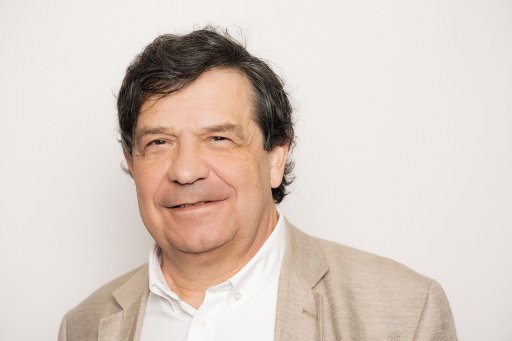
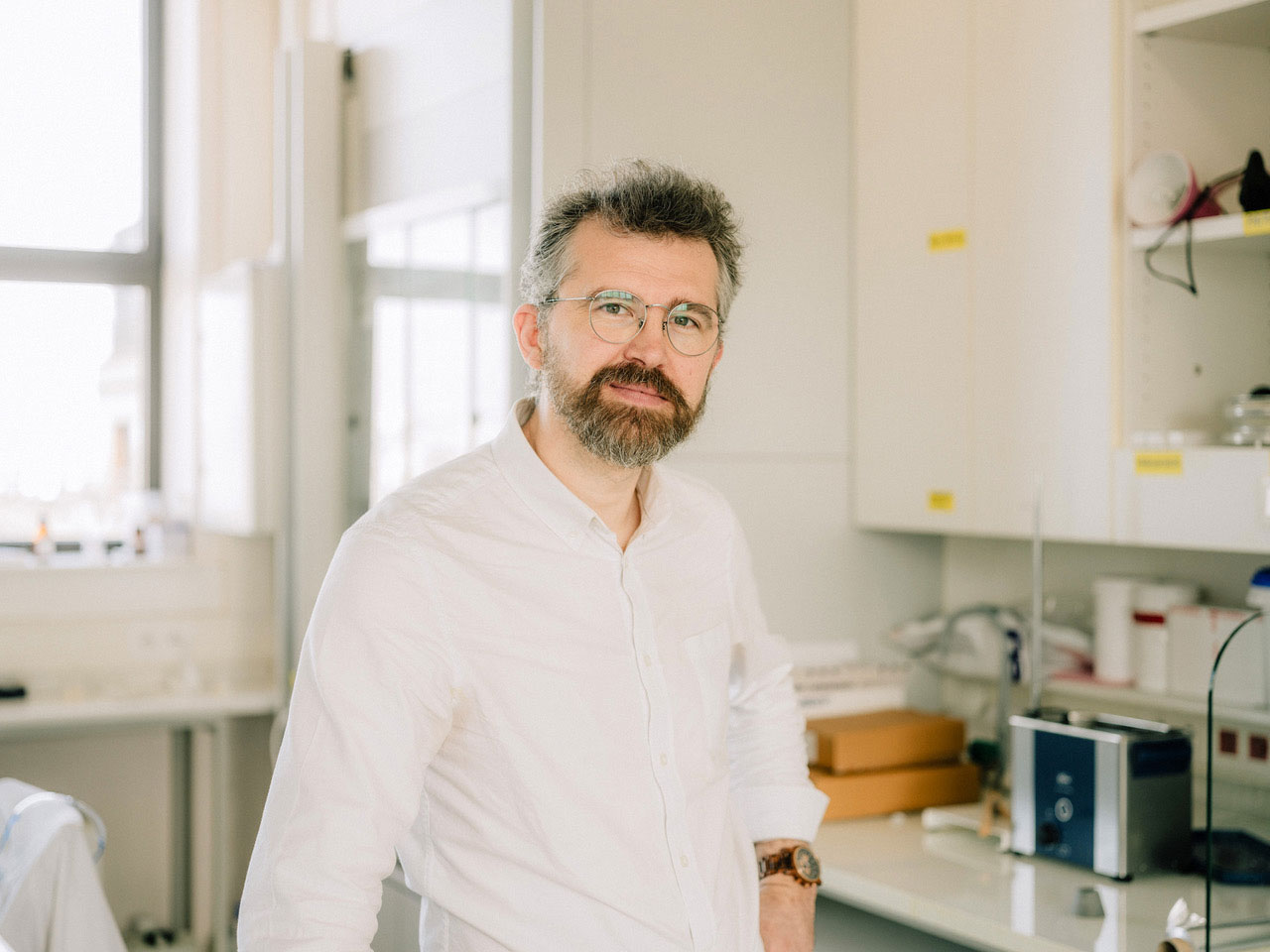
We spoke with Vincent Corcé *, a chemist at the Collège de France.
The idea of “more sustainable chemistry” is now emerging as a cross-cutting imperative, at the intersection of science policy, environmental mandates, and social expectations. For chemist Vincent Corcé, it is a matter of “carrying out chemical transformations using methods that are more eco-friendly and more respectful of the environment.” This endeavor begins with a critique of the historical foundations of organic chemistry, which has long relied on petroleum derivatives—both as raw materials and as solvents or reagents. Added to this dependence is that on noble metals (ruthenium, palladium, iridium), which are ubiquitous in chemical processes but are costly, rare, and environmentally problematic. Consequently, the search for alternatives has become urgent. “We’re trying to break free from this mindset, to address this scarcity, and to find alternatives,” says Vincent Corcé.
Even more abundant transition metals (nickel, copper, cobalt) remain difficult to extract on a large scale without significant environmental impacts. Furthermore, tensions in international trade make securing a steady supply of these metals more challenging.
The researcher emphasizes the importance of this shift for the discipline: “Organic chemistry still has the reputation of being a highly polluting field; it is crucial to change practices in order to alter the general public’s perception.” In this context, the challenge of sustainable chemistry lies not only in substituting these resources but also in a change of perspective. “What we’re seeking to do is no longer just to produce molecules, but to develop ways to recover value from waste, recycle, or deactivate harmful compounds.” Certain elements, such as silicon, offer chemical properties capable of meeting the challenges of tomorrow.
The Alternative Chemistry of Silicon
In this shift, silicon represents a strategic avenue. Abundant on Earth—particularly in sand—relatively inexpensive, and chemically versatile, it possesses several properties that make it a potential substitute for certain functions traditionally performed by rare metals. As Vincent Corcé points out, “silicon is located just below carbon in the periodic table; while they share similarities—since they belong to the same group—they also have notable differences.” This potential is being harnessed in the development of so-called silylated catalysts, which aim to induce selective chemical reactions through bond activation. Unlike highly reactive catalysts, which can only be handled under specific conditions (inert atmosphere, cryogenic conditions), the structures developed by Vincent Corcé are designed to function under milder, more robust conditions and are therefore better suited for industrial application.
Its electronic affinity with elements such as oxygen or fluorine makes it particularly well-suited for activating certain stable chemical bonds. “Our silylated derivatives fulfill this function, allowing us to activate, for example, a stable bond like the carbon-oxygen bond or even a very stable one like the carbon-fluorine bond,” explains the researcher. This is a beneficial property at a time when concerns about “forever chemicals ” are growing.
The Environmental Challenge of PFAS
One of the major challenges facing chemistry today is the management of perfluoroalkyl substances, better known by the acronym PFAS—substances that are extremely stable and ubiquitous in the environment. Used for their hydrophobic properties and heat resistance in textiles, food packaging, and firefighting foams, these molecules persist in natural environments and pose a growing toxicity risk. “The problem is that PFAS do not degrade. In nature, they accumulate everywhere, even in drinking water in some regions. Levels exceed regulatory thresholds,” warns Vincent Corcé. Their ubiquity in water, soil, and even the human body makes them a major health and environmental concern.
Given the ineffectiveness of conventional treatment methods—since PFAS pyrolysis requires temperatures above 1000 °C—the team in which the researcher works is developing an alternative approach based on silicon catalysis. The goal is to activate the carbon-fluorine bond—one of the most stable in organic chemistry—to enable its breakdown under controlled conditions. “If we can remove the fluorine atoms that make up PFAS, then we can create something much less hazardous and much easier to treat,” he explains. This shift from a persistent substance to a recyclable molecule is part of a circular economy approach. “The idea isn’t to destroy them, but to recycle them. These elements remain a source of carbon that can be put to good use,” he is keen to point out.
This work opens up far-reaching possibilities. It also signals a shift in the very purpose of chemistry: no longer just producing, but repairing, recycling, and making the transformation of matter compatible with sustainability requirements. Silicon chemistry, as envisioned by Vincent Corcé, does more than simply offer an ad hoc substitute for existing practices; it initiates a genuine realignment of the discipline, where catalysis becomes a tool for environmental management and molecular transformation a driver of sustainability. By focusing on issues such as PFAS treatment, this research highlights a chemistry that is mindful of its consequences. From this perspective, silicon-mediated catalysis emerges as a tool for a new scientific frontier.
*Vincent Corcé is a chemistry researcher in the “Activations in Molecular Chemistry” chair held by Prof. Louis Fensterbank. The research project “Silylated Lewis SuperAcids: from carbon-fluorine bond activation to PFAS recycling” is funded by the Avenir Commun Durable initiative.