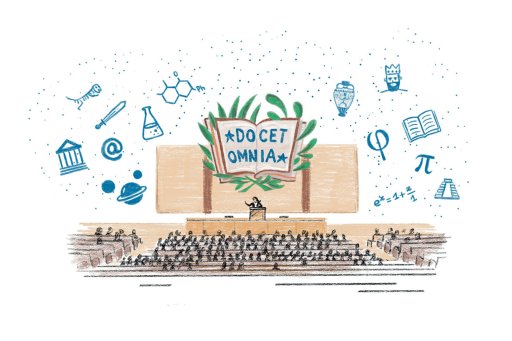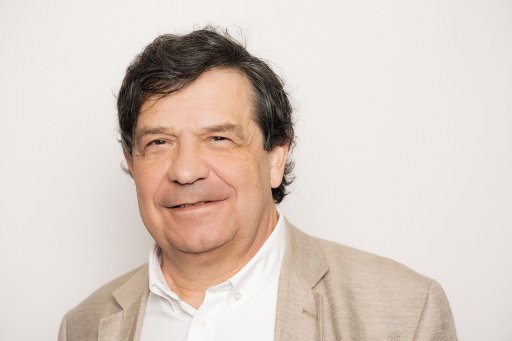
Laurent Fonbaustier, associate professor in the law schools at Paris-Saclay University, a legal scholar and historian of ideas, spoke on May 15, 2023, at the Collège de France as part of the lecture series “Reading the IPCC Reports to Understand the World Ahead.” This first presentation will be followed on June 1 by a second talk that will build upon and expand on these ideas. The text below is an edited transcript of Laurent Fonbaustier’s oral responses to questions from the audience; it introduces, in particular, the themes that will be addressed in the second part of his talk. It is essential reading to complement the discussions from May 15.
“We believe that one of the most hotly debated issues in public discourse is that of fundamental alternatives [to the current economic and political model]. We are undoubtedly witnessing, at this moment, an ‘overlapping’ of perspectives—an issue we will revisit when we discuss the concept of equity in greater detail during the June 1 session. Or, quite simply, when we discuss the political forms capable of accommodating the shock wave represented by the need to change our “mental framework”—since the IPCC does not advocate anything in and of itself, but in certain respects serves as a receptacle or reflection of a “background noise” of delicate interpretation.
Because this question of political forms is not neutral. The word “democracy” virtually never appears in the IPCC’s synthesis reports, which is perfectly understandable, since the goal is to avoid offending anyone and to achieve a very broad consensus based on state political models that are, by their very nature, contrasting and highly varied. We must bear in mind that the synthesis reports—and even more so the abstracts for policymakers (these texts should not be confused with the working group reports)—adopt the subtle and cautious language of diplomacy, where “meaningless circumlocutions” abound. Another example is particularly telling: what we will call, in an obviously simplistic way, “the growth narrative,” symbolized in particular by “GDP” (gross domestic product). It may come as a surprise to find this indicator even in the most recent reports, especially since economists—let’s say… alternative economists—have shown that GDP struggles profoundly to incorporate many values other than certain ones that likely contributed to the problems we face today. Admittedly, the reports are not naive and do not gloss over the difficult, complex tensions between “GDP,” progress, and climate preservation—and, more broadly, the preservation of a livable environment—in the context of a just transition. Yet a correlation is regularly drawn between a country’s “GDP” level and its capacity to adapt (infrastructure, education, etc.) to climate change, even though “GDP” is one of the indicators of a form of development that tends to be at the root of the very difficulties forcing adaptation… It’s a bit like trying to square the circle.
Growth versus Degrowth
Degrowth, on the other hand, does not appear as such. What we are seeing more and more in reports, it seems to me, are formulations suggesting that mitigation strategies must be intensified and focus particularly on addressing “demand.” This represents a logic that lies at the intersection of politics and economics. I searched in vain for very specific themes on degrowth itself—it’s not even worth considering.
On the other hand, we could indeed expand our reflection on the IPCC’s proposed work by simultaneously examining, among the options, several levers—notably, as mentioned earlier, those related to demand, behavioral changes, or more draconian regulatory mitigation measures, which are nonetheless accepted by the public. Curiously, from a certain perspective, this point is not unrelated to the possibility of a form of degrowth (or, to put it more accurately, a different conception of growth).
These are elements that, through circumlocution—and often in a somewhat convoluted manner—have, in our view, become much clearer since 2014 in particular, and are presented very clearly in the report by Working Group 3 dated April 4, 2022, as part of the Sixth Assessment Report. Nevertheless, while we did not find explicit references to degrowth terminology in our documents, planetary boundaries—though admittedly still not widely integrated—surface in the works we have reviewed. And so we are beginning to delve into a complex set of challenges that, given the limits of adaptation, could help reorient mitigation choices (more upstream than downstream, by focusing more on demand than on other levers) toward new “realms of possibility.” Of course, to better and more accurately reflect our readings, it would be appropriate to consider the interactions between the Special Reports—which are of great importance—and the work of the working groups within the framework of the General Assessments; however, this would take us far afield and certainly exceeds the scope of our expertise and intentions, and would, moreover, distance us from our position as non-specialist observers.
Nevertheless, it seems to us that, in the future, we will need to keep an eye on how the issue of limits—and the degrowth-oriented integration of this issue—will be addressed by the IPCC in its deliberations, as articulated in its upcoming reports (we are thinking, in particular, of the future evolution of the role of “moderation,” alongside efficiency—which, incidentally, should not be confused with one another).
Indigenous Peoples and Knowledge
It also seems to us that one of the major challenges ahead of us is not to “save the planet.” That would, in fact, amount to an “ecology of charity” that is entirely external to us and, at its core, utterly meaningless. The issue is indeed us, human beings, certainly in an inclusive relationship with the living world in general, or with non-human life within a single habitable environment. Let us not forget that the same year (1972) saw the publication of the Meadows report (*The Limits to Growth*) and the Ward-Dubos report (*We Only Have One Earth*); but in any case, at first glance, it seems to us that while the IPCC was convened primarily around a perspective that is certainly climate-centered, we observe that it incorporates—quite logically, as the reports progress—much broader ecological and social perspectives.
When we raise the idea of alternatives, in our view, this ties in with what we initially explained regarding the “unrepresentable.” When the IPCC uses terms such as “opportunities,” “solutions,” and “realistic” adaptation strategies, it is important to examine these words carefully, even though, of course, they refer to meanings that are very complex to pin down (not to mention linguistic and translation issues). We could ignore (or pretend to ignore) that this or that Indigenous community would have much to say about the scientific findings once we enter into the realm of adaptation or mitigation strategies; but, since we operate in a world of possible choices, we can also draw on their knowledge to incorporate adaptation solutions—and, to a certain extent, mitigation measures—that are currently difficult to imagine. While sensitive to international issues and the protections afforded to them by certain international conventions, the IPCC now more clearly grants indigenous peoples a role whose nature, significance, and scope remain uncertain for the time being.
Without wanting to get too far ahead of our next presentation, it is, in fact, very interesting to find in the IPCC’s latest reports the idea that Indigenous peoples cannot be understood solely in terms of their capacity to adapt, but also in terms of their traditional knowledge, skills, and competencies—which may, from a certain perspective, allow them to anticipate issues that, for the most part (to use measured language here), we ourselves—meaning a certain model that has caused serious problems—would not have been able to anticipate.
It is worth noting here that Indigenous peoples (nearly 350 million people worldwide) are populations that the IPCC identifies as being exposed to a very high degree of vulnerability based on the scenarios it outlines. It almost presents them as peoples who are rich in knowledge and cultural diversity, and who at one time possessed an adaptability that was perhaps greater than that of other populations.
Representativeness and Inclusion
Given its relatively inclusive approach and its functions, we certainly do not claim that the IPCC embodies the—let’s say—“mainstream” side of major international trends; moreover, as the reports progress, it becomes clear that the way an issue such as equity is understood is changing and evolving. This concept did not appear until 1995, but it was given significant attention at the time. Afterward, it seems to have receded into the background, only resurfacing in the synthesis reports and abstracts relatively recently. This appears to suggest that there is no single “orthodoxy” within the IPCC, so to speak—no line of thinking that is “permanent” in and of itself. On the other hand, perhaps due to its composition, its overall balance, and the issues it addresses (without considering here its highly influential working methods), there may be certain values that the IPCC quite naturally upholds and others that it cannot “conceive” or can only address under very delicate circumstances.
Here’s an illustration of this point. When people say—as Kari De Prick explains very well in her book The Voice of the Climate—something along the lines of, “It would be good to have more representatives from the Global South or more women among decision-makers, supervisors, or scientists,” we can intuitively grasp the point. But in reality, if this means having scientists (or delegates) from Bangladesh who studied in the United States at American universities, it is by no means certain that these individuals are, from a certain perspective, capable of offering alternatives or contributions of a profoundly different “nature”; in any case, compared to an American or a French person who has spent three years living among the Bangladeshis, it is possible that we are not, then, operating entirely within the same world.
It thus seems to us that, despite everything, when we speak of imaginaries, we are not merely dealing with an abstract vision. Let us examine more deeply—beyond the language and the IPCC’s method of producing its documents—the question of whether certain images are representable, conceivable, or “realistic” (a term regularly used by the institution in reference to “solutions,” “strategies,” “options”—and which term alone would warrant a comprehensive investigation), particularly in light of the systemic, organizational, institutional, and geopolitical constraints surrounding the institution’s work. We admit that we speak a great deal—perhaps a bit too readily and even with a touch of intellectual laziness—of “imaginaries in tension,” but we believe we perceive, throughout the IPCC’s reports and elsewhere in a non-linear manner, new “indications” or new “possibilities,” “options” that are evolving (quite logically as research progresses and data from the “groups” is exchanged with the outside world, which itself serves as an indefinitely “interpretable” source of the world’s “background noise”). As observers unable to “penetrate” this “leaky black box” that is the IPCC, what seems to emerge to us, report after report, are new constraints or other opportunities that might previously have seemed unthinkable.”