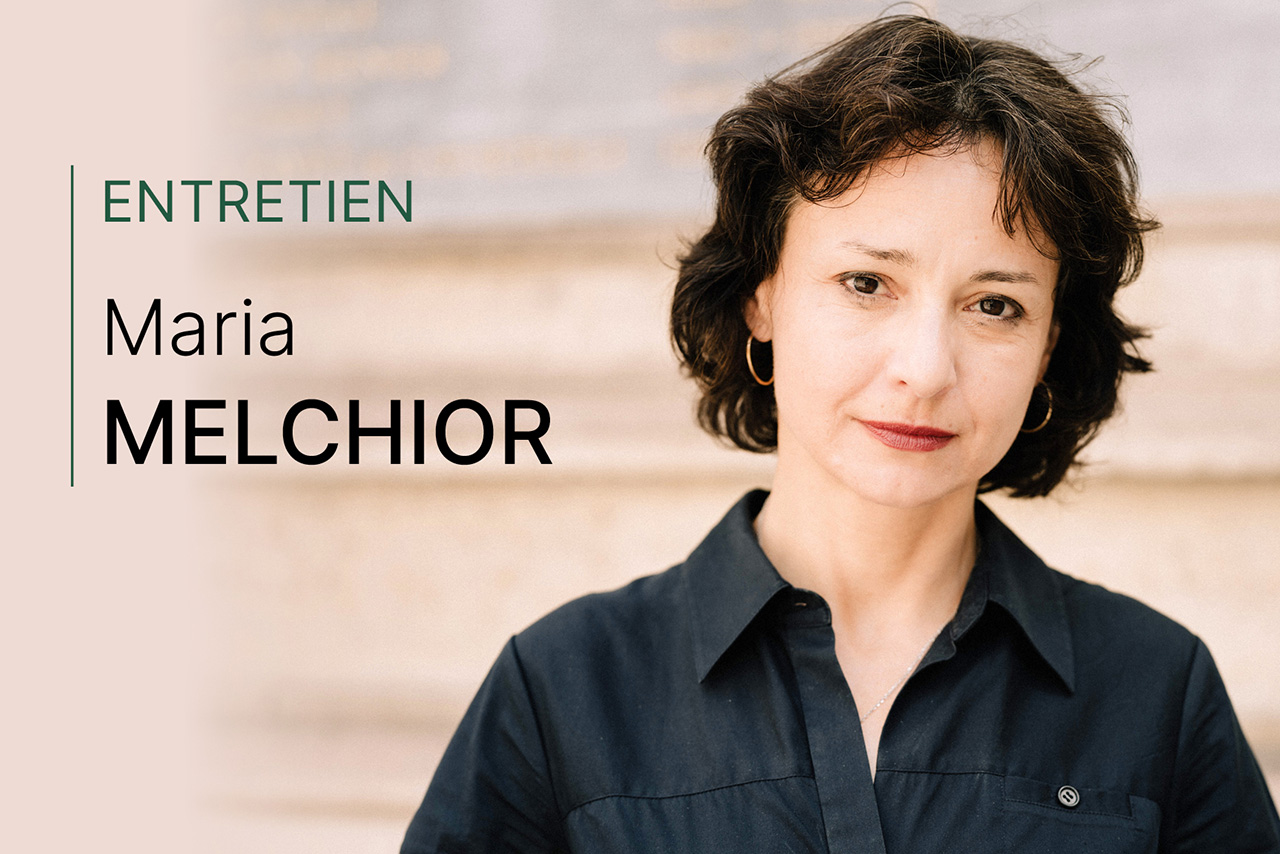
Maria Melchior is a specialist in the study of mental health, particularly that of young people. She explains how the epidemiological approach can provide new insights into the way we approach this issue on a societal scale, and alerts us to the urgent need to better understand this generation.
Maria Melchior, a researcher at Inserm, has been invited to hold the Public Health Annual Chairfor the year 2025-2026 , created in partnership with the Agence nationale Santé publique France.
Mental health research generally focuses on the individual.Why have you chosen to focus on populations ?
Maria Melchior : A bit by chance ! I did part of my psychology studies in the USA, where the measurement tools for population and quantitative research in the field of mental health were devised and deployed. So I was trained in these issues from an early age. In France, on the other hand, psychiatric epidemiology plays a lesser role. This was all the more true when I began my research twenty-five years ago, even if things have changed since then. However, there are still very few of us in this field. Like many doctors, psychologists, sociologists and economists, I'm interested in the subject of mental health among young people ; my particularity as an epidemiologist is that I use statistics to establish the frequency of mental disorders in a population, and the factors that cause them. To achieve this, I work with groups of people followed for scientific purposes, known as cohorts.
For example, I'm in charge of the TEMPO (Trajectoires Epidémiologiques en Population) cohort, which includes around three thousand five hundred people. TEMPO was initiated in 1991, over thirty years ago, by a child psychiatrist colleague. Its aim was to map the frequency of different types of mental health disorders in children and the reasons for seeking care, as we had very little data at the time. I decided to resume the follow-up in 2009 with the idea that the participants were all adults. I thought that knowing the mental health status of these adults - when they were children and teenagers - was an asset and could explain certain mental health phenomena.
What can we learn from the results of these cohorts ?
First of all, we need to know that among adults, studies show that around one in five people will develop a psychological disorder at some point in their lives, and that the prevalence of the most frequent mental health disorders, such as depression, is in the region of 7 % to 8 % of the population, which is a lot of people.
What's even more striking in our results is that we've observed an increase in rates of depressive symptoms among adolescents and young adults : around one in five young people today report depressive symptoms. What's more, the mental health of young people has been deteriorating for several years. It's especially among the youngest adolescents that we observe unfavorable trends, especially among girls. The other particularity is that, as with adults, the Covid-19 pandemic was a complicated period in terms of mental health. But unlike adults, who saw their mental health improve as soon as the pandemic was over, there was no reduction in these symptoms among young people. Among adolescents, rates remain very high, and we don't know how things will evolve over the next few years.
How do you explain such a deterioration in mental health among the youngest ?
The Covid epidemic marked a turning point. During the confinements, a whole generation of teenagers found themselves deprived of face-to-face reading and social life, without having chosen to do so. And yet, for teenagers, having contact with their friends and being able to get away from the family environment is particularly important in terms of mental health.
As I mentioned earlier, this malaise has not disappeared with the end of restrictions. Covid is not the only culprit : other factors are also at play, such as the increase in screen time, a trend that was already present before the crisis, but which has grown considerably since. The average teenager now spends between five and six hours a day in front of a screen. It has become a very important part of their lives, yet this time is taken up at the expense of other activities, particularly sport, reading and group activities. For many young people, this change in sociability is not a problem, but for some, the virtual world is replacing other forms of necessary interaction. The other side of screen consumption is overexposure to a constant stream of information. War in Ukraine, crisis in the Middle East, climate crisis... Our teenagers are very well informed about what's going on in the world, much more so than previous generations, in a world that seems uncertain to many adults. This is a source of concern for them too.
In what way does the economic context, such as inflation, also have an impact on the mental health of the youngest ?
In France, as elsewhere, poverty and income inequality are on the rise, and this has a direct impact on young people and their families, with single-parent families particularly hard hit, even though they account for one in four teenage families in France. When their households are faced with intense stress or financial difficulties, young people suffer the repercussions. For example, a number of studies on food insecurity, which translates into not having sufficient financial means to eat properly and in a balanced way, show that it is a risk factor in its own right, and that it generates anxiety problems in the youngest members of society.
More generally, material constraints are a major source of stress for them. Yet we live in a society where job insecurity is high, especially for young people. In other words, whereas previous generations could look forward to a permanent contract when they landed their first job, this is no longer the norm. The job market has become much more unstructured, which is a source of anxiety and has an impact on their social integration. They also find it harder to find housing. Energy insecurity, i.e. difficulties in paying rent and heating, is also a mental burden. On a broader level, research into the evolution of conjugal patterns shows that, until you have a stable job that allows you to leave your parents' home and become independent, you can't settle down as a couple, and you can't plan for the future.
You've also done a lot of work on post-partum depression. What link do you see with the mental health of young people ?
Growing up with a depressed parent, whether mother or father, exposes the child to an increased risk of health problems. The post-partum period is particularly critical in terms of the mother's mental health, with one in five women developing a depressive disorder in the year following childbirth. For almost half of them, these symptoms are likely to persist or recur later, with direct consequences on their ability to care for their child. For example, children of depressed mothers are less well cared for medically : fewer vaccinations, delays in care, etc. They have a higher risk of overweight and obesity. They are also more likely to be overweight, as depression can also affect parents' ability to manage the family diet.
Although the issue of perinatal mental health is now better recognized, thanks in particular to the First Thousand Days strategy, there are still gaps in access to care for people suffering from post-partum depression. It should also be noted that existing initiatives are largely focused on women, whereas men can also experience psychological difficulties and addictive behaviors that are more frequent around the birth of a child, but which are not currently identified or systematically treated. Paternity leave, for example, could have a positive impact on the mental health of both fathers and children, while having a more limited effect on that of mothers.
How can we improve our public policies to take better care of the mental health of the youngest ?
We need to roll out prevention and support initiatives that are accessible to all. Schemes such as " Mon soutien psy ", which provides reimbursement for twelve sessions with a certified psychologist, can help facilitate access to primary care . There are also telephone hotlines such as 31-14 for suicide prevention, 31-18 for teenage victims of harassment, and Fil Santé Jeunes , a chat line for young people in difficulty. In the event of a crisis, such as a suicide attempt by a teenager, the system is designed to react quickly, even though such crises often occur after a long period of malaise. The aim is to act before the situation worsens.
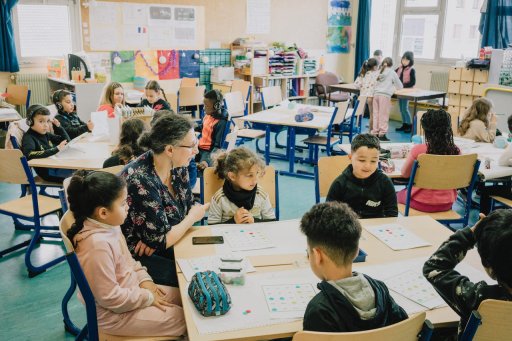
We also need to be vigilant in the school environment. For young people, the stress associated with academic success is a critical issue. Suicide attempts increase during lecture periods, due to a number of factors, including academic pressure, harassment and tensions that can be amplified by social networks. Programs such as " Phare ", which aims to appoint anti-harassment referents in schools, remain insufficiently evaluated in terms of their effectiveness, and their application is struggling to become widespread. On the other hand, programs designed to reinforce psychosocial skills have proved highly effective with children and teenagers. Deployed from pre-school onwards, they help children to better identify and manage their emotions, resolve conflicts constructively and avoid isolation. These programs teach children to better communicate and react to situations that can be a source of discomfort, thereby reducing the risk of psychological suffering. However, these initiatives remain marginalized in school curricula, due to a lack of time, resources and adequate training for teachers and other education professionals.
Interview by Emmanuelle Picaud, science journalist