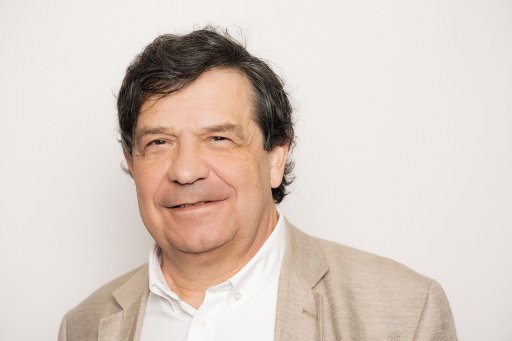
Marc Fontecave, a member of the French Academy of Sciences and a professor at the Collège de France holding the Chair in the Chemistry of Biological Processes , discusses the conflicting relationship between civil society and the outdated notions of “progress” and “technology.” In his view, technology can still provide solutions to today’s major challenges, such as combating climate change and the energy transition. He explains the efforts France has made—and must continue to make—to lead by example on the international stage.
Is the concept of “progress,” as formalized by the Enlightenment, now outdated in the face of climate change? In other words, should we be technoskeptical?
From the Enlightenment through the end of the 20th century, society had faith in progress through science—in humanity’s ability to solve problems through engineering or technology. Of course, there have always been debates about the limits of the advancements that progress could enable. Nevertheless, those opposed to this idea were in the minority. In France, during the 1970s—a major period of expansion for our nuclear power fleet—there was a very strong consensus on this issue, even though the technologies at our disposal were far from being as sophisticated and safe as they are today. Today, the debate is heated, and such a consensus seems impossible. I believe that the loss of confidence in progress is rooted more in psychological than political factors. The complexity of the world and the phenomena at play is destabilizing society, which finds itself increasingly in a state of disarray. The problem is that certain people—such as doomsayers—fuel these fears for reasons I do not understand. As a result, we’re sliding into an ideological clash that pits the advocates of “progress” against technophobes. What I find particularly troubling is that this conflict affects young people, who are more susceptible to this negative rhetoric. Yet science and technology can address today’s major challenges, such as the energy transition or reducing the impact of our energy consumption.
Speaking of transition, is France on the right track? Is it a “polluting” country or a model student?
To set the stage for this discussion, all developed countries pollute more than emerging economies, due to our higher standard of living. That said, among developed nations, France remains one of the lowest emitters of CO₂ (editor’s note: the greenhouse gas responsible for global warming). It accounts for barely 1.7% of global emissions. If we focus solely on the issue of energy, we are among the best performers in terms of CO2 produced per kWh consumed. This strong performance stems from the fact that France is one of the most electrified countries in the world and that its electricity comes primarily from nuclear and hydroelectric sources. The greatest efforts must be made in the areas of transportation and housing, and to a lesser extent in industry.