Avenir Commun Durable , true to its original mission, supports the Collège de France in its research activities. In 2024, following a call for proposals, the initiative decided to support three ambitious projects. One of them is titled “Toward an Epistemology of Research on Preindustrial Socio-Agrosystems .”
For the past twenty years, the “environmental humanities” have represented a new frontier in research across the social sciences. This growth is closely linked to growing contemporary concerns fueled by humanity’s destruction of its own living environment. However, the historicization of societies’ relationships with their environment still appears insufficient, even though it allows us both to distance ourselves from supposed “obvious truths” that distort current debates and to develop concepts useful for re-examining the relationships between humans and the components of their living environment. Indeed, while preindustrial agrarian societies functioned according to balances that we might—using our contemporary categories—describe as “sustainable,” they were nonetheless not spared either the logic of intensive exploitation or the drive to maximize the productivity of both people and land, as demonstrated by irrigated agriculture in Lombardy between the 13th and 16th centuries.
Furthermore, the notion of a gradual conquest of hostile nature throughout the Middle Ages—leading to the drastic reduction of European forests through the efforts of land-clearing monks—has proven to be a flash in the pan. The concepts of “regime of anthropization” and “gradient of anthropization” are gradually replacing the binary framework that previously pitted cultivated nature against wild nature. This project aims to deepen our understanding of these dynamics of historicization and strengthen its epistemological framework by examining the case of the Lombard Po Valley in the Middle Ages.
The droughts of the summers of 2022 and 2023 have dramatically highlighted the dependence of Lombard agriculture on the flow of the Po River. Lombard agriculture, however, has been heavily reliant on irrigation since the 12th century, when the first major canal-digging projects were documented; these connected the city of Milan—which lacked a waterway—to the surrounding hydrographic network (the Ticino and Adda rivers, the Po River, and Lake Como). The digging of these major canals was the result of a political and economic initiative supported by the region’s most important actors: the Commune of Milan, ecclesiastical institutions, and the families of landowners who held estates in the area.
The research project therefore aims to explore how we can historicize the relationship between societies and their environments, with a particular focus on the processes at play during the medieval period. The goal is to lay the theoretical foundations for an epistemological convergence within the environmental humanities at a time when research on these issues is flourishing.
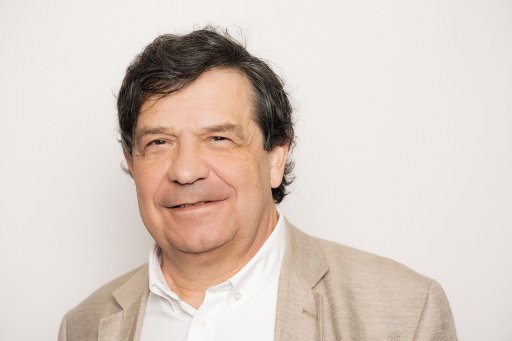
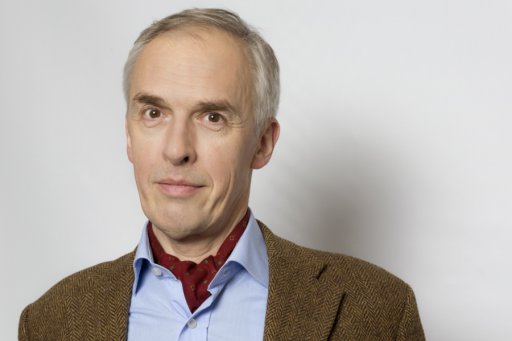
The project is led by Patrick Boucheron and François-Xavier Fauvelle , both professors at the Collège de France.
The Avenir Commun Durable initiative is supported by the Collège de France Foundation , its patrons FORVIA and Saint-Gobain , and its major patrons, the Covéa Foundation and TotalEnergies .