In biblical texts, the Ark of the Covenant represents the presence of Israel's god among his people. A mysterious and elusive object, it has been transformed over the centuries into a powerful political symbol, at the heart of the discourse of certain collective identities and several regimes. This is particularly the case in Ethiopia, where since the Middle Ages, the Ark has been a key element of the country's theological and political discourse, to the point of becoming the center of one of the most important popular narratives of the Tigray War, the conflict that devastated northern Ethiopia from 2020 to 2022.
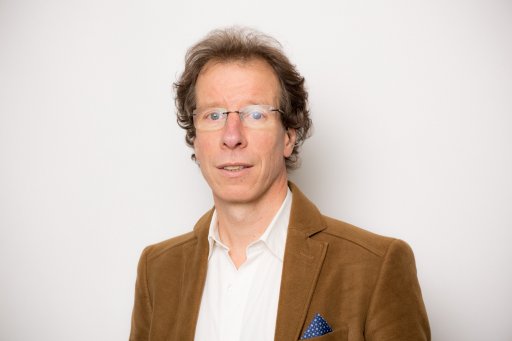
Interview with Matteo Bächtold*, researcher in theology at the Collège de France.
The Ethiopian story of the Ark of the Covenant - the chest where, according to the Bible, the Tables of the Law handed to Moses on Mount Sinai - begins where the Bible leaves off : in the temple of Jerusalem. An epic tale from the XIVthcentury, the Kebra Nagast, which means " Glory of the kings ", recounts how Menelik, the natural son of Solomon, King of Israel, and the Queen of Sheba, transported the Ark from Jerusalem to the town of Aksum in Ethiopia, along with other young men. In so doing, he took with him not only an object of worship, but the divine election of the royal lineage itself. This theological-political fiction founded the legitimacy of the Solomonic dynasty that ruled Ethiopia until 1974, and established its Christian population as the new chosen people : " Through this mythical transfer, the story of the chosen people of the Hebrew Bible passed from the Hebrews to the Abyssinians, the first name given to the inhabitants of Ethiopia ", notes Matteo Bächtold. This important story was to form the basis of the political imagination of modern orthodox Ethiopia.
The origins of a national myth
This story is not just marginal folklore, but the origin of the Ethiopian national novel. The Ark of the Covenant became a central pillar of Ethiopian Christianity, with each church owning a tabot, a replica of the Ark. " If you take a tabot from one church and move it elsewhere, the church itself moves ", explains the researcher, underlining the importance of this object of worship. This specific theology is rooted in a Christian tradition " Judaizing ", marked by respect for the Sabbath, biblical fasts and the importance of Old Testament figures. Ethiopia sees itself not only as Christian, but also as the land of the descendants of the people with whom the biblical god allied himself at Sinai.
The centrality of the Aksum Ark of the Covenant, which, according to the Ethiopian Church, serves as a model for all others, culminated in the reign of Haile Selassie Ist , Emperor of Ethiopia from 1930 to 1974. He had a cathedral built in the city, dedicated to the cult of the Ark, reinforcing the idea that Aksum would be the new Jerusalem. The project was a conscious effort to inscribe Ethiopia in biblical continuity in the eyes of Western nations, in order to affirm it as a legitimate sovereign state. " Haile Selassie was very good at deploying a symbolic language that could speak to both Westerners and Ethiopians, each in their own referential universe ", emphasizes Matteo Bächtold. However, the myth did not collapse with the monarchy in 1974, and continues to structure contemporary discourse in the context of the ethnic conflicts currently ravaging Ethiopia. In particular, the imaginary of the Ark has been reactivated in theological rereadings of the Aksoum massacre, a key moment in the Tigray war between 2020 and 2022.
In November 2020, at the start of clashes between the Ethiopian federal government and the Tigrayan independence forces, a massacre of civilians was perpetrated in the town of Aksoum. Eritrean troops, allied to the Ethiopian federal army, entered the town, looting its infrastructure and killing several hundred people. This massacre, long ignored by the international media due to the blockade imposed on the region, nevertheless marked a symbolic turning point in the conflict.
The Ark of the Covenant in contemporary conflicts
Rumors soon began to circulate among the inhabitants of Aksum that the primary objective of the assault on the town was not looting and massacre, but the theft of the Ark of the Covenant, which the faithful believed was kept in a chapel in the town center. The civilians killed would not have died trying to flee or resist the invasion, but rushing to protect the chapel. However, Matteo Bächtold observes that" shows no sign that the Ark chapel was a military objective, and no assault was launched on it ". According to the researcher, this account, which has since become the official version of events for the inhabitants of Aksoum, is a theologization of the massacre, which falls under what he designates as a " rhetoric of paradoxical victory ". " It's a question of transforming a defeat into a victory by rereading events in the light of fictitious elements that serve as a key to understanding in order to reverse the value of things ", explains Matteo Bächtold. In the case of the Aksum massacre, this key is the Eritrean forces' intention to steal the Ark of the Covenant, which makes their invasion of the city a failure, and the executed civilians heroic martyrs defending the object of the Covenant that God has given them to guard.
This speech was part of the broader movement for independence in the Tigray region, where Aksoum is located. In 2023, a schism occurred leading to the partition between the Ethiopian Orthodox Church and the Orthodox Church of Tigray. Matteo Bächtold sees this as a direct consequence of the religious reading of the conflict, of which the rumors about the Ark are a part : " Without the possibility of obtaining independence on the political map, the Tigrayans obtained it on the religious map ". Despite the signing of the cessation of hostilities agreements in Pretoria in October 2022, a close look at the religious elements of the conflict shows the ever-widening gulfs between Ethiopia's ethnic groups.
For Matteo Bächtold, the strength of the Ark of the Covenant lies not in its material existence, but in its ability to carry legitimizing narratives and establish a rhetoric of divine election. In fact, Aksum is just one of the many anchor points for this rhetoric based on possession of the Ark of the Covenant, which can be found in communities from South Africa to Papua to Japan. The theologian insists : " The essence of the Ark is to be a mystery, something to which no definitive answer can be given, but which can nevertheless be mobilized in public debate to express political ideas in a narrative way. " In this way, she embodies a mystery instrumentalized in Ethiopia's long history as well as in its contemporary dramas.
*Matteo Bächtold is a doctoral student in theology at the Prof. Thomas Römer Chair of The Hebrew Bible and its Contexts.