Étienne-Émile Baulieu (1926–2025)
On May 7, 2023, when a journalist from Le Monde asked him, “Don’t you feel frustrated, after a lifetime of research, that you haven’t been able to unravel the mystery of life and its finitude?” Étienne-Émile Baulieu, then 97 years old, replied, “I don’t really feel like criticizing God.”
A physician, biochemist, and endocrinologist whose intellectual rigor was matched only by his moral courage, Étienne-Émile Baulieu died on May 30, 2025, in his ninety-ninth year. With his passing, one of the great French physician-researchers of the 20th century was lost—a man who turned hormone chemistry into a tool for emancipation and science into an uncompromising civic commitment. In the collective memory, he will be remembered as the man who made it possible for the “contragestive” action—a term he himself coined—of RU486 to be used to medically terminate an unwanted pregnancy during its first trimester, thereby profoundly changing the lives of tens of millions of women on every continent.
But to reduce Étienne-Émile to this seminal achievement would be to do him an injustice. His career began in 1955 with the discovery of dehydroepiandrosterone sulfate secretion by the adrenal glands, whose metabolism and functions he described, thereby paving the way for his lifelong passion for steroids, a family of molecules sharing a perhydrocyclopentanophenanthrene ring whose structure resembles the cells of a honeybee hive. Through tenacious work spanning more than six decades, Étienne-Émile Baulieu opened up new horizons regarding the action and clinical use of these molecules. He was one of those rare scientists who did not hesitate to cross the boundary separating academic research from its practical applications, convinced that medicine’s primary purpose is not to describe human suffering but to alleviate it. “It’s about being useful,” he would often say—a brief phrase that sums up his dual commitment, both as a scientist and as a physician.
Étienne Blum was born on December 12, 1926, in Strasbourg, into an Alsatian Jewish family. His father, Léon Blum, a respected physician, died when Étienne was not yet three years old—a family tragedy that may have been the origin of a medical calling he experienced as a legacy, as a continuation. The Occupation transformed the studious teenager into a fighter in the shadows: at the age of fifteen, he joined the Resistance, adopting the pseudonym Baulieu, which he would officially take on after the liberation in order to escape the antisemitism of his comrades in the Communist Party, as he later explained. It was in Grenoble, under this false identity and living a semi-clandestine existence, that he continued his studies, learning from those years not only physical courage but also the ability to distinguish between legitimacy and the established order.
After completing his medical studies in Paris in 1955 and earning a Ph.D. in science in 1963, Étienne-Émile Baulieu left to pursue further training in the United States. At Columbia University, he worked alongside biochemist Seymour Lieberman, but it was above all his encounter with Gregory Pincus—one of the pioneers of the birth control pill—that proved to be a revelation for him. He returned to France with the deep-seated conviction that, with a little boldness, chemistry could expand the horizons of what was possible for women.
Recruited when INSERM was founded in 1964, he set up his laboratory at Bicêtre Hospital in the Val-de-Marne, which, within a few years, became a world-renowned center for molecular endocrinology. His first major contributions focused on the nature of steroid hormone receptors—those nuclear proteins that receive hormonal signals and translate them into genetic responses. In a field of research that still tended to view hormones as mere chemical messengers, he helped establish a more nuanced understanding, positioning these receptors as true regulators of the overall expression of genes that determine, at every moment, the responses of billions of our cells to changes in environmental conditions, such as diet, stress, and emotion.
In the late 1970s, Étienne-Émile Baulieu, in collaboration with the Roussel-Uclaf laboratory, embarked on research that would transform his life and leave an indelible mark on the history of reproductive medicine. The project was simple in its premise, yet dangerously progressive in its implications: the goal was to develop an anti-hormone molecule capable of blocking the action of progesterone, thereby terminating an early pregnancy without resorting to surgical intervention or other often drastic measures. The compound RU486, later named “mifepristone,” had been synthesized in 1980 by Roussel-Uclaf as part of another research program but was subsequently set aside precisely because of its undesirable anti-progestogenic effects. Étienne-Émile Baulieu set up an initial clinical trial in collaboration with Walter Herrmann in Calvinist Geneva—a small-scale trial involving only 11 patients. The positive results of this study were published in the Proceedings of the French Academy of Sciences in May 1982. Following the success of this initial trial and the larger studies that followed, RU486 received marketing authorization in France on September 23, 1988. It was then the first anti-progestin for clinical use in the world.
This approval sparked an immediate and extremely violent backlash. Under pressure from anti-abortion groups threatening to boycott the entire pharmaceutical company, Roussel-Uclaf decided to suspend sales of the drug just a few days after its launch. It was Claude Évin, then Minister of Health in the Rocard government, who ordered the resumption of distribution, explaining that this product was “the moral property of women.” Étienne-Émile Baulieu, for his part, weathered the onslaught with a composure that, even today, commands admiration: despite receiving death threats and having his lectures interrupted, he continued to speak methodically, citing figures, developing arguments, and refusing to engage in confrontation, choosing instead to focus exclusively on the clinical trial.
Today, while mifepristone is authorized in more than sixty countries and is included on the World Health Organization’s list of essential medicines, its use for abortion remains banned in many countries, including some of the most developed. Its impact on maternal mortality in regions where surgical abortion is rare or even illegal remains difficult to quantify precisely, but it is likely considerable. Its symbolic impact—by restoring to women control over a medical procedure long monopolized by men—is perhaps even greater.
In his fifties, Étienne-Émile Baulieu showed no signs of slowing down and changed course. Convinced that aging was still a poorly explored area of biology, he devoted himself in the 1990s to the study of pregnenolone and its derivative, dehydroepiandrosterone—the famous DHEA—itself a precursor to sex hormones, the levels of which decline with age. The DHEAge study, a rigorous clinical trial he oversaw in France, aimed to objectively assess what the prevailing sentiment of the time hailed as a panacea, a magic potion. His cautious and nuanced conclusions disappointed the dietary supplement industry, while upholding the integrity of medicine, since it became clear that DHEA, while it might somewhat alleviate the symptoms of cognitive and muscular decline, was not an elixir of youth.
In the final years of his life, at an age when he could have allowed himself some rest, he turned his attention to the tau protein and its role in Alzheimer’s disease, co-founding the biotechnology company Mapreg to develop new therapeutic approaches based on his work on neurosteroids—neuroactive steroids synthesized locally by the nervous system itself. Old age as a subject of study, old age as a struggle—this, in essence, was the dialectic that drove his final decade. Age had no hold on his curiosity and his interest in knowledge, literature, and the arts in general. In his opening lecture on March 28, 1994, he mentioned a 1502 work by the Venetian artist Vittore Carpaccio depicting a visionary Saint Augustine at his desk, his gaze directed toward a luminous window—toward the world, toward others. And many of us no doubt remember his moving appearances at the Administrator’s receptions, even just a few years ago, accompanied by others since he was no longer able to get around on his own.
The scientific and institutional communities honored him with recognition commensurate with the scope of his contributions. In 1989, the Albert Lasker Award for Clinical Medical Research—the world’s highest distinction in his field of research—recognized his work. Elected to the Academy of Sciences in 1982, he served as its president from 2003 to 2006. A Commander of the Legion of Honor and a Grand Cross of the National Order of Merit, as well as a foreign member of the U.S. National Academy of Sciences, he also received numerous national and international honors. He accepted these awards with gratitude, to be sure, but also with the detachment that often characterizes men and women who have led extraordinary, sometimes novelistic lives. In 2023, recounting his happy youth, surrounded by his mother, grandmother, and sisters, he said: “I wanted to be worthy of this family, in which the pursuit of personal enrichment and honors was looked down upon. I would say I was well-raised.”
A man who was both refined and formidable, always elegantly dressed, an unrepentant smoker, a lover of contemporary art, and a friend of François Mitterrand and Simone Veil, he moved with great ease between the worlds of science and the humanities. His intellectual courage was never the subject of thunderous displays, and when faced with adversity, he cited facts and figures, never shying away from debate or reflection on the societal importance of these technologies. Thus, in 1999, he published—along with Françoise Héritier and the demographer Henri Léridon—the proceedings of a multidisciplinary symposium held at the Collège de France in 1998 concerning the numerous impacts of modern birth control methods beyond strictly medical issues, and their profound implications for both individuals and societies. Étienne-Émile Baulieu leaves behind a vision of medicine as a practice that is both scholarly and civic, inextricably linked to the dignity of the people it seeks to serve. The former member of the Resistance had undoubtedly understood very early on that science is not the only form of courage, but that it can sometimes be—when practiced with passion and honesty—one of the most enduring.
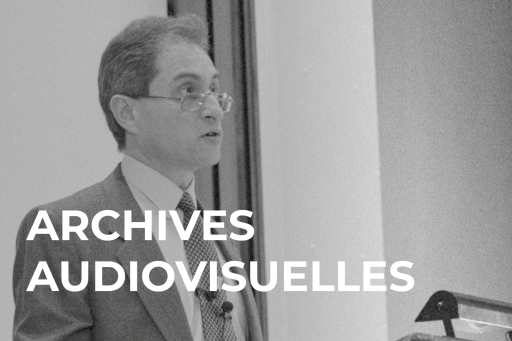
Étienne-Émile Baulieu was a professor at the Collège de France from 1993 to 1998, holding the Chair in Foundations and Principles of Human Reproduction. In his opening lecture, he quoted Primo Levi: “The honor of science is to say what is.”
Denis Duboule, June 28, 2026