William Marx
Comparative Literatures
Letters, arts, language, philosophy
Statutory chair
Current professor
2019 - today
Literature is a universal phenomenon, spanning the globe and transcending history, albeit in extremely diverse forms: the study of its variations is the focus of this chair, following in the tradition of courses in Comparative Literatures that emerged in Europe and America as early as the 19th century. Reading texts of all origins and statuses, literary analyses, and essential contextualization are put at the service of this stationary journey and the sense of disorientation that accompanies it. The exercise of admiration is not forbidden here either.
The goal is to crack open the door to the world library and browse a few of its shelves in order to make us readers without limits, capable of reading beyond literature , freeing ourselves from our own historicity through a process of defamiliarization. For it is in reality the very notion of literature that poses a problem, with all that it implies in terms of presuppositions and practices that are historically dated and geographically localized: broadly speaking, the Europe of the last two centuries. This is why the title of the chair is in the plural, and it proposes the study not of “literature ,” but of “literatures,” whose diversity—not only linguistic, but also cultural and anthropological—must first be acknowledged.
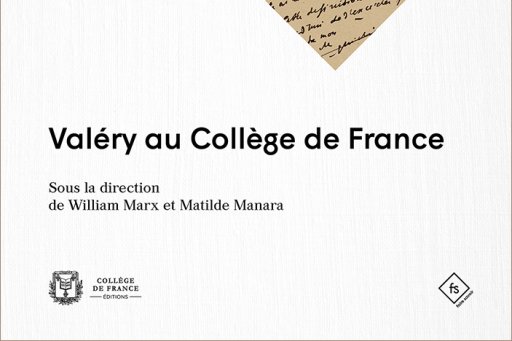
Research within the Comparative Literatures chair thus focuses on the long-term evolution of aesthetic systems and the status of literature from antiquity to the present day, as well as on their variation across cultures, with work covering, among other topics, Greek tragedy, Japanese Noh, and Asian literatures; medieval and Renaissance humanism; the Enlightenment; classical and romantic arts, European modernism, and contemporary literature. Genetic criticism and manuscript editing are also employed, with studies notably on Paul Valéry and T. S. Eliot.